
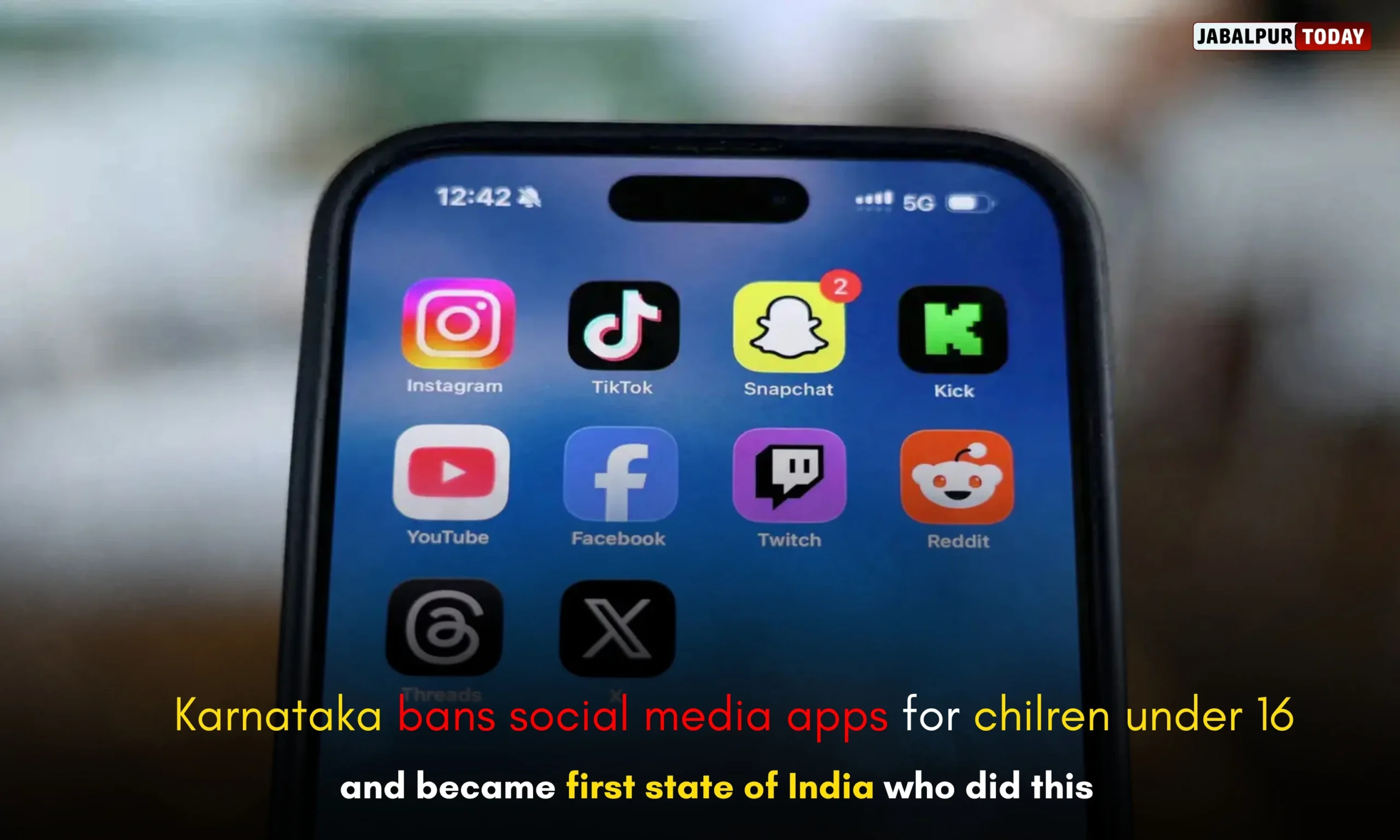
Why has Karnataka banned social media for children under 16? Explore the details of the new policy, reactions from experts and parents, and what it could mean for the future of digital safety in India
Bengaluru: In a major decision that could change how children use the internet in India, Karnataka Chief Minister Siddaramaiah announced on Friday that children under the age of 16 will not be allowed to use social media.
The announcement was made while presenting the state’s ₹4.48 lakh crore Budget for 2026–27. With this move, Karnataka — often called India’s Silicon Valley because of its strong technology industry — has become the first state in the country to take such strict action against early exposure to social media platforms such as Instagram, TikTok, YouTube, and Facebook.
During his budget speech, Siddaramaiah said the decision aims to protect children from the harmful effects of excessive mobile phone use. “With the objective of preventing adverse effects of increasing mobile usage on children, usage of social media will be banned for children under the age of 16,” he said.
The government believes the step will help reduce problems such as addiction, cyberbullying, and mental health issues among young people.
The Announcement in the Budget
The proposal appears in the School Education section of the state budget. It also builds on Karnataka’s existing campaign called “Mobile Bidi, Pustaka Hidi”, which means “Leave the phone, pick up a book.”
Earlier discussions about regulating children’s social media use were not very clear. However, the language used in the budget is firm and shows that the government intends to implement the rule soon.
More details about how the ban will work — including age verification systems, enforcement methods, and possible penalties — are expected to be released in future policy documents.
Why the Government Took This Step
The Karnataka government says the decision is based on growing evidence that excessive smartphone and social media use is harming children.
Studies show that more than 70% of children aged 10–15 in India spend over three hours every day on social media platforms. Similar patterns are seen among young people in cities across Karnataka.
National data also shows that 10–21% of teenagers suffer from internet addiction. This problem is often connected to issues such as:
• disturbed sleep patterns
• anxiety and depression
• poor academic performance
• exposure to harmful or inappropriate content
Experts also warn that social media algorithms can make these problems worse. Cyberbullying, for example, affects about one in three children online. Social media can also create pressure related to body image and social comparison.
India’s Economic Survey 2025–26 also highlighted compulsive internet use as a growing public health concern.
Learning from Other Countries
Karnataka’s decision follows a similar step taken by Australia, which introduced a ban on social media use for children under 16 in December 2025. Under Australia’s law, companies that fail to enforce the rule can face fines of up to $32 million. The ban applies to major platforms such as TikTok, Instagram, and YouTube.
Other countries that are considering similar restrictions include:
• France
• the United Kingdom
• Spain
• Denmark
• New Zealand
Within India, states like Andhra Pradesh and Goa are also discussing similar policies. At the national level, Union IT Minister Ashwini Vaishnaw has expressed support for age-based regulation of social media.
Challenges in Implementing the Ban
Even though the policy has been announced, several important questions remain unanswered.
These include:
- How might the government verify users’ ages without violating their privacy?
- What kind of penalties could be imposed on platforms, parents, or schools if rules are broken?
- Are there likely to be any exceptions for educational use?
School organisations have already raised concerns. Many institutions depend on digital tools and online platforms for communication and learning.
Experts also warn that enforcement may be difficult in a technology-savvy state like Karnataka. There is also concern that the rule could increase the digital divide between urban and rural areas, or between boys and girls. In India, women already have lower internet access compared to men.
Advantages and Concerns
Possible Advantages
• Lower risk of social media addiction
• Better mental health among children
• Improved focus on studies
• Creation of safer online environments
Possible Concerns
• Difficulty in enforcing the rule
• Potential impact on freedom of expression and information
• Limited access to positive online communities
• Risk that teenagers may move to hidden or unregulated platforms
Possible Impact Across India
Because Karnataka is a major technology hub, this decision could influence other states and even national policy.
India has around 472 million people under the age of 18, and cybercrimes against children have been rising. The new policy reflects growing concern about protecting young people online.
At the same time, it raises questions about how to balance child safety with technological freedom and innovation.
The Karnataka government is expected to release detailed implementation rules soon. These may include consultations with parents, educators, and technology companies.
Many experts recommend a balanced approach that includes:
• digital literacy programs in schools
• stronger responsibility for social media platforms
• better parental control tools
• independent research on the impact of social media on children
Karnataka’s decision marks an important moment in the debate over children and technology. While many people support the goal of protecting young minds, the success of the policy will depend on careful implementation and cooperation between parents, schools, technology companies, and young people themselves.
As other states observe Karnataka’s experiment closely, the outcome could shape how India manages online safety for the next generation.

Mansi Sharma is a journalist covering Global Affairs, and wellness, known for turning complex ideas into sharp, engaging narratives. Her work is driven by curiosity, depth, and a constant urge to question and explore. When she’s not writing, you’ll often find her diving into new ideas—preferably with a cup of coffee in hand, one sip at a time.