
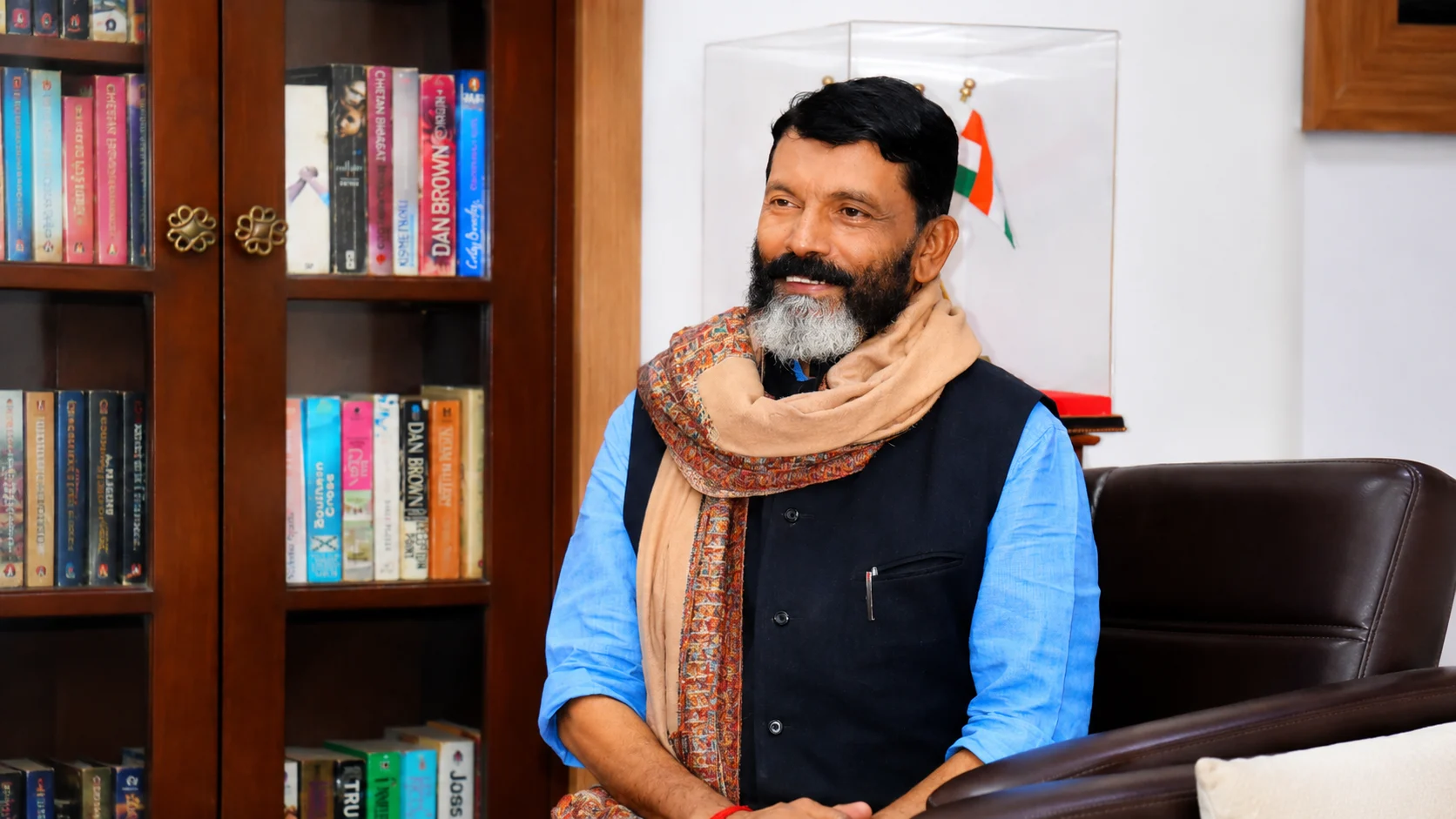
Delhi: HRDS INDIA Secretary Aji Krishnan has urged the Central Government to implement the recently introduced amendments to the Foreign Contribution (Regulation) Act (FCRA) without delay.
According to him, the Foreign Contribution (Regulation) Act (FCRA) is a law enacted to regulate financial assistance (foreign contributions) received by organizations in India from foreign countries or institutions. The primary objective of the Act is to ensure that foreign funds are not used in ways that are detrimental to national security or public interest.
Aji Krishnan stated that the opposition of certain Christian church leaders to the FCRA Amendment Bill is motivated and undesirable. He alleged that foreign Christian influence has expanded in India since the 15th century under Portuguese leadership and argued that foreign powers historically exploited India’s resources and wealth. He further claimed that several Hindu temples were destroyed and that colonial powers established their own territories in places such as Kochi and Goa.
He stated that missionaries entered India with a religious conversion mission and sought to replace traditional Indian culture and heritage with Western religious practices. According to him, bishops appointed by the Pope function as representatives of the Vatican and implement church laws in India.
He further alleged that Christian-majority states in Northeast India, including Manipur, Nagaland, Mizoram, and Meghalaya, have witnessed unrest and that foreign assistance has contributed to anti-national activities. He also claimed that church organizations have collaborated with extremist groups in some regions and that foreign-funded evangelical movements have expanded in parts of India.
According to Aji Krishnan, forced and fraudulent religious conversions are a threat to India’s unity and social harmony. He acknowledged that some groups argue that freedom of religion is a fundamental right guaranteed under the Constitution. He noted that Article 25 of the Indian Constitution grants citizens the right to profess, practice, and propagate their religion, while emphasizing that coercion or inducement in religious conversion is not permitted.
He pointed out that several Indian states have enacted anti-conversion laws to prevent forced religious conversions and noted that the Supreme Court has stated that forced conversion is impermissible. He further alleged that some educational institutions, hospitals, and charitable organizations run by churches function as recruitment centers for religious conversion and that extensive media networks are used for religious propagation.
Aji Krishnan argued that stronger controls are needed against what he described as a “conversion mafia” in order to protect social harmony and national security.
He further stated that religious conversion has historically been central to church activities and claimed that missionary efforts worldwide ultimately aim at conversion. According to him, conversion is rooted in intolerance and reflects a belief that only one religion or worldview is correct.
He alleged that missionary strategies historically involved undermining local faiths and traditions before promoting Christianity and that such methods contributed to European colonial expansion in various countries, including India.
Referring to Northeast India, he claimed that separatist movements in some Christian-majority border states have been supported by missionary activities and foreign influence. He further alleged that churches have led campaigns against Hindus and Buddhists in certain regions and accused foreign-funded organizations of supporting extremist groups.
Aji Krishnan also criticized church-led protests against the Kudankulam Nuclear Power Plant and alleged that efforts have been made to encourage the boycott of national observances such as Independence Day and Republic Day.
He further argued that while princely states and royal families integrated their assets into the Republic of India after independence, certain religious institutions, including Christian churches and Muslim organizations, continue to retain extensive land holdings.
Calling for stricter action against bishops whom he described as representatives of a foreign authority, he alleged that opposition to FCRA regulations stems from the misuse of foreign funds and illegal activities.
According to him, some religious leaders have accumulated wealth and built churches, institutions, and residences through foreign funding obtained over many years. He stressed that foreign funds intended for religious and charitable purposes should not be used against national interests.
He stated that all organizations operating in India are obligated to comply with Indian law and that NGOs functioning legally generally support the government’s position. He emphasized the need for transparency in the utilization of FCRA funds and argued that money intended for social welfare should not be misused.
Aji Krishnan further stated that:
- The possibility of anti-national activities being carried out using foreign funds must be prevented.
- Allegations regarding the misuse of foreign funding for religious conversion activities should be investigated and regulated.
- The government has a responsibility to prevent undue foreign influence in India’s internal affairs.
- All NGOs should transparently disclose the sources and expenditure of foreign funds.
He also expressed the view that India is a Hindu nation and argued that foreign-origin religions such as Christianity and Islam have contributed to social tensions rather than benefiting the country.
Concluding his statement, Aji Krishnan said that the present government is not one that will yield to pressure from religious conversion lobbies. He expressed full support for the FCRA amendments introduced by the government of Prime Minister Narendra Modi, stating that the measures are in the national interest and essential for India’s progress and security.
