
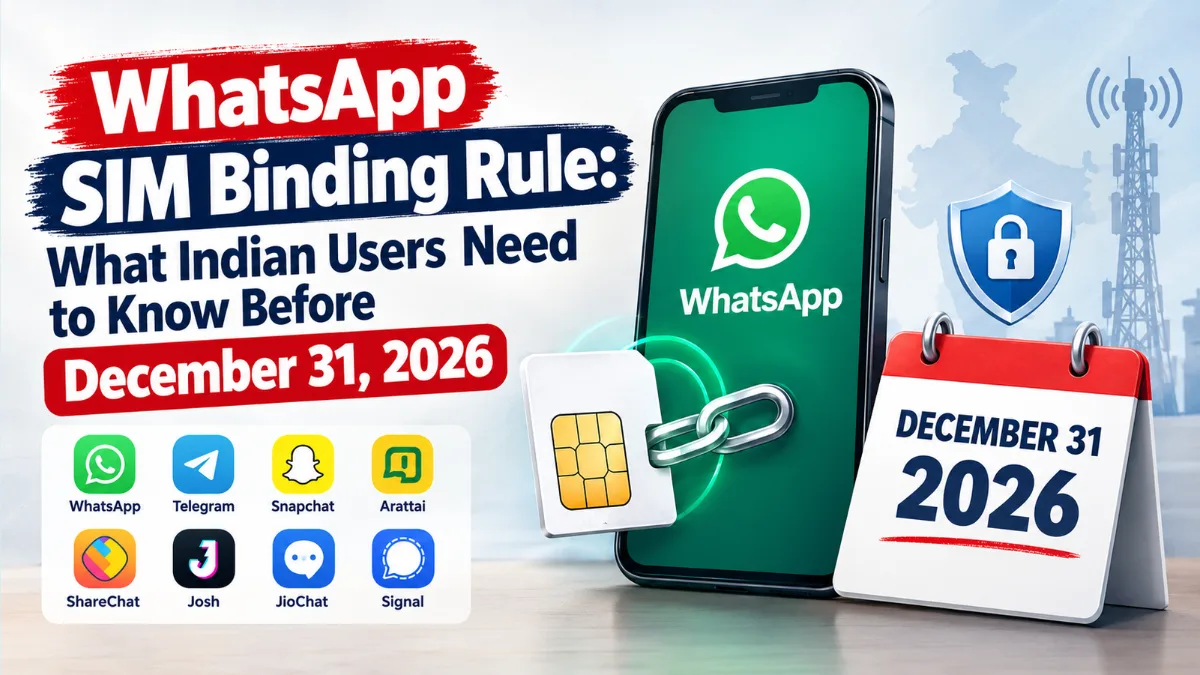
WhatsApp SIM binding rules require eight messaging apps to stay linked to active SIMs by December 31, 2026. Here is what Indian users need to know.
New Delhi: The Department of Telecommunications (DoT) has directed WhatsApp, Telegram and six other messaging apps to remain linked to the active SIM card associated with each registered mobile number. The government has set December 31, 2026, as the compliance deadline, although users may notice changes during the rollout. This requirement, known as SIM binding, aims to make it harder for fraudsters to misuse messaging accounts linked to Indian phone numbers. It does not mean the government will shut down any of these apps in India.
What is SIM binding?
SIM binding means a messaging app must maintain a connection with the specific SIM card linked to a user’s registered mobile number. A SIM card connects a mobile number to a telecom network, while an eSIM performs the same role digitally inside a compatible device.
Under the new directions, the covered apps must ensure that users cannot continue using an account without the corresponding active SIM installed in the device. This differs from the existing experience, where users can often continue using a messaging account after verifying their number, even if they later remove or deactivate the SIM.
The rule focuses on maintaining a link between the account, the registered number and its active SIM. Each platform will determine how to implement the requirement within the government’s directions.
Which apps are covered?
The DoT has named eight messaging and communication apps in its directions:
- Telegram
- Snapchat
- Arattai
- ShareChat
- Josh
- JioChat
- Signal
The requirement covers all eight named platforms. Users should not assume that any one of them has an exemption simply because it uses a different interface or account-verification process.
What changes for most users
People who keep their registered SIM or eSIM active in their regular smartphone should see little change in everyday use. They may not need to change their number, reinstall their apps or take any immediate action.
However, the exact experience will depend on how each platform implements SIM binding. Apps may introduce checks to confirm that the registered SIM remains active and present in the device.
Users should also distinguish between their registered number and the SIM they currently use for calls or mobile data. Someone who changes their primary SIM but continues to use an account registered to an older number could face additional checks or access problems.
Who could run into problems
The rule could affect people who use messaging apps in ways that separate their registered number from their regular device.
Likely affected groups include:
- Wi-Fi-only phone users: People who use a smartphone without the registered SIM may face access restrictions.
- Frequent SIM switchers: Users who regularly change SIM cards may need to ensure that the correct SIM remains active.
- People using multiple devices: Those who use the same account across a phone, tablet or other supported device may notice changes depending on the platform’s implementation.
- Users with old Indian numbers: People who have stopped using the SIM associated with an account may need to restore access to that number through their telecom provider, where possible.
These are expected effects, not confirmed outcomes for every user. The final impact will depend on each app’s implementation and how it handles different devices and account situations.
Web and desktop: The six-hour logout is gone
The original directions required web versions of the covered services to log users out periodically and ask them to reconnect through QR codes. Reports described a six-hour logout interval.
However, later reporting indicates that the government dropped the fixed six-hour requirement and moved towards a risk-based logout approach. Under this approach, platforms would use an assessment of security risks to determine when a web session should end, rather than automatically logging every user out at the same fixed interval.
A web session is the period during which a user remains signed in through a browser or desktop application. Risk-based logout means a service can consider security risks when deciding whether to end that session. Users should not assume that every desktop session will follow the same schedule across all eight apps.
Why the government wants this rule
The Ministry of Communications says some messaging and calling accounts remain usable even after users remove or deactivate their SIM cards or take them abroad. According to the government, this creates opportunities for criminals to misuse Indian mobile numbers for anonymous scams, digital-arrest frauds and calls that impersonate government officials.
SIM binding aims to strengthen the connection between an account and a live, KYC-verified mobile number. KYC, or Know Your Customer, refers to the identity-verification process that telecom providers use when issuing connections.
The government has also cited the financial impact of cybercrime. Its statement reportedly put fraud losses at more than ₹22,800 crore in 2024. Editors should verify that figure against the original government statement before publication.
The measure seeks to make account misuse harder, although SIM binding alone cannot eliminate online fraud. Users must still treat suspicious links, requests for money and calls claiming to come from government agencies with caution.
The timeline, from November 2025 to December 2026
| Date | Development |
|---|---|
| Late November 2025 | The DoT issued directions under the Telecom Cyber Security Rules, 2024. |
| December 1, 2025 | The Ministry of Communications publicly described the directions. |
| February 2026 | The original 90-day implementation period approached its end. |
| April 2, 2026 | Minister of State for Communications Pemmasani Chandra Sekhar confirmed a deadline extension in a written Rajya Sabha reply. |
| April 2026 | Meta confirmed that it was testing SIM-binding functionality for WhatsApp users in India. |
| October–November 2026 | Industry reporting indicated that platforms expected to achieve readiness across Android and iOS around this period. |
| December 31, 2026 | The revised official compliance deadline for the covered apps. |
The original directions provided 90 days for implementation and 120 days for submitting a compliance report. Industry representatives sought more time, citing technical challenges involving testing and deployment. The government subsequently extended the compliance deadline to December 31, 2026.
Is January 1, 2027 the real date?
January 1, 2027, appears frequently in reports because it follows the official December 31, 2026, compliance deadline. However, users should treat it as a commonly cited expected start date, not as a separately confirmed official enforcement date.
The government has set the deadline for platforms to comply, but the exact date when individual users will notice changes may vary. Officials have indicated that the rollout could happen in phases, and each platform will determine its implementation details within the applicable requirements.
Myth versus fact: Will WhatsApp stop working?
Myth: WhatsApp will shut down in India from January 1, 2027.
Fact: The directive does not order WhatsApp or Telegram to shut down. It requires covered apps to maintain a link with the active SIM associated with the registered number.
Myth: Every user must buy a new SIM card.
Fact: Users who already keep their registered SIM active in their phone may not need to make any changes.
Myth: Everyone will be logged out of WhatsApp Web every six hours.
Fact: Reports indicate that authorities dropped the fixed six-hour logout interval in favour of risk-based session management.
Myth: The rule guarantees that online fraud will end.
Fact: SIM binding aims to reduce opportunities for account misuse, but users must continue to follow basic digital-safety practices.
What you can do now
- Keep the SIM or eSIM linked to your messaging account active.
- Check which mobile number you registered with each covered app.
- If you no longer use that number, contact your telecom provider about your options.
- Watch for official announcements from the apps you use.
- Never share OTPs or verification codes with callers claiming to represent a government department or messaging platform.
You do not need to panic or delete your messaging apps because of this directive. Keep your registered number active and follow verified updates as platforms prepare for the deadline.
