
Kathmandu / New Delhi: Nearly 300 Indian nationals are among the thousands of people reported missing after devastating flash floods hit the Nepal-Tibet border region on Wednesday. Nepal’s Foreign Minister Shishir Khanal confirmed the figure on Thursday. The disaster has killed at least 162 people in Nepal, while authorities have reported three more deaths on the Chinese side. Rescue teams are searching through mud, debris and damaged roads as they try to reach people trapped in one of the deadliest disasters to hit the Himalayas in recent years.
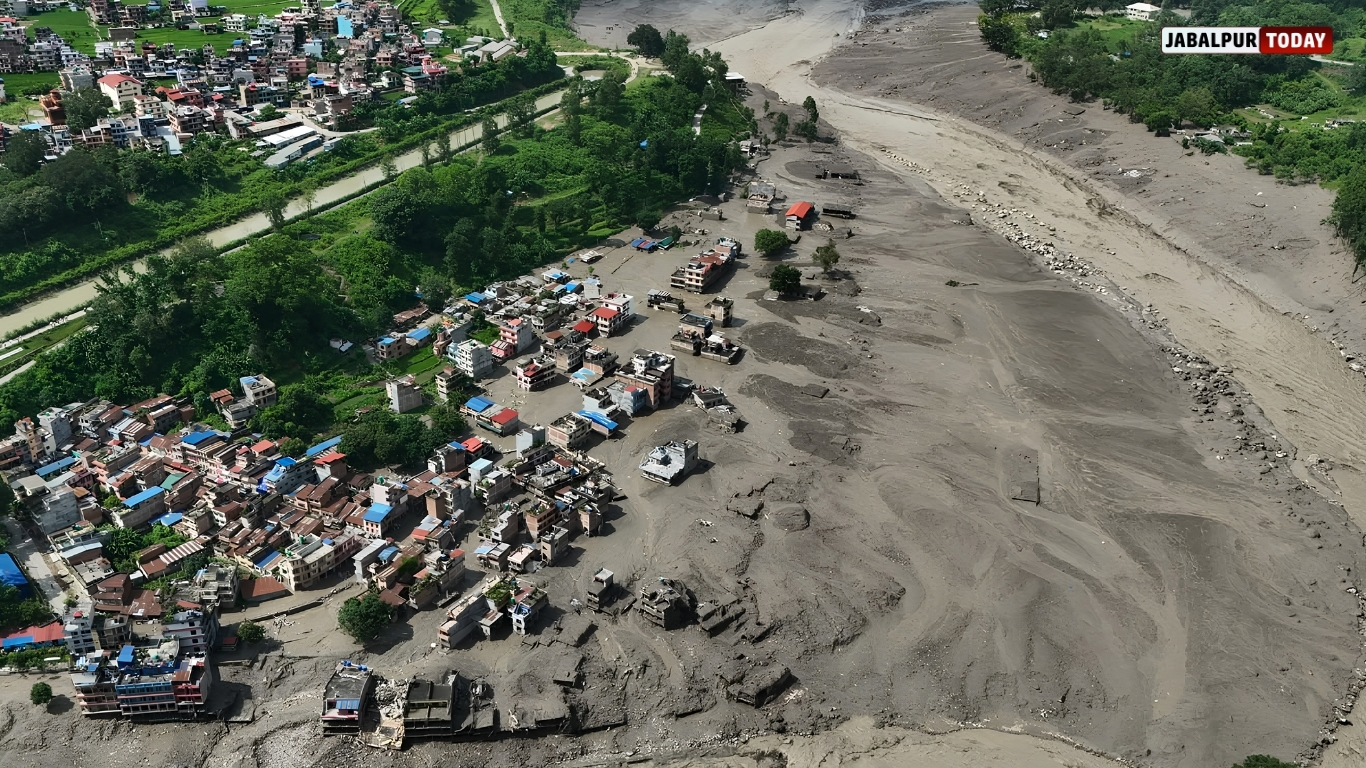
A powerful mix of ice, mud, water and huge rocks caused the floods and destroyed large parts of the region. Aerial images show entire river valleys covered with thick layers of mud and debris. The flood broke bridges, washed away roads and destroyed settlements. Authorities and media outlets have released aerial footage and satellite images that show the scale of the damage. Green mountain slopes now look like large brown fields of debris. Floodwaters either buried or carried away vehicles and buildings. Huge amounts of rubble have also blocked parts of the Bhotekoshi and Trishuli river systems.
The disaster has raised serious concerns about the growing threat of high-altitude ice and rock failures in the Himalayas. It has also highlighted the need to understand what caused the flood, how many people remain missing and what authorities can do to protect communities in the future.
What Happened on August 26?
At around 8:37–8:40 a.m. local time on Wednesday, a sudden and extremely powerful surge hit the high valleys near the Nepal-China border. Residents and officials said a huge wall of water, mud and rocks moved through the area at great speed. In some places, the water level rose by as much as nine metres, or around 30 feet, within just 30 minutes.
The flood first hit Timure, near the Rasuwagadhi border crossing. It then moved through Rasuwa district before reaching Dhading, Nuwakot and areas farther south toward Chitwan. Rescue teams later recovered bodies as far as 150 km downstream, showing the enormous force of the flood.
Security camera footage from the Chinese side of the border shows people running to safety as a massive wall of water and debris quickly covered multi-storey buildings.
Nepal Police and the National Disaster Risk Reduction and Management Authority (NDRRMA) said the flood destroyed or badly damaged at least 19 motorable bridges and around 40 km of roads. The damage includes important road sections connecting Syabrubesi with Rasuwagadhi. The flood also damaged several hydropower projects. Authorities still cannot account for workers at some of these projects.
The flood buried or completely destroyed several markets, homes and other settlements.
What Caused the Flood? Ice-Rock Avalanche and Possible Earthquake Trigger
Scientists and officials believe a chain of events high in the Himalayas caused the disaster. Experts who studied satellite images, including Planet Labs data, found that a large section of a glacier broke away at an altitude of about 5,200 metres. The ice and rock then fell around 1,200 metres toward the valley floor. As the material fell, it collected more mud, rocks and other debris and gained greater force.
The ice-rock avalanche then hit the Lhende River, a tributary of the Bhotekoshi River, about 20 km northeast of the Nepal-China border crossing. The falling debris temporarily blocked the river. When the natural blockage broke, it released a huge flow of water mixed with ice, mud and large rocks.
The mixture then moved downstream at extremely high speed and caused widespread destruction.
Early reports also mentioned an earthquake measuring between magnitude 4.4 and 5.2 near the border around the same time. Foreign Minister Shishir Khanal told Parliament that tremors struck the Tibet region at around 8:37 a.m. and that people reported the floods three minutes later. This timing has raised the possibility that the earthquake may have helped trigger the glacial collapse.
The U.S. Geological Survey and independent glaciologists have identified the glacial collapse and resulting debris flow as the main cause. However, they have also considered the earthquake a possible contributing factor.
Experts from the International Centre for Integrated Mountain Development (ICIMOD) in Kathmandu described the event as a cascading cryosphere hazard. In such an event, an ice and rock failure at high altitude triggers a massive flood and debris flow in valleys where people live and infrastructure operates.
The Lhende Khola area also experienced flooding about 14 months ago. This shows that the region faces repeated risks from such events.
Human Toll: Nearly 300 Indians and Hundreds of Other Foreigners Missing
Nepal authorities had recovered between 162 and 165 bodies by Thursday. However, the number of missing people continues to change as rescue teams collect more information.
Foreign Minister Khanal said thousands of families had lost their homes and that authorities still could not trace many people. He said around 500 foreign nationals remained out of contact. Nearly 300 of them are Indian nationals.
Earlier reports had placed the number of missing Indians at around 105 to 133, along with 37 non-resident Indians (NRIs). The latest figure represents a significant increase.
Many of the missing Indians had travelled along the Kailash Manasarovar Yatra route, which passes through the affected border region. Different travel operators and spiritual organisations had organised groups travelling through the area. Members associated with the Isha Foundation were also present at or near immigration points and staging areas when the flood struck.
Authorities have specifically linked at least 50 to 80 missing Indians to the pilgrimage.
People from several other countries also remain missing. They include citizens of the United States, Australia, the United Kingdom, Canada, Malaysia and other countries.
On the Tibetan side, Chinese authorities have reported three deaths and hundreds of missing people. The missing group includes foreign nationals who had crossed into the area or who were near the Gyirong Port.
Security forces have also suffered major losses. Early reports said around 80 Nepal Army and police personnel remained missing. These reports included 44 soldiers and 29 police personnel. Floodwaters swept away barracks and security posts near the border.
Hydropower workers, customs officials and local residents also make up a large part of the missing population.
Aerial Images Show Massive Destruction
Aerial footage released by Nepali media, international agencies and rescue teams shows the full scale of the destruction.
In the Trishuli area of Nuwakot and along the Bhotekoshi corridor, the flood has turned large parts of the riverbanks into fields of mud. Some buildings remain partly buried, while others now stand at dangerous angles.
Floodwaters and debris have destroyed roads that connected remote communities with the border and Kathmandu. The disaster has cut these routes at several points.
Before-and-after satellite images show a dramatic change in the landscape. Areas that once had green valley floors now appear brown and covered with debris.
Witnesses said the water rose like a huge wave, with some describing it as nearly 100 metres high near Timure. A customs officer said the flood destroyed the local market within moments.
Communities farther downstream, including those in Chitwan and surrounding areas, have also found debris and bodies carried from the main disaster zone.
Rescue Operations Face Major Challenges
Nepal has deployed Army and police personnel along with helicopters, drones, search dogs and ground rescue teams.
Rescue workers face serious challenges. High river levels, destroyed roads, thick mud and unstable mountain slopes have made it difficult to reach the worst-hit areas.
Helicopters have also struggled to land in some locations while floodwaters remain high. Authorities have established temporary medical facilities and evacuated several survivors to hospitals in Kathmandu, including Tribhuvan University Teaching Hospital.
India Sends Immediate Assistance
India quickly responded to the disaster. Prime Minister Narendra Modi spoke with his Nepali counterpart and offered India’s full support.
An Indian Air Force C-130J aircraft delivered 10 tonnes of humanitarian aid to Nepal. The supplies include temporary shelters, blankets, hygiene kits, solar lamps and medicines. India has also kept a larger C-17 aircraft on standby for further assistance.
The Indian Embassy in Kathmandu has issued emergency helpline numbers, +977 985 131 6807 and +977 970 910 7500. The embassy is coordinating with Nepalese authorities and families looking for missing Indian nationals.
China has also launched search and recovery operations on the Tibetan side.
Embassies representing other affected countries are communicating with authorities in Kathmandu. Foreign Minister Khanal said Nepal is giving foreign nationals the same priority as its own citizens and is communicating with governments around the world.
Climate Change Adds to the Himalayan Risk
The latest disaster has not happened in isolation. The Hindu Kush Himalaya region contains huge amounts of ice and has been warming faster than the global average.
Glacial lake outburst floods, ice avalanches and related debris flows have become more frequent and, in some cases, more destructive. ICIMOD and other research organisations have repeatedly warned that cascading hazards can threaten communities, infrastructure and pilgrimage routes.
Such events can begin with a failure high in the mountains and quickly turn into powerful floods in populated valleys.
Earlier disasters in the wider region also show the growing pattern. These include a 2025 glacial flood that affected the Rasuwagadhi area and the 2024 Thame flood in the Everest region.
Experts have called for stronger early-warning systems, better sharing of information across borders and infrastructure that can withstand climate-related disasters.
The speed of Wednesday’s flood created another major problem. The surge travelled from the high mountains to populated valleys within minutes, leaving very little time for authorities to warn residents and travellers.
What Families and the Public Need to Know
Communication networks in the affected districts remain disrupted. Officials have warned that the number of missing people could increase or change as rescue teams receive new information.
Travel companies and embassies are checking passenger lists to identify missing foreign nationals. Families looking for information about Indian nationals should contact the Indian Embassy through its emergency helplines.
Nepal’s tourism and disaster management authorities are also continuing to update information about foreign travellers.
Rescue operations are likely to continue for several days, depending on weather and access conditions. Authorities are also watching downstream rivers, including rivers that flow into India, for possible secondary flooding.
The full human and economic damage will take time to assess. The floods have damaged homes, destroyed livelihoods, affected important energy infrastructure and disrupted a major pilgrimage route.
Thousands of families are still waiting for information about their loved ones. They include Indian pilgrims, international tourists, Nepali villagers, hydropower workers and security personnel.
As rescue teams continue searching through mud and debris, satellite images are helping authorities understand the full extent of the destruction. The disaster has once again shown the enormous power of the Himalayas and the growing danger that climate change poses to communities living in one of the world’s most fragile mountain regions.
