
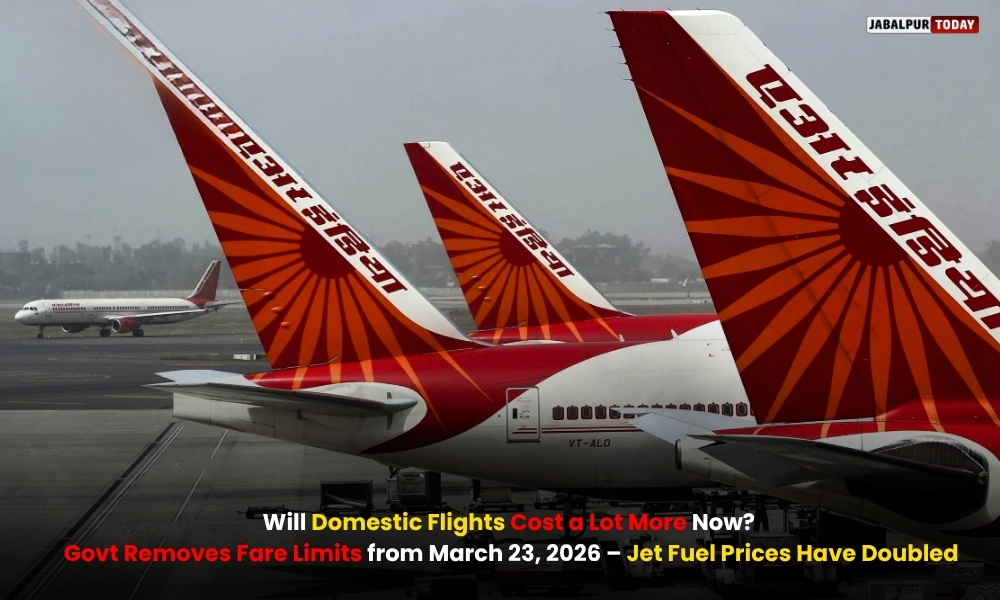
With fare limits removed, flyers may soon face unpredictable ticket prices as airlines regain full pricing control amid rising fuel costs—here’s how this shift could impact your travel plans, budget, and booking strategy in the coming months
New Delhi: In a major decision that ends months of fare control but may lead to higher ticket prices, the Ministry of Civil Aviation has removed temporary caps on domestic airfares. This change will take effect from Monday, March 23, 2026.
Because aviation turbine fuel (ATF) prices have more than doubled due to tensions in West Asia, passengers should be ready for costlier tickets — especially on popular and long-distance routes. Airlines will now have full freedom to set prices based on demand.
What Led to the Fare Caps? The IndiGo Crisis Explained
The government had introduced fare caps on December 6, 2025, after a major crisis involving IndiGo, India’s largest airline with over 60% market share.
The airline struggled to adjust to new pilot duty and rest rules, which caused a major scheduling breakdown. Around 4,500 flights were cancelled within just 10 days, leaving lakhs of passengers stranded.
As a result, ticket prices on other airlines shot up to 5–10 times the normal rates. To stop this sudden surge, the government set maximum limits on economy-class fares (excluding taxes and other charges):
• Up to 500 km: ₹7,500
• 500–1,000 km: ₹12,000
• 1,000–1,500 km: ₹15,000
• Above 1,500 km: ₹18,000
These limits helped protect passengers during a difficult time.
Why Are the Caps Being Removed Now?
The Ministry of Civil Aviation said that airline operations have now returned to normal, especially after IndiGo fixed its scheduling issues.
At the same time, airlines have been pushing for the removal of caps, saying they were losing large amounts of money as their costs kept rising.
Another major reason is the ongoing Iran-Israel conflict in West Asia, which has caused a sharp increase in global fuel prices. ATF prices have more than doubled, and the Indian rupee has weakened against the US dollar.
Since there has been no reduction in taxes on fuel, airlines are facing what they call their “biggest crisis since COVID.”
Government’s Warning to Airlines
Even though the caps are removed, the government has clearly warned airlines to act responsibly.
It stated that fares must remain reasonable, transparent, and in line with market conditions.
The ministry also warned that any excessive or unfair price hikes during peak seasons or disruptions will be taken seriously. If needed, the government may step in again to control fares.
Airlines Get Relief — But Demand Still Matters
Airlines are happy to regain pricing freedom, as it allows them to recover rising costs.
However, there is a limit to how much they can increase fares. Air India CEO Campbell Wilson said that while fuel prices have surged and fuel surcharges have been added, not all customers are willing to pay higher fares. If prices go too high, demand will fall.
Big airlines like IndiGo (around 64% market share) and the Air India Group (about 25–27%) are in a stronger position. Smaller airlines like Akasa Air and SpiceJet may face more pressure. Many airlines have already started adding fuel surcharges.
What This Means for Passengers
Passengers should expect higher ticket prices in the coming months.
Flights that earlier stayed around ₹18,000 for long routes may now go beyond ₹20,000–₹25,000 or more during peak travel times or disruptions.
People who will feel the biggest impact include:
• Middle-class families
• Students
• Senior citizens
• Medical travellers
Since airlines can now use dynamic pricing again, ticket prices may change quickly depending on demand.
Impact on Tourism Industry
Earlier, the fare caps helped tourism recover. For example, in January 2026, long-distance fares stayed between ₹8,000–₹10,000 despite rising fuel costs, which supported tourism in places like Kerala.
Now, industry experts are worried.
Some believe that if ticket prices rise too much, domestic tourists may start choosing international destinations instead. This could hurt local tourism and regional economies.
The stable flight connectivity seen in recent months may also be affected.
Smart Tips for Passengers to Save Money
To deal with rising fares, passengers can take a few simple steps:
• Book tickets early to get lower prices
• Choose mid-week or off-peak flights
• Use flexible date options on booking apps
• Take advantage of airline loyalty programs
• Compare prices across airlines
• Consider trains for shorter routes (under 1,000 km)
• Look for travel packages that combine flights and hotels
• Keep an eye on DGCA updates for any future fare controls
India’s aviation sector is one of the fastest-growing in the world, and airlines need financial stability to continue expanding.
However, higher ticket prices could reduce demand, especially at a time when people are already facing economic pressure.
Experts note that even a small change in fuel prices can cost airlines billions. For example, a $1 increase per barrel can significantly raise expenses for major carriers like IndiGo.
In the short term, passengers are likely to face higher travel costs. But in the long run, allowing market-based pricing is important for the health of the aviation industry.
The government has made it clear that it is closely monitoring the situation and may step in again if fares rise unfairly.

Mansi Sharma is a journalist covering Global Affairs, and wellness, known for turning complex ideas into sharp, engaging narratives. Her work is driven by curiosity, depth, and a constant urge to question and explore. When she’s not writing, you’ll often find her diving into new ideas—preferably with a cup of coffee in hand, one sip at a time.