
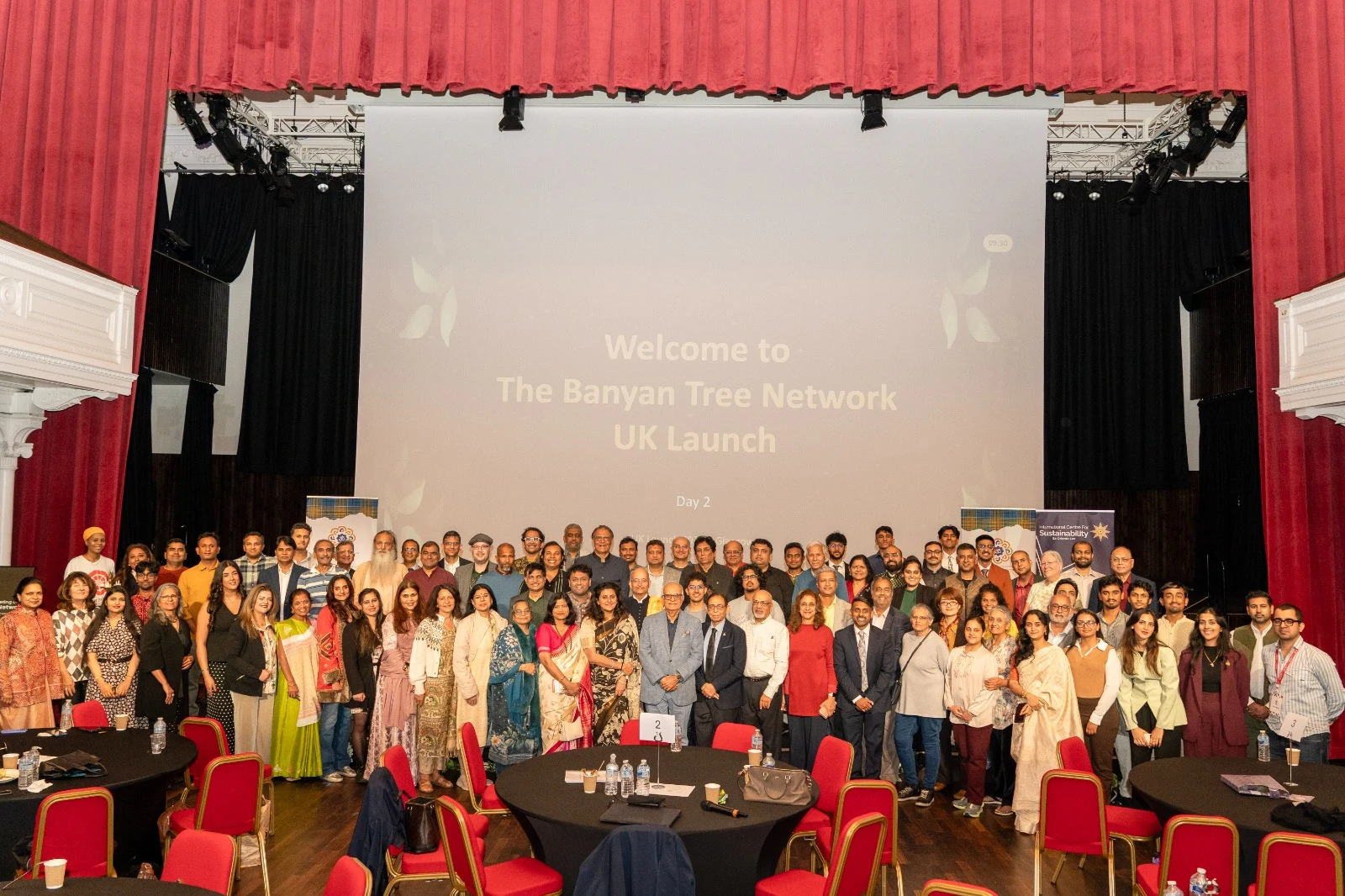
First international conference of Scottish Hindus brings together political leaders, thinkers, entrepreneurs and community representatives to strengthen advocacy and leadership
Glasgow /Paisley: The Hindu community in Scotland has taken a significant step towards strengthening civic engagement, advocacy and future leadership with the launch of the Banyan Tree Network in Paisley. The Banyan Tree Network and the Scottish Hindu Foundation jointly organised the two-day international conference at the historic Paisley Town Hall on August 29 and 30.
The organisers described the gathering as the first-ever international conference of the Hindu community in Scotland. Prominent political representatives from the UK and Scotland, global Hindu thinkers, young entrepreneurs and community leaders participated in the conference and discussed ways to build stronger institutions and increase the community’s presence in public life.
Focus Shifts from Reactive Engagement to Institution Building
The conference placed strong emphasis on moving beyond reactive responses to incidents and developing a proactive approach to civic and public engagement. Participants discussed policy-making, technology, media, temple management, youth leadership and the future of Hindu identity.
The Banyan Tree Network aims to create a global ecosystem in which independent organisations can exchange knowledge, resources and expertise while retaining their individual identities and autonomy. The initiative seeks to connect capable individuals and organisations and help them contribute more effectively to community development and advocacy.
Paisley’s Historic Connection with Indian Mandala Symbolism
A special historical presentation at Paisley Town Hall highlighted a connection between the famous Paisley Pattern and the more than 2,000-year-old Mandala symbolism associated with India.
The presentation drew attention to the historical and cultural links between Paisley and India. Provost of Renfrewshire Lorraine Cameron said the history of Paisley and its cultural connection with India should not be overlooked.
In his keynote address, West Scotland MSP Neil Bibby praised the contribution of the Hindu community to Scottish society. He also expressed gratitude to the Scottish Hindu Foundation for bringing the international gathering to Paisley.
Rajiv Malhotra Outlines Vision for Global Hindu Advocacy
Banyan Tree Network founder Rajiv Malhotra outlined his vision of creating a global ecosystem for Hindu advocacy. He said the network aims to establish a new “Gold Standard” for Hindu advocacy worldwide and ensure that capable individuals receive opportunities based on merit and their work.
The conference also highlighted the network’s rotational leadership model. Dr. Richa Sinha of the Scottish Hindu Foundation took over as President from Hari Kiran Vadlamani. According to the organisers, the network will adapt its leadership structure according to the requirements of individual countries.
British and Scottish Political Leaders Attend
The two-day conference brought together several prominent figures from British and Scottish public life. Those attending included Susan Murray, MP and a member of the British Parliament’s All-Party Parliamentary Group of British Hindus; former MSP Alison Thewliss; Councillor James Adams; Councillor Paul Edlin; and Susan Siegel of Interfaith Scotland.
The gathering provided a platform for Hindu community representatives, political leaders, thinkers and emerging young leaders to exchange ideas and discuss a long-term framework for institution building, leadership development and greater civic participation.
The launch of the Banyan Tree Network in Scotland marks a new phase in the organisers’ efforts to build stronger institutions and create a coordinated ecosystem for Hindu advocacy, leadership and community engagement in the UK and globally.
