
Supreme Court to deliver crucial verdict on Jan 5 in Umar Khalid, Sharjeel Imam bail pleas in Delhi riots UAPA case. Will the historic judgment end their 4+ year detention or uphold terror charges? Get full details here.
New Delhi: The Supreme Court of India is set to deliver an important judgment on January 5 on the bail pleas of former JNU student leader Umar Khalid and several others accused in the larger conspiracy case related to the 2020 Delhi riots. The verdict is being closely watched, as it comes after years of legal proceedings under the strict Unlawful Activities (Prevention) Act (UAPA) and raises wider questions about free speech, dissent, and the use of anti-terror laws in India.
The apex court has reserved its order after hearing detailed arguments from both sides. The case appears on the court’s cause list for pronouncement.
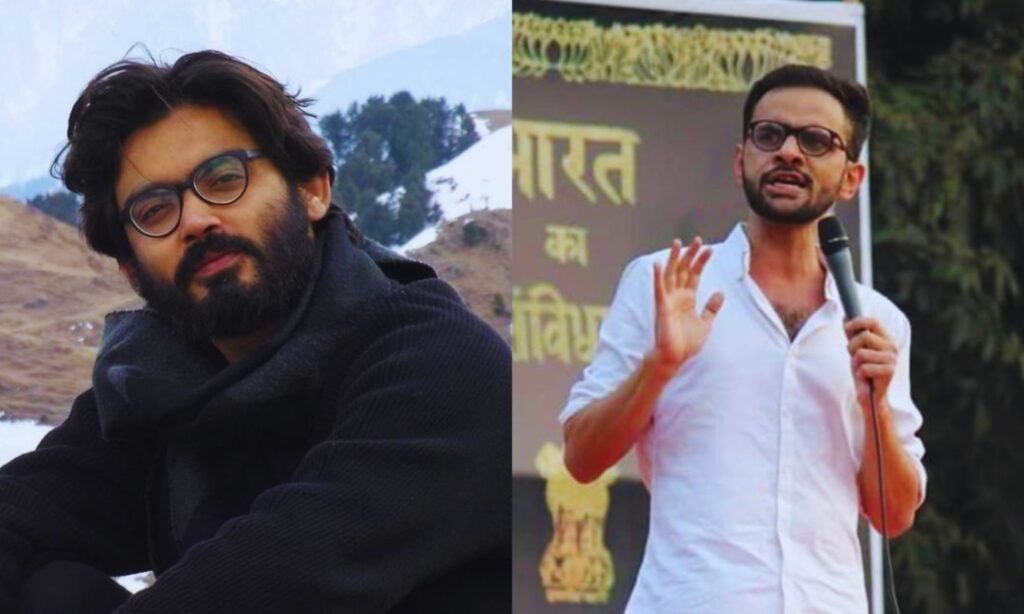
Those seeking bail include Umar Khalid, Sharjeel Imam, Gulfisha Fatima, Meeran Haider, Shifa-ur-Rehman, Shadab Ahmed, and Mohammad Saleem Khan. Most of them have been in jail for over four years, arguing that they have remained behind bars without the trial moving forward.
Background: What Happened During the Delhi Riots
The case originates from the communal violence that broke out in North-East Delhi in February 2020. The riots left 53 people dead and more than 700 injured. The violence occurred during widespread protests against the Citizenship (Amendment) Act (CAA) and the proposed National Register of Citizens (NRC).
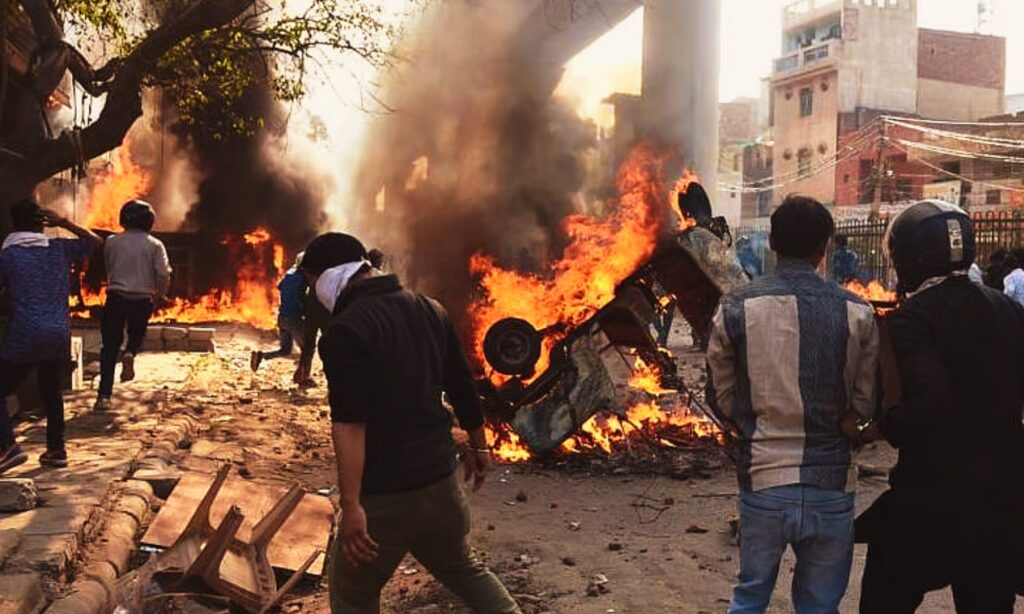
Delhi Police registered 751 FIRs in connection with the riots. Among these, FIR 59/2020 is the larger conspiracy case. According to the police, the accused planned and executed the violence to disrupt public order, particularly during the visit of then US President Donald Trump to India.
Allegations Against Umar Khalid and Other Accused
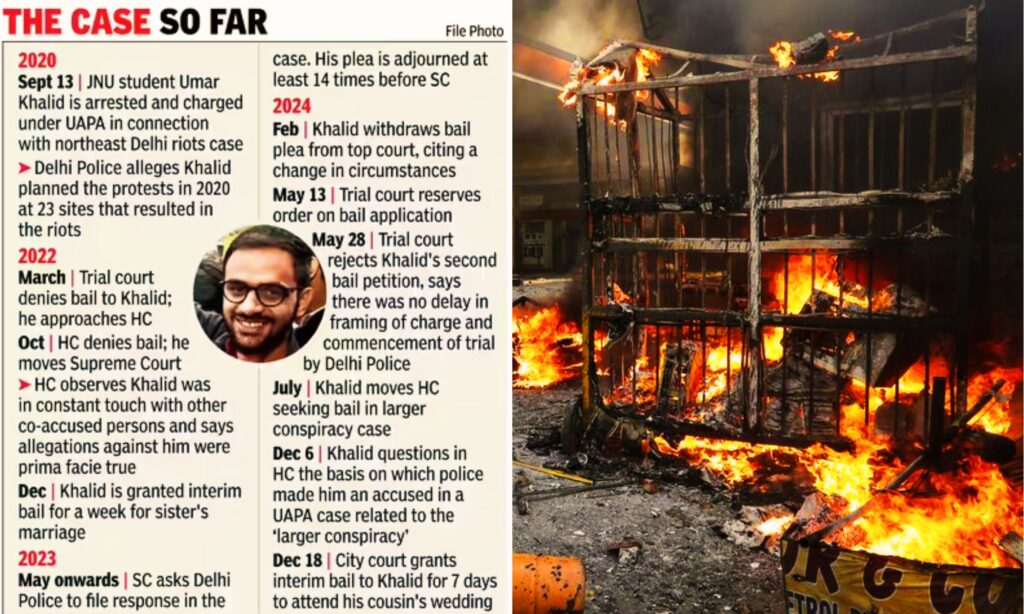
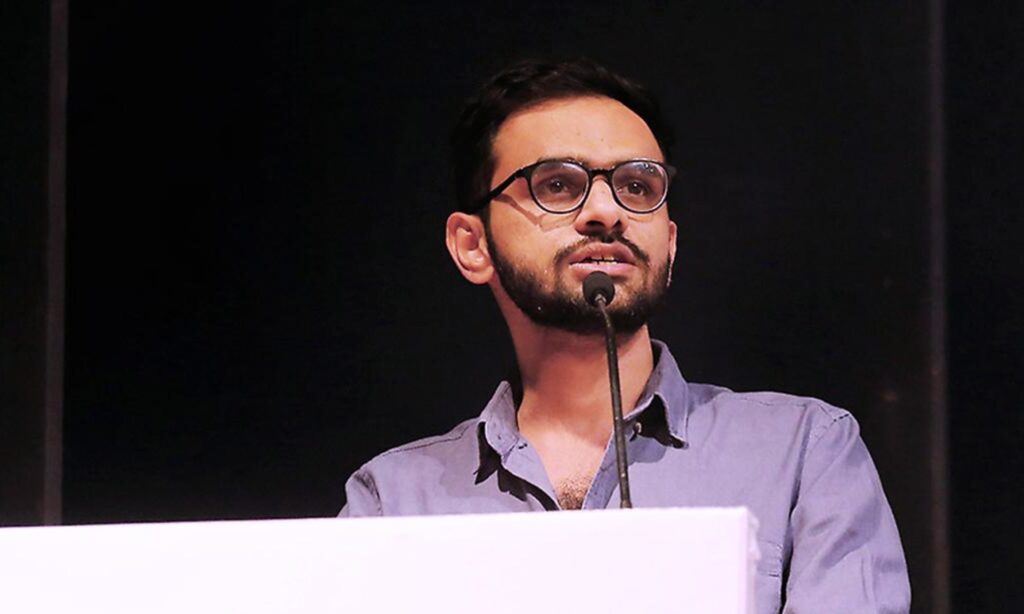
Police arrested Umar Khalid on September 13, 2020. Although he appears in only one FIR, they allege that he played a central role in planning the conspiracy through speeches, meetings, and coordination with others.
Police arrested Sharjeel Imam in January 2020, accusing him of delivering speeches that allegedly encouraged unrest. They also accuse Gulfisha Fatima and Shifa-ur-Rehman, former President of the Aligarh Muslim University Alumni Association, of organizing protests that later turned violent. The other accused face similar charges for mobilizing, coordinating, and planning the unrest.
Charges Under UAPA and IPC
Police have charged the accused under several sections of the UAPA, including Sections 13, 15, 16, 17, and 18, for unlawful activities, terrorist acts, conspiracy, and funding. They have also filed charges against them under the Indian Penal Code for criminal conspiracy, rioting, and unlawful assembly.
Bail Rejections and Legal Journey So Far
Courts have rejected the accused’s bail applications multiple times. In March 2022, a trial court denied Umar Khalid bail, and in October 2022, the Delhi High Court upheld the decision, citing prima facie evidence of a conspiracy.
Courts passed similar decisions in the cases of Sharjeel Imam and others. After these rejections, the accused approached the Supreme Court, but the apex court delayed hearings several times due to adjournments and bench changes.
On May 28, 2024, the Supreme Court reserved its judgment. However, the court later delisted the case at different stages because it reassigned benches, including one involving Justices A.S. Bopanna and P.K. Mishra.
Also Read on jabalpur today: Indore Water Crisis: MP Minister Faces Backlash After Calling Reporter’s Questions “Ghanta”, Issues Apology Later
Earlier Supreme Court Observations in Related Cases
In June 2021, the Supreme Court granted bail to co-accused Devangana Kalita, Natasha Narwal, and Asif Iqbal Tanha. In that ruling, the court observed that mere participation in protests does not amount to terrorism under UAPA. This observation has been repeatedly cited by the defense in the present case.
Arguments Presented by the Prosecution
The Delhi Police, representing the prosecution, has argued that the accused were part of a coordinated plan to incite violence. The police rely on speeches, social media messages, witness statements, and other material to establish a conspiracy.
The authorities have also pointed to the strict bail conditions under UAPA, which prevent courts from granting bail if a prima facie case exists against the accused.
Defense Stand: Prolonged Detention Without Trial
The defense strongly argues that authorities have jailed the accused for an excessively long period without even starting the trial. Umar Khalid alone has spent over 1,900 days in custody.
The defense argues that no direct evidence links the accused to acts of violence. They claim that authorities based the charges largely on the accused’s participation in protests and speeches and assert that the government is misusing UAPA to silence dissent and restrict democratic expression.
As the country waits for the Supreme Court’s decision, experts expect the verdict to shape future debates on civil liberties, national security, and the balance between state power and individual rights in India.
Also Read on jabalpur today: US Takes Control of Venezuela Oil After Maduro Arrest: Long-Term Effects on Global Prices and Supply