
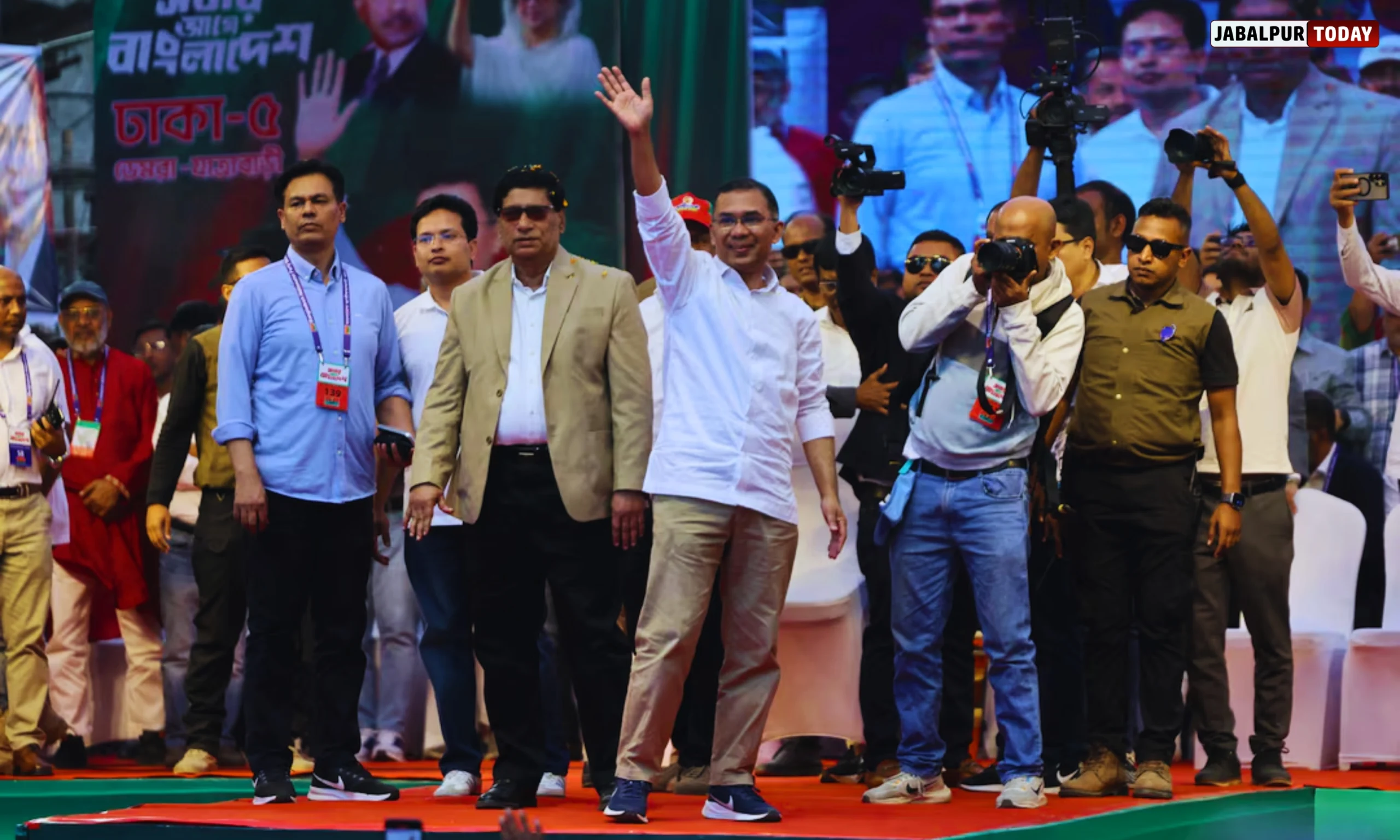
Tarique Rahman’s BNP secures a sweeping two-thirds majority in the first national vote since the 2024 uprising that ousted Sheikh Hasina. With 127 million voters, major constitutional reforms approved, and a strong mandate in parliament, Bangladesh enters a new political chapter focused on stability and reform.
Dhaka: The Bangladesh Nationalist Party (BNP), led by Tarique Rahman, has won a huge victory in Bangladesh’s 13th general election. This is a major political change for the country.
The election was held on February 12, 2026. It was the first national vote since the 2024 Gen Z-led protests that forced former Prime Minister Sheikh Hasina to resign and ended the rule of her party, the Awami League.
Unofficial results show that the BNP has won a two-thirds majority in parliament. This means Tarique Rahman is likely to become the next prime minister. It also ends the BNP’s 20 years in opposition and begins what many people believe could be a new period of democratic reform in Bangladesh.
How the Election Was Conducted
The election was supervised by an interim government led by Nobel Peace Prize winner Muhammad Yunus. Around 127 million eligible voters voted to elect 299 members of the Jatiya Sangsad (one seat’s voting was postponed).
At the same time, people also voted in a referendum on the July National Charter. This referendum proposed important constitutional changes.
While counting is still going on, official results are expected soon from the Election Commission. However, local media outlets such as Jamuna TV, Somoy TV, and Prothom Alo have already shared early results showing a clear BNP victory.
Background: Why This Election Is Important
This election is very important because it comes 18 months after the 2024 mass protests. These protests removed Sheikh Hasina from power after allegations of authoritarian rule, corruption, and election fraud. Hasina later went to India.
The Awami League was not allowed to contest this election, which completely changed the political situation.
The interim government under Yunus worked to restore order, introduce reforms, and ensure free and fair elections. International observers praised the voting process as mostly peaceful and credible.
Many voters described the atmosphere as joyful and “like Eid,” especially for those who were voting freely for the first time in many years. However, there were some isolated clashes, and media reports mentioned at least nine deaths linked to election-day violence.
There was also some delay in early result updates because the Election Commission’s website temporarily stopped working.
Main political groups in the election included:
• The BNP’s 10-party alliance
• The Jamaat-e-Islami-led 11-party alliance
• The National Citizen Party (NCP), formed by youth leaders from the 2024 protests
Opinion polls before the election predicted a strong win for the BNP, especially because many voters wanted economic improvement, judicial independence, and better foreign relations.
Key Results: Party-by-Party Breakdown
As of the morning of February 13, 2026, unofficial results show:
• The BNP coalition has won between 181 and 212 seats. Some channels reported 209 seats, while others reported around 212. Since 151 seats are needed for a simple majority, this gives the BNP a clear and strong mandate.
• The Jamaat-e-Islami alliance has won between 61 and 70 seats. Some reports suggest lower numbers (around 15 seats), as counting is still ongoing.
• The NCP has won 6 seats, entering parliament for the first time.
• Other small parties and independent candidates have won a few seats.
Tarique Rahman won from two constituencies: Dhaka-17 and Bogura-6. BNP leader Morshed Milton won from Bogra-7, which was previously held by former Prime Minister Khaleda Zia.
In Dhaka city, the BNP won 13 out of 20 seats. Jamaat leaders alleged vote tampering in some places, but no major irregularities have been officially confirmed.
Voter Turnout and Voting Process
The Election Commission reported a voter turnout of 60.69%. This shows strong public participation despite economic problems and recent political unrest. Polling stations had long lines, and the voting process was mostly peaceful compared to previous elections.
Voting ended at 4:30 PM local time, and counting began immediately. Voters used two ballots:
• White ballot for parliamentary elections
• Pink ballot for the referendum
This may have slightly slowed down the counting process.
Referendum on the July National Charter
The referendum on the July National Charter was approved by 72.9% of voters.
The proposed reforms include:
• Limiting the prime minister to two five-year terms
• Creating a two-house (bicameral) parliament
• Strengthening the independence of the judiciary and Election Commission
• Bringing back caretaker governments for future elections
These changes reflect public demand for stronger democratic systems and checks on power.
Tarique Rahman’s Rise to Power
Tarique Rahman, 60, is the son of former Prime Minister Khaleda Zia. He returned to Bangladesh in 2025 after 17 years in exile. He is set to become Bangladesh’s first male prime minister in 35 years. For decades, the country was led by two women — Sheikh Hasina and Khaleda Zia.
Rahman has promised to focus on clean governance, economic recovery, and inclusive development. Although he faced corruption allegations in the past, he said in his speech that he wants to work for the welfare of the country.
The BNP has decided not to hold large victory rallies to maintain peace and order. Other possible prime minister candidates, such as Jamaat’s Shafiqur Rahman, NCP’s Nahid Islam, and scholar Syed Rezaul Karim, could not match the BNP’s strong performance.
International Reactions
Indian Prime Minister Narendra Modi congratulated Tarique Rahman and said India is ready to support a democratic and progressive Bangladesh. India’s External Affairs Minister S. Jaishankar also sent good wishes.
Pakistan’s Prime Minister Shehbaz Sharif and the US Embassy in Dhaka also congratulated the BNP, calling it a historic win. The results may affect relations in South Asia, especially Bangladesh’s ties with India over border and trade issues, and with Myanmar regarding the Rohingya refugee crisis.
Challenges Ahead
The new government faces many challenges:
• High inflation
• Unemployment
• Economic recovery after the 2024 unrest
• Judicial and institutional reforms
Although the BNP has a strong majority, it will still face pressure from opposition parties like Jamaat and youth-led groups like the NCP.
This election marks the end of the long “two Begums” era of Bangladeshi politics and shows the strong influence of the 2024 youth movement.
As the Election Commission prepares to confirm the final results, Bangladesh stands at an important turning point. Many people hope that Tarique Rahman’s leadership will bring stability, reform, and long-term progress to the country.
