
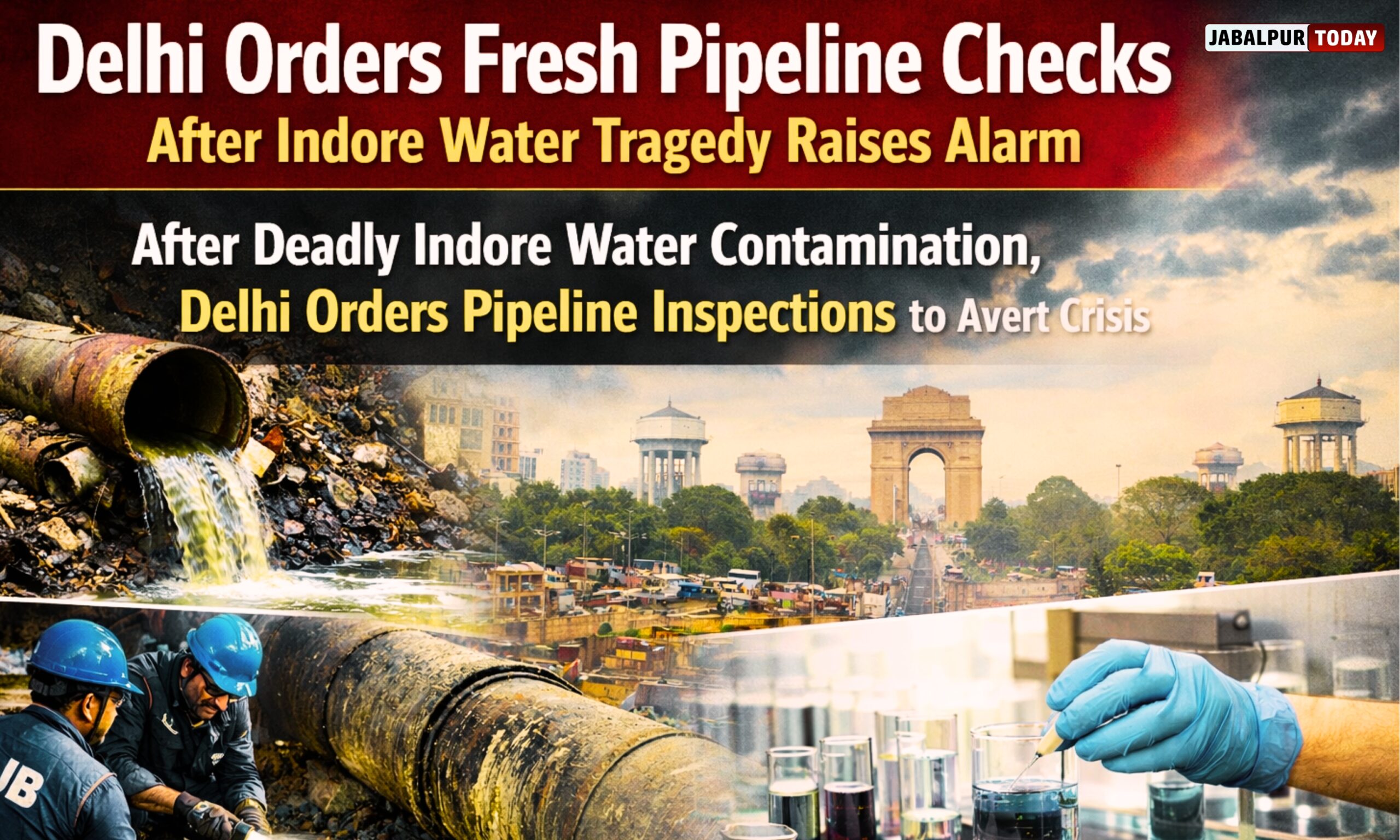
After deadly water contamination deaths in Indore, Delhi has gone on alert. Water Minister Parvesh Verma has directed the Delhi Jal Board to intensify pipeline inspections. The move aims to prevent sewage from mixing with drinking water and to ensure safe water supply across the capital.
New Delhi: After a deadly drinking water contamination in Indore, Delhi Water Minister Parvesh Sahib Singh Verma directed the Delhi Jal Board (DJB) to increase inspections of water pipelines across the capital. The aim is to prevent a similar tragedy in Delhi. Concerns over ageing infrastructure and water quality have been rising for some time. The Indore incident in Bhagirathpura caused multiple deaths and serious illnesses. It exposed major lapses in monitoring and response.
What Happened in Indore?
The crisis in Indore began when a leak appeared in the main Narmada drinking water pipeline near a police check post. Officials later discovered that sewage from a toilet above the pipeline had seeped into the water supply. This contamination made the drinking water unsafe.
Residents started falling ill in late December 2025, complaining of diarrhoea, vomiting, and severe dehydration. According to official and local estimates, between 7 and 14 people lost their lives, including a six-month-old infant.
By January 2, 2026, hospitals had admitted at least 201 people, including 32 patients in ICUs. Authorities delayed corrective action despite repeated complaints from residents about foul-smelling and dirty water, which worsened the outbreak.
Madhya Pradesh Government’s Emergency Measures
In response to public outrage, the Madhya Pradesh government launched emergency repairs. Workers fixed around 60% of the damaged pipeline section and issued tenders for the remaining repairs. By January 2, the pipeline resumed supplying clean water, and authorities advised residents to boil it before use.
Other measures included:
• Testing water samples and increasing chlorination
• Distributing packaged drinking water
• Deploying 4 ambulances, 14 doctors, 24 health workers, and specialists from MY Hospital
Chief Minister Mohan Yadav announced ₹2 lakh compensation for families of confirmed victims and free treatment in both government and private hospitals.
Officials Suspended, Inquiry Ordered
Disciplinary action followed quickly:
Authorities suspended Zonal Officer Shaligram Sitole and Assistant Engineer Yogesh Joshi. They also removed PHE Sub-Engineer Shubham Srivastava from service.
IAS officer Navjeevan Panwar, along with Superintending Engineer Pradeep Nigam and medical expert Dr. Shailesh Rai, formed a three-member inquiry committee.
The state government also announced plans to issue a statewide Standard Operating Procedure (SOP) to prevent similar incidents. Meanwhile, the Public Health Engineering Department is conducting a technical audit, and the State Pollution Control Board is assessing environmental risks.
Courts Step In
The Madhya Pradesh High Court’s Indore Bench took suo motu cognisance of the incident based on media reports and a PIL. It has sought a detailed status report by January 10, 2026, covering treatment, compensation, and responsibility.
Other actions include:
• Legal aid outreach by the Indore District Legal Services Authority
• A report sought by the State Human Rights Commission
• A judicial inquiry by the Indore Collectorate
Authorities may take legal action under the Water (Prevention and Control of Pollution) Act, 1974, and IPC Sections 269 and 270. As of January 3, no one had registered an FIR.
Why Delhi Is on Alert ?
The Indore tragedy has exposed serious weaknesses in Delhi’s water testing system. Out of more than 25 public water laboratories in the capital, only two are NABL-accredited—Haiderpur and Wazirabad. Several DJB labs lost accreditation in October 2025.
Delhi currently tests 300–400 water samples daily, far below the 1,000 samples required for a population of around 20 million. Between December 1 and 18, 2025, 100 out of 7,129 samples failed quality tests.
Residents in areas like Pandav Nagar complain of dirty water caused by old pipelines and sewer blockages, forcing many to rely on RO systems or bottled water. These issues persist despite earlier election promises.
Expert Warnings and Delhi’s Preventive Order
Environmental expert Anil Gupta warned that water pipelines running close to sewer lines pose a serious risk if damaged. He stressed the importance of strict monitoring and NABL-accredited testing to ensure credibility and accountability.
Acting on these concerns, Minister Parvesh Verma has ordered:
• Regular and intensified inspection of water pipelines
• Immediate repair of leaks and damage
• Special focus on areas where sewer and drinking water lines run close together
• Round-the-clock response teams and faster complaint redressal
• Replacement of old pipelines
Verma stated that the government will ensure clean drinking water and actively prevent any repeat of the Indore tragedy.
The Indore incident has once again shown how ageing urban infrastructure, weak monitoring, and delayed responses create serious risks. Experts warn that poor testing standards threaten public safety and emphasize that authorities must treat water safety as a top public health priority.
As Indore slowly stabilizes, Delhi’s preventive push reflects a wider need for stronger oversight, transparent testing, and rapid action to protect citizens from avoidable disasters.
Also Read: Nitin Naveen Engages with Journalists in New Delhi, Honoured with Traditional Mithila Paag

Mansi Sharma is a journalist covering Global Affairs, and wellness, known for turning complex ideas into sharp, engaging narratives. Her work is driven by curiosity, depth, and a constant urge to question and explore. When she’s not writing, you’ll often find her diving into new ideas—preferably with a cup of coffee in hand, one sip at a time.