

Early symptoms mimic viral infections, but the disease progresses rapidly to seizures, confusion, and death.
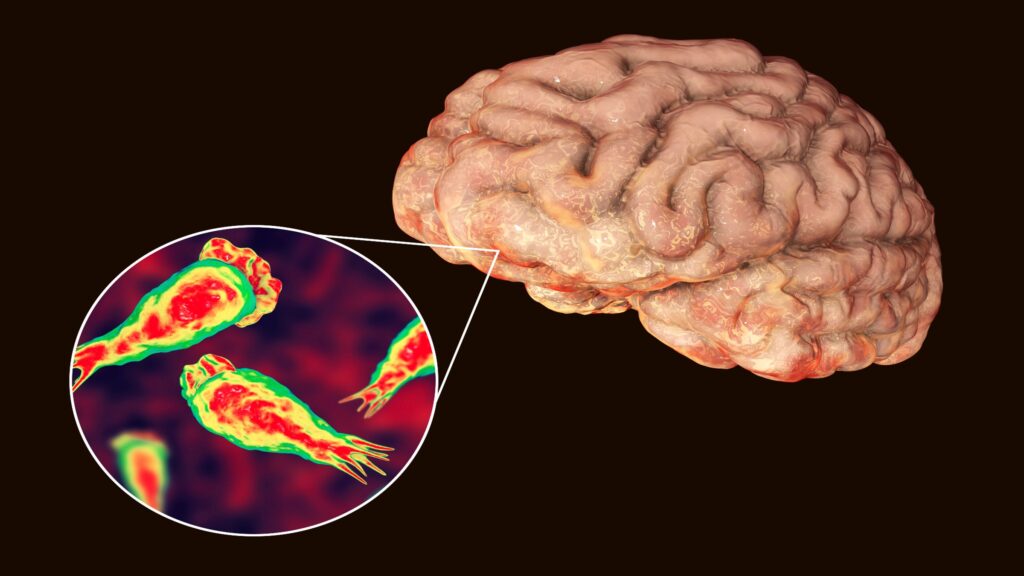
Kerala on High Alert as Deadly ‘Brain-Eating Amoeba’ Cases Double its, has been put on high alert after a worrying rise in infections caused by a rare and deadly water-borne organism commonly known as the “brain-eating amoeba.” The state has so far reported 72 infections and 19 deaths in 2025, with nine deaths recorded in September alone.
The infection, known medically as primary amoebic meningoencephalitis (PAM), is caused by Naegleria fowleri—a microscopic amoeba that lives in warm freshwater bodies like lakes, rivers, and poorly maintained swimming pools. The organism earns its terrifying nickname because once it enters the body, usually through the nose, it travels to the brain and destroys brain tissue.
Rising Concern in Kerala
What makes this year’s situation alarming is that cases are spread across the state, unlike previous years when they were concentrated in certain pockets. The growing number of infections has prompted intensified surveillance and mass testing to detect and treat suspected cases early.
Health officials have confirmed that 19 people have lost their lives so far, out of the 72 confirmed cases. September alone saw 24 infections and nine fatalities, highlighting how quickly the situation has escalated in recent weeks.
Last year, Kerala had reported 36 infections and nine deaths. This year’s numbers have already doubled, raising serious concerns about the spread of this microscopic but lethal pathogen.
Why This Amoeba is So Dangerous
Though infections are considered very rare, Naegleria fowleri is almost always fatal once it reaches the brain. Experts estimate that more than 95% of cases result in death. The amoeba does not spread from person to person; instead, it infects individuals when contaminated water enters the nose, often during swimming or bathing in warm freshwater. From there, it travels through the nasal passages to the brain, where it causes rapid and devastating damage.
The condition progresses swiftly. Early symptoms include severe headache, fever, nausea, and vomiting. These quickly escalate into seizures, hallucinations, confusion, altered mental status, and coma. Death usually occurs within days of symptom onset, making early detection critical—though treatment remains extremely challenging.
Symptoms and Spread
Health experts warn that the amoeba thrives in warm and stagnant waters. It cannot survive in properly treated and chlorinated pools, but under-maintained swimming areas, natural ponds, and rivers during hot months become potential breeding grounds. Symptoms often appear within 1 to 12 days after exposure and can easily be mistaken for common viral infections in the early stages. This delay in accurate diagnosis contributes to the high fatality rate.
Global Cases and Kerala’s Challenge
While cases of PAM are reported worldwide, India has seen an unusual spike in recent years, with Kerala at the center of concern. Since the first documented case in the 1960s, fewer than 500 cases have been recorded globally. Yet the survival rate remains dismally low. In Kerala, the challenge lies not just in treating infections but also in preventing exposure. As the amoeba is naturally present in many freshwater sources, avoiding contaminated water is the only sure way to stay safe.
Preventive Measures
Health authorities are urging people to be cautious, especially during the current season:
- Avoid swimming or bathing in warm, stagnant freshwater bodies.
- Use only treated and chlorinated water for pools and recreational activities.
- Keep water out of your nose—using nose clips or keeping your head above water can help reduce risk.
- Ensure tanks and reservoirs are cleaned and disinfected regularly.
- Seek medical help immediately if severe headaches, fever, or neurological symptoms appear after swimming or water exposure.
The Road Ahead
The surge of “brain-eating amoeba” cases in Kerala has set alarm bells ringing for both the public and the healthcare system. While the infection remains rare, its nearly 100% fatality rate means every case is critical. Officials emphasize that there is no outbreak cluster so far, but the scattered rise in cases indicates the need for greater awareness and preventive action. With no foolproof cure available, protecting oneself from exposure is currently the most effective defense. Kerala’s health system continues to monitor the situation closely, but the message for the public is clear: caution in water use, strict hygiene, and immediate reporting of symptoms could be life-saving.
Also Read : Ramalaya Foundation hosts ‘Eternal Krishna: Dharma, Devotion and Destiny in a Rising World’
