
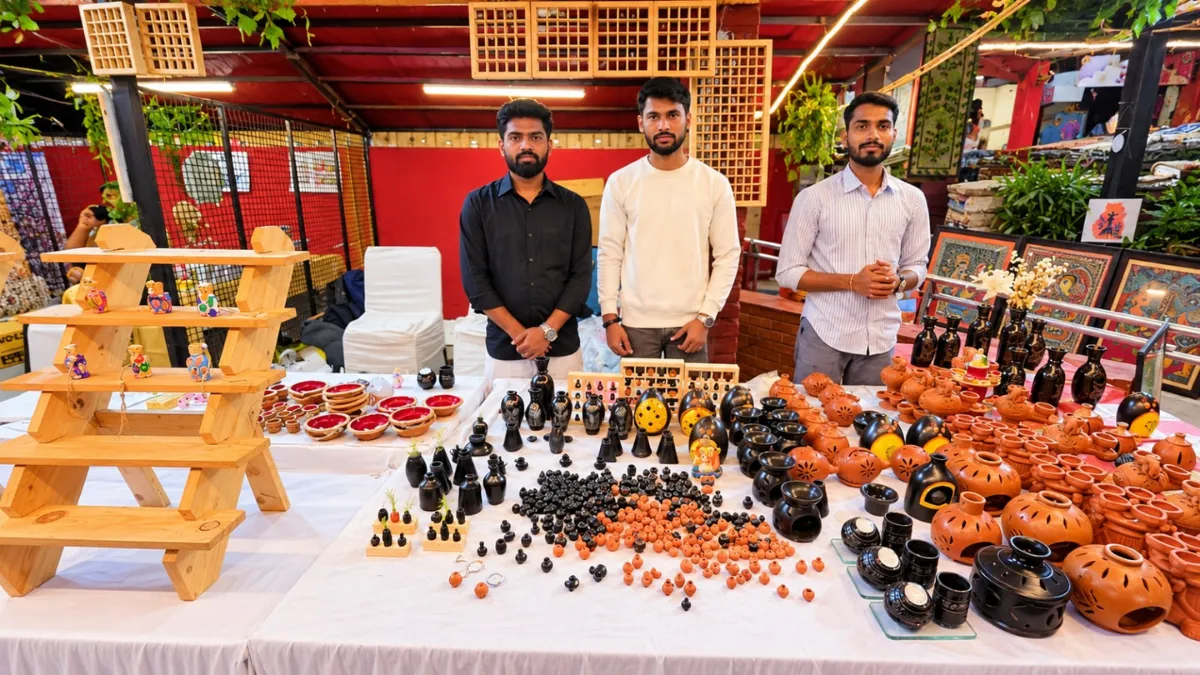
Artisans Ankit Prajapati and Satyam Gupta showcase GI-tagged Nizamabad black pottery at Delhi’s Shilp Samagam Mela 2026
New Delhi: Traditional craftsmanship is finding new admirers at the Shilp Samagam Mela 2026 in Delhi, where artisans from Nizamabad, Azamgarh, are showcasing their famous black pottery. The GI-tagged craft is attracting visitors at Dilli Haat, INA, with tea light holders, small flower pots and Deepawali diyas emerging as popular products.
The 15-day exhibition, organised by the Ministry of Social Justice and Empowerment, runs from November 1 to 15. It brings artisans from different communities together and helps them connect with customers beyond their local markets.
At the Prakash Chowk stall, third-generation artisan Ankit Prajapati and fellow artisan Satyam Gupta are presenting the traditional craft through a collection of handmade products.
How Nizamabad’s Black Pottery Gets Its Unique Finish
Nizamabad black pottery is known for its dark surface and silver-coloured decorative patterns. Artisans use locally sourced clay to shape different products before creating detailed designs on them.
They fire the pottery in closed kilns using rice husks or dung cakes. This process gives the finished products their distinctive black appearance, after which artisans add silver-like patterns.
The Prajapati community has practised this craft for generations. Nizamabad black pottery received its GI tag in December 2015 and is also recognised under Uttar Pradesh’s ODOP initiative.
Third-Generation Artisan Carries Forward Family Legacy
Ankit Prajapati represents the third generation of his family involved in black pottery. His grandfather, late Rajendra Prasad Prajapati, contributed to bringing recognition to the craft, while his father, Shivratan Prajapati, continued the family tradition.
At the Delhi exhibition, Ankit and Satyam are presenting both traditional pottery and products designed for modern consumers.
Their collection includes jewellery, decorative pieces, clock stands and household accessories. Tea light holders, miniature flower pots and Deepawali diyas have emerged as some of the most popular items.
Ankit said, “Black pottery is not just a craft for me; it is my identity and my family’s heritage. It gives me great pride to carry forward the work of my grandfather and father. Events like Shilp Samagam Mela help traditional artisans reach more people and keep this craft alive.”
Satyam Gupta said that visitors have shown strong interest in the smaller decorative products. He believes their popularity demonstrates that traditional handicrafts continue to attract urban buyers.
Visitors from India and Abroad Appreciate the Craft
Dr. Nity Sharma praised the intricate designs and artistic finish of Nizamabad pottery. She said such exhibitions help traditional art forms gain wider recognition.
Manoj Sharma appreciated how the artisans are adapting their products to modern preferences without losing their cultural identity. He also highlighted the importance of such platforms in supporting skilled craftspeople.
International visitor Guille Marrero from Spain was mesmerised by the craftsmanship of Ankit and Satyam.
Government Initiative Connects Artisans with New Markets
The Ministry of Social Justice and Empowerment has provided participating artisans with free stalls and travel support at the mela. The initiative allows them to interact directly with customers, showcase their skills and explore new business opportunities.
The growing response to Nizamabad black pottery at Dilli Haat demonstrates how traditional artisans can preserve their heritage while adapting to modern market demand.