
Know Why India Ranked 100th in Global Hunger Index 2026 & How Top Countries Secured Their Positions
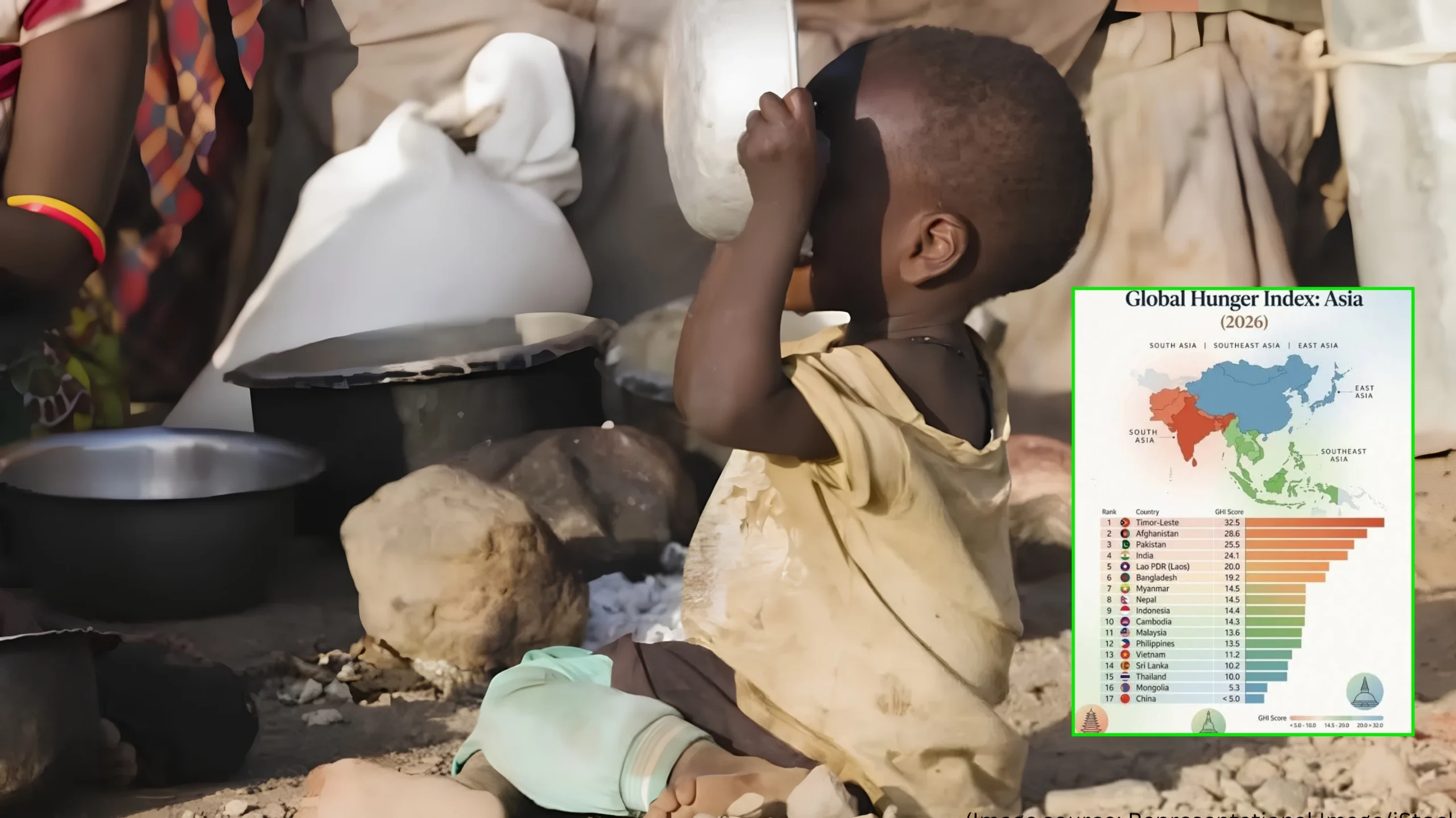
New Delhi: The Global Hunger Index (GHI) 2026 has once again put India under the spotlight for its hunger and nutrition levels. India ranks 100th out of 122 countries, with a score of 24.1. The index places the country in the “serious” hunger category. This ranking raises an important question: Why does India continue to struggle with hunger when it ranks among the world’s largest food producers and runs some of the biggest free-food programmes?
People who want to understand the index, prepare for exams, study public policy or learn more about global hunger often ask the same questions. Which countries rank at the top, and why? Why does India continue to rank so low? Is the ranking fair? What causes hunger in India? This article answers these questions and explains what India can do to improve its nutrition levels.
What Is the Global Hunger Index, and How Does It Calculate Hunger?
The Irish non-governmental organisation Concern Worldwide and the German organisation Welthungerhilfe publish the Global Hunger Index every year with academic partners. The index measures and tracks hunger at global, regional and national levels.
The GHI uses four indicators, based mainly on data from United Nations agencies and international organisations, including the Food and Agriculture Organization (FAO), UNICEF, the World Health Organization (WHO), the World Bank and the Inter-agency Group for Child Mortality Estimation.
These four indicators are:
- Undernourishment (one-third of the score): The percentage of people who do not consume enough calories.
- Child stunting (one-sixth of the score): The percentage of children under five who have a low height for their age. This indicates long-term undernutrition.
- Child wasting (one-sixth of the score): The percentage of children under five who have a low weight for their height. This indicates acute undernutrition.
- Under-five mortality (one-third of the score): The rate at which children die before reaching five years of age.
The index assigns scores from 0 to 100. A score of 0 represents no hunger, while 100 represents the worst level of hunger.
The GHI places countries in five categories:
- Low: 9.9 or below
- Moderate: 10.0–19.9
- Serious: 20.0–34.9
- Alarming: 35.0–49.9
- Extremely alarming: 50 or above
Readers should not compare rankings and scores from different annual editions without considering changes in data and methodology. However, long-term trends can help explain how hunger levels have changed.
In 2026, the global GHI score stood at 18.1, which falls in the moderate category. The world made rapid progress against hunger after 2000, but that progress slowed considerably between 2016 and 2018 and has largely stalled since then. Armed conflicts, extreme weather, economic shocks and the lasting effects of the COVID-19 pandemic have contributed to this slowdown.
Current projections suggest that dozens of countries will fail to reach even the low-hunger category by 2030.
India’s Latest Numbers: Rank, Score and the Four Indicators
India scored 24.1 in the 2026 Global Hunger Index and ranked 100th among 122 countries with sufficient data.
The country has made progress over the past two decades. Its score stood at 38.1 around 2000 and 37.0 in 2006. However, India has made only modest progress since 2018, when its score stood at 25.8.
South Asia recorded a regional score of approximately 23.5, which also falls in the serious category and remains above the global average.
The four indicators that contribute to India’s GHI score show the following picture:
- Undernourishment: 9.8%
- Child stunting: 29.3%, down significantly from 50% in 2000
- Child wasting: 19.0%, among the highest rates worldwide and the highest in South Asia
- Under-five mortality: 2.7%
India has reduced child stunting and under-five mortality considerably over the past two decades. However, child wasting remains a major problem. This indicator plays a significant role in keeping India in the serious hunger category and contributes to its lower ranking compared with several neighbouring countries.
Which Countries Top the Index, and Why Do They Perform Better?
The GHI groups countries with scores below 5 together under ranks 1 to 24 because their hunger levels differ very little. Countries that typically appear in this group include China, Chile, Costa Rica, Belarus, Armenia, Bulgaria and Bosnia and Herzegovina, along with several other countries in East Asia, Europe and Latin America. Brazil also falls in the low-hunger range.
These countries have achieved better results through a combination of economic growth, public health services and effective social policies.
Several factors explain their success:
- Stronger and more equal economic growth: Economic growth has improved household incomes and helped more families afford nutritious food.
- Better public health services: These countries provide wider access to maternal healthcare and child nutrition services.
- Clean water and sanitation: Better hygiene and sanitation reduce infections that prevent the body from absorbing nutrients properly.
- Diverse food systems: Their agricultural and food systems supply more than calories. They also provide protein, vitamins, minerals and a wider variety of foods.
- Women’s education and healthcare: Lower rates of early marriage and teenage pregnancy, better education for girls and stronger social support help improve maternal and child nutrition.
- Stable governments and effective institutions: Strong institutions help governments implement welfare programmes on a large scale and reduce the loss of benefits during delivery.
China provides a well-known example of long-term progress against undernutrition. The country combined agricultural reforms, poverty reduction, healthcare investments and targeted nutrition programmes to reduce hunger over several decades.
The Countries Facing the Worst Hunger: Conflict, Climate and Collapse
Countries in the alarming category face some of the world’s most severe hunger crises. Recent GHI lists have included Somalia, South Sudan, the Democratic Republic of the Congo, Madagascar, Haiti, Chad and Yemen. Somalia has recorded scores in the mid-to-high 40s in recent assessments.
These countries face prolonged conflicts, weak or collapsing state institutions, repeated climate disasters, displacement and damaged agricultural systems. Droughts, floods and cyclones destroy crops, disrupt food supplies and reduce people’s ability to earn a living.
Many of these countries also lack reliable healthcare services and effective systems to distribute food.
In such situations, governments cannot solve hunger through nutrition policies alone. They must also address security, political stability, governance and the collapse of essential public services.
Why India Remains in the Serious Hunger Category
India produces enough food overall, yet millions of people still struggle to access adequate nutrition. Child undernutrition, particularly wasting, remains unacceptably high.
The problem goes beyond a shortage of food grains. Several long-term social, economic, health and environmental factors contribute to India’s hunger and nutrition challenges.
1. Poor Maternal Nutrition and the Cycle of Undernutrition
Many Indian women enter pregnancy with poor nutritional health, anaemia or low body weight. When women do not gain enough weight during pregnancy, they face a greater risk of giving birth to babies with low birth weight.
These babies may already face nutritional disadvantages from birth, increasing their risk of wasting and other health problems.
This cycle passes nutritional disadvantages from one generation to the next. Maternal nutrition therefore plays an important role in explaining India’s high child wasting rates, including cases that appear very early in life.
2. Poor Sanitation and Repeated Infections
India has reduced open defecation significantly, but many communities still lack adequate sanitation, clean water and proper hygiene facilities.
These conditions expose children to repeated infections, including diarrhoea. Repeated infections can prevent children’s bodies from absorbing nutrients properly. A condition known as environmental enteropathy can also damage the intestinal lining and reduce nutrient absorption.
As a result, children may remain undernourished even when their families have access to food.
3. Infant and Young-Child Feeding Practices
Many children do not receive adequate nutrition during the first years of life.
Some mothers face difficulties starting breastfeeding soon after birth or maintaining exclusive breastfeeding during the recommended first six months. After six months, children also need suitable complementary foods alongside continued breastfeeding.
However, many families struggle to provide meals with enough variety, protein, healthy fats, vitamins and minerals. Poor feeding practices during this critical period can affect children’s growth and development.
4. Poverty, Inequality and Limited Access to Nutritious Food
Government programmes such as the Public Distribution System (PDS) provide free or subsidised food grains to millions of people. However, access to rice and wheat alone does not guarantee a balanced diet.
Families also need pulses, protein-rich foods, healthy fats, fruits, vegetables and essential micronutrients. Many low-income households cannot afford these foods regularly.
People in remote areas and marginalised communities may also face difficulties accessing healthcare, nutrition services and diverse food supplies.
5. Micronutrient Deficiencies and Limited Dietary Variety
Consuming enough calories does not automatically mean that a person receives adequate nutrition.
Many people experience hidden hunger, a condition in which the body lacks essential vitamins and minerals despite receiving enough food energy.
Deficiencies in iron, vitamin A, zinc and other micronutrients can affect growth, immunity and overall health. Diets that rely heavily on a few staple foods often fail to provide all the nutrients the body needs.
6. Climate Change and Agricultural Stress
Unpredictable monsoons, rising temperatures and extreme weather events affect farmers and food supplies.
Small farmers often face the greatest risks because they have fewer financial resources to recover from crop losses. Climate-related disruptions can reduce household incomes and make nutritious foods less available or more expensive in local markets.
These changes can affect both food security and the quality of people’s diets.
7. Gaps in Programme Implementation
India runs several large-scale food security, health and nutrition programmes. However, their results depend on how effectively governments implement them.
The quality of services, delivery of benefits to the last mile, coordination between health and nutrition departments, access to sanitation and the use of timely data vary across states.
These differences can prevent some communities from receiving the full benefits of government programmes.
India’s neighbours, including Sri Lanka, Nepal and Bangladesh, have generally recorded better GHI scores and lower child wasting rates in several assessments. Some have achieved these results despite lower per-capita incomes than India. Their experiences show that policy priorities, public health services and effective implementation can make a major difference.
The Child Wasting Problem: Why India Struggles to Reduce It
Child wasting, at approximately 19%, remains one of the biggest obstacles to India’s progress in the GHI.
Stunting has declined considerably over the years, but wasting has fluctuated and remains close to historically high levels.
Research repeatedly points to the role of maternal health and nutrition. Mothers who have low body weight, poor nutrition or other health problems may give birth to babies who already face a higher risk of undernutrition.
Infections during early childhood and inadequate complementary feeding can make the problem worse. When children do not receive enough nutrients during their first years, they face greater risks to their growth and health.
This is why governments and healthcare providers cannot focus only on treating undernourished children after birth. They must also improve nutrition among adolescent girls and women before and during pregnancy.
Treating the child without addressing these deeper causes is like putting a bandage on a much larger wound.
Food Surplus but Empty Plates: India’s Great Paradox
India ranks among the world’s leading producers of rice, wheat, milk, fruits and vegetables. The country also runs extensive food distribution and nutrition programmes.
The National Food Security Act covers roughly two-thirds of India’s population with subsidised food grains. The government also provided additional free rations to hundreds of millions of people through the Pradhan Mantri Garib Kalyan Anna Yojana (PMGKAY) during and after the COVID-19 pandemic.
Government programmes also provide meals and supplementary nutrition to millions of children through schools and Anganwadi centres.
Despite these efforts, the Global Hunger Index and India’s National Family Health Survey (NFHS) continue to show high levels of child undernutrition.
This gap highlights a central problem: India needs to turn food availability into better nutrition outcomes.
Producing and distributing enough grain cannot solve every nutrition problem. Families also need diverse diets, mothers need proper healthcare, children need safe water and sanitation, and public programmes must reach people effectively.
India’s challenge is therefore not simply to produce more food. It must also ensure that people can access the right foods and receive adequate nutrition at every stage of life.
Government Schemes and the Debate Over the GHI Methodology
Successive Indian governments have criticised the Global Hunger Index and questioned whether it accurately reflects the country’s hunger situation.
Their main objections include the following:
- Three of the four indicators focus on children: The government argues that these indicators do not measure hunger across the entire population directly.
- Concerns about undernourishment estimates: The GHI uses FAO estimates based on statistical modelling. The Indian government argues that these estimates rely on limited survey data and may not fully reflect the impact of India’s large food distribution programmes.
- Concerns about rankings: The government argues that the index gives insufficient credit to India’s extensive welfare programmes and that people often use the rankings to present a misleading picture of the country’s progress.
The organisations that publish the GHI defend their methodology on several grounds.
They argue that the index uses internationally standardised indicators, draws on recognised UN data sources and supports monitoring of global development goals. They also point out that child undernutrition and child mortality reveal serious consequences of hunger and poor nutrition.
The publishers further caution readers against making simple year-to-year comparisons. India’s own NFHS data also contribute to the figures for child stunting and wasting.
Both sides raise important points, but neither argument tells the entire story.
The GHI has limitations, yet it uses a transparent set of indicators to compare hunger and undernutrition. India has expanded its food and welfare programmes considerably, but the continued prevalence of stunting and wasting in national surveys shows that food distribution alone has not solved the country’s nutrition challenges.
The debate should therefore focus not only on India’s rank but also on the reasons behind its nutrition outcomes and the steps needed to improve them.
What Can India Do to Improve Its Hunger Ranking?
Countries that have moved out of the serious hunger category or reduced hunger rapidly have combined several measures rather than relying on a single programme.
Their approaches offer useful lessons for India.
1. Improve Maternal Nutrition
India must invest more in the nutrition and healthcare of adolescent girls and women before, during and after pregnancy.
Better access to nutritious food, antenatal care and support for healthy pregnancies can reduce the risk of low birth weight and improve children’s nutritional health. Governments must also address teenage pregnancy and help girls continue their education.
2. Strengthen Sanitation and Hygiene
India must continue expanding access to safe drinking water, toilets and proper hygiene facilities.
These services can reduce diarrhoea and other infections that interfere with nutrient absorption. Governments must also ensure that communities use and maintain sanitation facilities effectively.
3. Make Diets More Diverse
India needs food systems that supply a wider range of nutritious foods, including millets, pulses, fortified foods and other sources of protein.
Depending on local diets and cultural preferences, families can also benefit from nutrient-rich animal-source foods. Government food programmes should pay greater attention to dietary diversity instead of focusing mainly on staple grains.
4. Improve Coordination Between Government Programmes
Health, nutrition, sanitation and social protection programmes must work together.
Better coordination can help governments identify vulnerable families, address multiple causes of undernutrition and deliver services more effectively. Strong monitoring systems and timely data can also help officials identify gaps and respond quickly.
5. Support Women’s Education and Economic Empowerment
Educated and economically empowered women are better positioned to make informed decisions about healthcare, nutrition and family planning.
Governments must expand opportunities for girls and women to access education, earn an income and receive healthcare. These changes can improve nutrition outcomes across generations.
For India, the priorities are clear. The government must strengthen Poshan Abhiyaan 2.0, give greater attention to maternal nutrition, improve the quality of services at Anganwadi centres and school meal programmes, expand access to diverse foods through the PDS, continue improving sanitation and treat child wasting as an urgent public health problem.
India must focus on both prevention and treatment to reduce wasting sustainably.
Moving From Calories to True Nutrition Security
The Global Hunger Index 2026 does not identify India as the world’s hungriest country. However, it highlights a serious gap between India’s economic size, food production capacity, welfare programmes and the nutritional health of its youngest citizens.
Tens of millions of children face stunting or wasting. These figures represent a serious human challenge and threaten India’s ability to benefit fully from its young population.
India has made progress over the long term. Its GHI score has fallen considerably since 2000, child stunting has declined and under-five mortality has improved. However, child wasting and the maternal, social and environmental conditions that contribute to it remain major challenges.
The country must now move beyond food security, which focuses on ensuring enough food, towards nutrition security, which ensures that people receive the right nutrients at the right time.
This approach requires special attention to mothers, infants and young children. India must strengthen nutrition services, improve access to diverse diets, prevent infections and ensure that government programmes deliver results in every community.
The country has demonstrated its ability to implement large public programmes, from vaccination campaigns to digital public infrastructure. It must now apply the same level of commitment to improving nutrition.
That is the central message of the Global Hunger Index: India has made progress, but it must turn its food production and welfare efforts into better health and nutrition outcomes. Policymakers, students and readers must continue asking the difficult questions until the country’s nutrition indicators reflect its full potential.

Mansi Sharma is a journalist covering Global Affairs, and wellness, known for turning complex ideas into sharp, engaging narratives. Her work is driven by curiosity, depth, and a constant urge to question and explore. When she’s not writing, you’ll often find her diving into new ideas—preferably with a cup of coffee in hand, one sip at a time.