
Social media messages claimed a girl was raped and later died by suicide while the university tried to cover it up; police call the claims unverified and deny any formal complaint
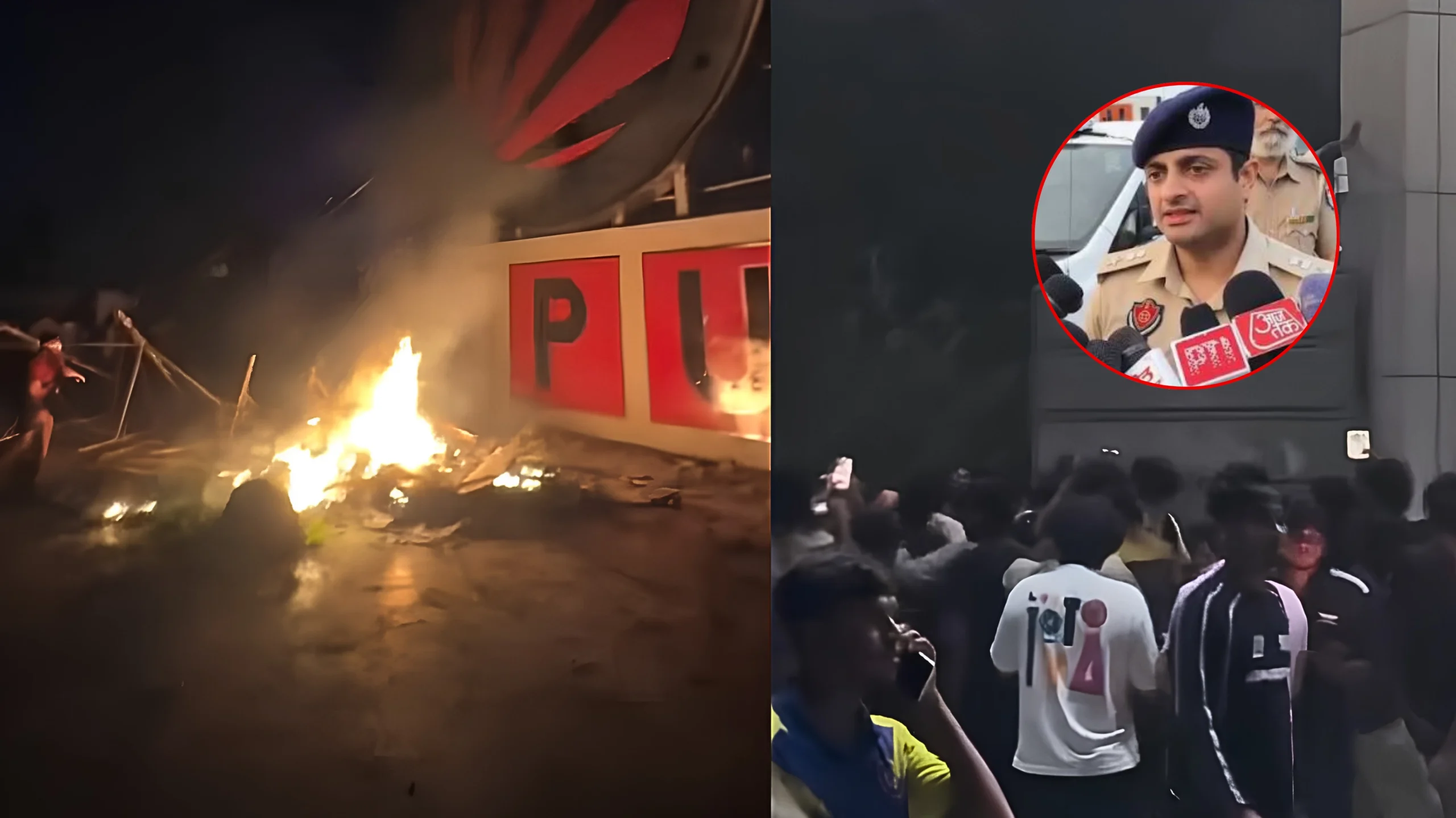
Phagwara / Chandigarh: Tension gripped Lovely Professional University (LPU) in Phagwara, Punjab, in the early hours of Sunday after hundreds of students gathered on campus, damaged property, set objects on fire and blocked a major national highway. A series of unverified social-media claims triggered the protest. The claims alleged that someone had raped a female student on campus — in some versions, a construction worker or an outsider — and that she later died by suicide after university authorities allegedly sent her home.
Police have clearly said that they have not received any formal rape complaint and have not found evidence to support the allegations so far. The university has also called the claims false, baseless and fabricated.
However, the incident shows how quickly online rumours can turn into real-world unrest on a large campus. It also raises questions about campus security, communication and the trust between students and university authorities.
What Exactly Happened and When
Reports say the first messages started circulating late on Saturday night, September 26, mainly among student groups and around the girls’ hostels.
Different versions of the claims circulated on social media. Some alleged that a construction worker raped a female student, while others named an outsider or claimed that a group of people carried out the assault. Several messages connected the alleged assault with claims that the university sent the student home and that she later died by suicide.
One protesting student told the media that a roommate had informed other students about the alleged suicide.
Around 1:45 a.m. to 2 a.m. on Sunday, large numbers of students started gathering near the girls’ hostel area. Some accounts estimated that nearly 2,000 students joined the gathering.
The protest initially focused on demands for justice and accountability, but the situation soon became violent. Videos circulating online showed students breaking window panes, throwing bricks and flower pots, and setting parts of buildings or other objects on fire.
The crowd then moved towards the university’s main entrance and onto the nearby national highway. Reports referred to the road as the Jalandhar-Phagwara, Chandigarh-Amritsar or Delhi-Amritsar stretch. The protest brought traffic to a standstill for several hours.
Police teams from Kapurthala, Jalandhar Rural and Hoshiarpur reached the area. By morning, police had cleared the highway and restored traffic movement.
Officials started assessing the property damage and said they would take legal action after determining the full extent of the damage.
Police Account: “No Complaint, No Evidence So Far”
Kapurthala Senior Superintendent of Police Gaurav Toora emerged as the main police spokesperson on the situation.
Toora said police learned about the highway blockade during the night and reached the spot to control the situation. He said officers discovered that rumours had triggered the gathering.
According to Toora, students claimed that someone had raped a woman and that some students connected the alleged rape with a suicide. Other students focused only on the rape allegation.
Toora said police had not received any complaint from the alleged victim or anyone else about the incident. He also said police had not found evidence to support the allegations so far.
Police have also not established the identity of an alleged victim or any person accused of carrying out the alleged assault.
Police confirmed that a woman died by suicide four to five days earlier near the university’s agriculture department. However, Toora said police had not received any complaint linking that death to the rape claims circulating among students.
Toora said the situation appeared to have developed from a misunderstanding between students and the LPU administration. He added that police were helping the two sides hold discussions.
Police continued to assess the damage and said they would take necessary legal action.
However, later reports quoted DIG Jalandhar Range Naveen Singla as saying that police had received a statement from students about an alleged incident involving a girl from the G3 hostel three days earlier. Singla said police had started the process of registering an FIR against an unknown person.
He also said investigators would conduct a scientific investigation that could include forensic analysis, CCTV footage and phone data. He added that police had planned a meeting with the university management.
These statements show that the official response remained under development as of Sunday morning.
University Firmly Denies the Claims
Lovely Professional University rejected the allegations and issued a strong statement.
Registrar Dr Monica Gulati said the university had found no truth in the rumours circulating at the time. The university described the social-media posts as false and misleading and said “mischievous sources” had circulated them.
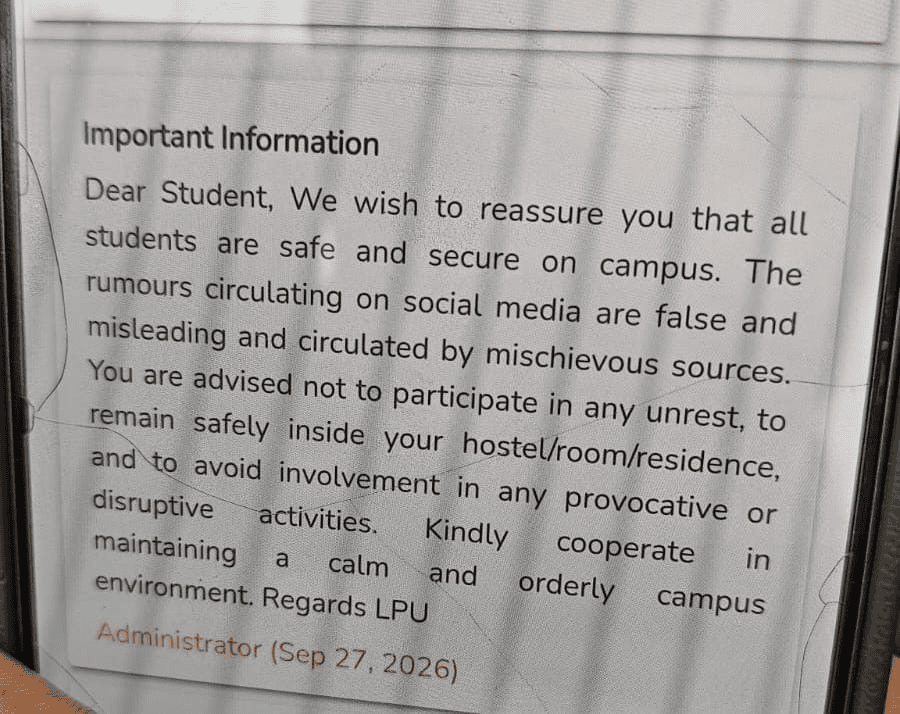
The university also called the incident a “deliberate and concerted attempt” by anti-social elements to create confusion and disturb the academic environment.
The administration asked students to stay safely inside their hostels or residences and avoid taking part in the unrest. It also asked students to rely only on official university channels for information.
The university said the campus remained safe and secure.
Student Voices and Demands
Videos shared widely on social media showed protesting students expressing anger and saying that authorities had not taken their concerns seriously.
One account claimed that students had started with a peaceful demonstration but that the situation became chaotic after the university gates opened. The student also claimed that “some other people — who were not part of the college” entered the area and created a disturbance.
Protesting students demanded that police register an FIR, take action against those responsible and hold the university administration accountable.
Students also raised concerns about campus security, particularly the safety of female students living in hostels.
The large gathering near the girls’ hostel showed how strongly personal safety concerns can affect students on large residential campuses.
Authorities have yet to establish whether the specific allegations have any basis. However, the incident has already increased discussion around the need to verify information, respond quickly to student concerns and prevent unverified claims from triggering large-scale unrest.
A Pattern? The Chitkara University Episode a Day Earlier
The LPU unrest came soon after another rumour-driven disturbance at Chitkara University near Rajpura in Patiala district.
On the night of September 25–26, students at Chitkara University protested after social-media claims alleged that two female students had died by suicide or gone missing. Some versions of the claims also mentioned “ghost” rumours and alleged screams coming from a girls’ hostel.
Reports said protesters damaged police vehicles.
University and police authorities firmly denied the claims about deaths or missing students. Officials explained that an ambulance seen on the campus had brought a student back from a hospital.
No names or concrete evidence supporting the claims about missing students emerged.
The close timing of the two incidents in Punjab has drawn attention to the influence of social media among student communities. The incidents also show the challenge universities face when they need to counter false or unverified information quickly before it turns into physical action.
About Lovely Professional University
Lovely Professional University, established in 2005, ranks among India’s largest private universities by student strength on a single campus.
The university sits on the Jalandhar-Delhi GT Road in Phagwara and covers around 600 acres. Tens of thousands of students study on the campus. Estimates in recent years have placed the on-campus student population at around 30,000 or more.
Students from different Indian states and dozens of countries study at LPU.
The university offers undergraduate, postgraduate and doctoral programmes across a wide range of subjects. It also provides extensive residential facilities, including separate hostels for male and female students.
The size of the student population and the residential nature of the campus mean that any security concern or communication gap can quickly affect a large number of young people who live away from their families.
Impact and Wider Questions
The overnight protest blocked an important national highway corridor and caused major traffic disruption.
The university will also need to assess and repair the property damaged during the unrest. Authorities are expected to take legal action against people involved in vandalism and arson.
Beyond the physical damage, the incident has affected the sense of calm on a large residential campus. It has also forced the university and local administration to respond to concerns from students while investigating the claims that triggered the protest.
Several important questions remain:
- Will authorities eventually receive a formal complaint of sexual assault?
- Will investigators find evidence that supports or disproves the claims circulating on social media?
- Where did the social-media messages that triggered the protest originate?
- How will the university improve communication with students during emergencies?
- What steps will the university take to strengthen security, particularly around hostels?
- What legal and accountability measures will authorities take against people who allegedly engaged in arson and damaged property?
As of the latest reports on Sunday, authorities had brought the situation under control, reopened the highway and continued discussions involving students, police and university officials.
Authorities are still expected to provide further updates on any FIR, forensic findings and administrative action.
The LPU incident shows how quickly an unverified claim can move from social media to the streets. In this case, the gap between the circulation of the rumours and a large-scale physical protest lasted only a few hours.
For students, parents, university administrators and law-enforcement agencies, the incident highlights the need for quick and transparent systems to verify information. It also underlines the importance of strong campus-safety measures and communication systems that students can trust.
