
Who Is Actually Running Iran? Trump Ended the Ceasefire — But Does Tehran Have Anyone Left to Respond?
Ankara, Turkey: President Trump announced that the Iran ceasefire was over from a NATO summit in Ankara. At the same time, Iran appeared to have no visible top leader. Its new Supreme Leader has not appeared in public for five months, its nuclear talks stopped because of a state funeral, and fighting has started again along its coastline.
On Wednesday, July 8, Donald Trump stood with NATO Secretary General Mark Rutte at the NATO summit in Ankara and said, “I think it’s over. I don’t want to deal with them anymore. They’re scum, they’re sick people, they’re led by sick people, and they’re vicious, violent people.”
When reporters asked whether the ceasefire and interim agreement between the United States and Iran were still in effect, Trump said they were not. However, he added that his negotiators could continue talking, even though he called the negotiations “a waste of time.”
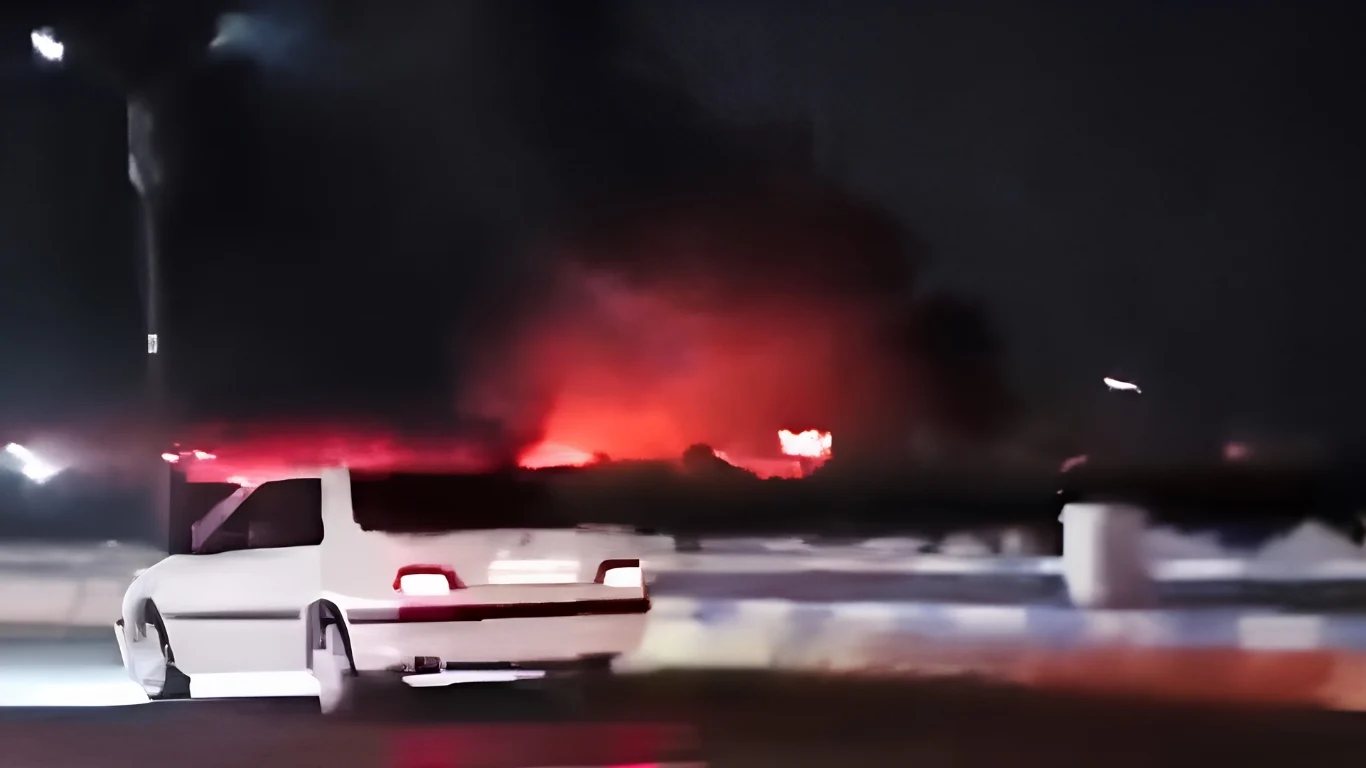
The latest fighting began after attacks in the Strait of Hormuz. On Tuesday, three commercial ships passing through the strait came under attack. An LNG tanker near Oman caught fire after being hit. Two other ships were damaged but continued their journey. No injuries were reported.
Iranian state television claimed that the tanker ignored warnings before the attack, but Iran did not officially take responsibility.
The U.S. Central Command responded by launching what it called a “series of powerful strikes.” The attacks hit more than 80 Iranian targets, including air defense systems, command centers, anti-ship missile sites, and more than 60 small boats belonging to the Islamic Revolutionary Guard Corps (IRGC).
Iran responded by launching missiles and drones at U.S. military bases in Kuwait and Bahrain.
Financial markets reacted immediately. Brent crude oil prices rose by about 5–6% to around $78 per barrel, while U.S. West Texas Intermediate crude climbed to about $74–75 per barrel.
At the same time, the U.S. Treasury removed a waiver that had allowed Iran to sell oil, increasing economic pressure on Tehran.
A bigger issue: Iran’s leadership remains out of sight
This ceasefire collapse is different from earlier clashes because it happened while Iran’s leadership was largely absent from public view.
The ceasefire ended during the six-day state funeral of Ayatollah Ali Khamenei, who had served as Iran’s Supreme Leader for more than 30 years. He died along with several family members during the first U.S.-Israeli strikes of the war on February 28.
His son, Ayatollah Mojtaba Khamenei, became the new Supreme Leader as the war continued. However, according to Reuters and U.S. officials, he suffered serious injuries in the same attack that killed his father. Reports suggest that he may have lost a leg.
Since then, Mojtaba has not appeared in public. He did not attend his wife’s funeral last week. He has also remained absent throughout his father’s funeral ceremonies, which moved from Tehran to Qom and later to Najaf and Karbala in Iraq.
Analysts quoted by TIME believe that he is staying out of public view on purpose. They say that appearing injured would weaken the image of strength that the Iranian government wants to project. It would also make him an easier target. Israeli Defense Minister Israel Katz has publicly said that Mojtaba is “marked for death.”
This creates an important question: If Trump says he no longer wants to negotiate, who in Tehran has the authority to decide whether Iran should escalate, retaliate, or reduce tensions?
During the crisis, Iran’s public leaders have included Parliament Speaker Mohammad Bagher Ghalibaf, President Masoud Pezeshkian, Foreign Minister Abbas Araghchi, and IRGC commander General Ahmad Vahidi.
Reports say these officials remain in contact with Mojtaba Khamenei, but he has not appeared publicly.
Ghalibaf wrote on social media that “the era of bullying and extortion is over.”
Iran’s Foreign Ministry called the latest U.S. strikes a “gross violation” of last month’s memorandum of understanding.
Iran’s Army Chief of Staff, Rear Admiral Habibollah Sayyari, warned that Iranian forces would turn the coastline into “a hell” for U.S. forces.
However, the one person who has the constitutional authority to make final decisions on war and peace in Iran has not spoken publicly since he was seriously injured five months ago.
The timing carries strong symbolism
The timing of these events also carries symbolic importance.
Khamenei’s body lay in state in Tehran on July 4, the same day the United States celebrated 250 years of independence and Trump delivered a major speech.
The funeral has also taken place during Muharram, the Islamic month that Shia Muslims associate with martyrdom, mourning, and betrayal. During Muharram, Shia Muslims remember the martyrdom of Imam Hussein.
Iranian state media has strongly used this symbolism. Large banners across Tehran have encouraged citizens to “rise up” in support of the Islamic Republic.
Trump announced the end of the ceasefire while attending the NATO summit in Ankara rather than from Washington.
At the summit, NATO Secretary General Mark Rutte supported the U.S. military strikes. He said they were “absolutely necessary” because the United States had to respond strongly when someone violated a ceasefire.
European Union foreign policy chief Kaja Kallas called Iran’s attacks on Bahrain and Kuwait “unacceptable.” She said EU foreign ministers would meet with Gulf countries to discuss protecting freedom of navigation in the Strait of Hormuz and the Red Sea.
The main conflict remains the Strait of Hormuz
Despite the political drama, the main issue remains the same.
The war has always centered on control of the Strait of Hormuz, a narrow waterway through which a large share of the world’s oil and natural gas passes.
Iran closed the strait during the war and later argued that it had the right to charge ships for passing through it. The United States and Gulf countries rejected that claim.
Last month’s ceasefire reopened the strait for 60 days while negotiators tried to reach a permanent agreement. Iran’s nuclear program and its stockpile of enriched uranium remained the biggest unresolved issues.
That 60-day period was already underway when this week’s attacks on commercial ships took place.
As a result, the temporary reopening of one of the world’s most important shipping routes is now at risk again, and energy markets fear more disruption before any permanent agreement can be reached.
Diplomatic talks had already stopped earlier this week because Iran paused negotiations to hold Khamenei’s funeral.
Trump’s special envoy Steve Witkoff and his son-in-law Jared Kushner traveled to Doha for talks with Qatari mediators. Iranian negotiators were also in Doha, but the two sides did not meet directly.
Officials had expected negotiations to resume after the funeral. The latest military escalation has now made that timeline uncertain.
Where things stand now
- Trump’s position: Trump believes the ceasefire is over. He has not completely ruled out future talks, but he says negotiating with Iran’s current government is largely pointless.
- Iran’s position: Iran has not officially declared the ceasefire over. As of Wednesday morning, Tehran had not confirmed whether it considers the agreement finished, although its military and government leaders have used some of their strongest language since the war began.
- Military activity: The United States has attacked more than 80 Iranian targets. Iran has launched attacks on U.S.-linked bases in Kuwait and Bahrain. Three commercial ships have come under attack in the Strait of Hormuz.
- Economic impact: Oil prices increased by more than 5% within hours, and the United States canceled Iran’s oil-sale waiver.
- Leadership: Mojtaba Khamenei, Iran’s Supreme Leader and final decision-maker under the constitution, has still not appeared in public. Reports say he is recovering from serious injuries while senior civilian and military officials speak on Iran’s behalf. They reportedly stay in contact with him through private channels.
- Diplomatic situation: Negotiations had already paused because of Khamenei’s funeral. The Strait of Hormuz had reopened under a temporary 60-day agreement when the latest attacks happened.
Why this matters
Most reports have focused on whether the ceasefire has ended and how oil prices will change.
However, the bigger issue may be Iran’s leadership.
The United States is trying to negotiate a long-term peace with a country whose highest decision-maker remains seriously injured, cannot appear in public, and may not want to be seen making major decisions.
Right now, other Iranian officials are publicly making military and political decisions instead of the Supreme Leader.
No one outside Iran knows where Mojtaba Khamenei is or how directly he is leading the government.
Whether this system can hold together long enough to reach a lasting peace—or whether it will lead to more crises in the Strait of Hormuz whenever another ship or military base is attacked—could have a greater impact on the future of the war than anything President Trump said from the NATO summit in Ankara.

Mansi Sharma is a journalist covering Global Affairs, and wellness, known for turning complex ideas into sharp, engaging narratives. Her work is driven by curiosity, depth, and a constant urge to question and explore. When she’s not writing, you’ll often find her diving into new ideas—preferably with a cup of coffee in hand, one sip at a time.