
Discover Muharram 2026 food traditions—haleem, sharbat and khichra—and how they keep the memory of Karbala and Ashura alive today
New Delhi: Every year, when the Islamic month of Muharram begins, kitchens across India, Pakistan, Bangladesh, Iraq, Iran, and diaspora communities from London to Toronto turn into spaces of collective mourning, generosity, and memory. People cook simple and deliberately humble food — yet that food carries a weight of history that most cuisines never hold.
This Muharram, which began on June 16, 2026, and will mark Ashura (the 10th of Muharram) on June 25, brings this tradition back to millions of tables. This is the full story of what people cook, why it matters, and how it travelled across centuries and continents.
The Night in Karbala That Changed Everything
To understand Muharram food, you must first understand what happened on the 10th of Muharram, 61 AH — October 10, 680 CE — in the desert plains of Karbala, in present-day Iraq.
Imam Hussain ibn Ali, the grandson of Prophet Muhammad (PBUH) and the son of Hazrat Ali, refused to pledge allegiance to the Umayyad Caliph Yazid because he considered him unjust and corrupt. Hussain stood with only 72 companions and family members against a much larger army. For three days before the battle, Yazid’s army blocked their access to the Euphrates River. They denied water to everyone — men, women, and children — in the intense heat of the Iraqi desert.
On Ashura, Hussain was martyred. His companions were killed. The attackers burned the camp. The surviving women and children, including Hussain’s son Zainul Abedin — the only surviving adult male — were taken captive to Kufa and then to Damascus.
That moment of extreme thirst, hunger, and sacrifice did not end in the desert. It became the emotional foundation of Muharram and shaped everything people cook, distribute, and offer during it.
The Word “Haleem” Means Patient — and That Is Not a Coincidence
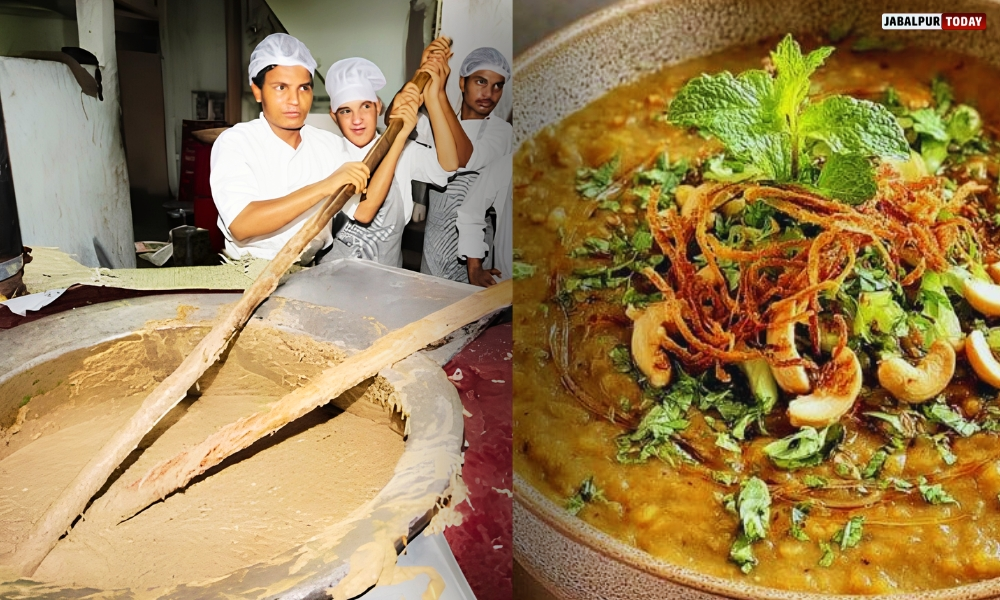
Haleem, the most famous Muharram dish, takes its name from the Arabic word for patience. People cannot cook this dish quickly.
Its earlier version is harees — a wheat-and-meat porridge recorded in the oldest surviving Arabic cookbook, Kitab al-Tabikh (The Book of Recipes), written by Abu Muhammad al-Muzaffar ibn Sayyar in 10th-century Baghdad. That ancient method — cooking grains and meat slowly and beating them into a porridge-like texture — closely matches what people cook in South Asia today.
As Islam spread to the Indian subcontinent through trade, conquest, and the Mughal courts, harees changed. The Ain-e-Akbari — a 16th-century administrative text from Emperor Akbar’s court — records recipes for harisa, haleem, and kashk. This shows that by the Mughal period, people had already adopted and refined the dish. Some accounts say that Sultan Saif Nawaz Jung Bahadur, an Arab chief from Hadhramaut in Yemen, helped popularise haleem in Hyderabad while serving in the court of the seventh Nizam, Mir Osman Ali Khan. In Hyderabad’s Barkas area — home to the Yemeni Chaush community — people still prepare the original Arab harees in both savoury and sweet forms.
Today, Hyderabadi haleem has such a strong identity that in 2010 it became the first non-vegetarian dish in India to receive a Geographical Indication (GI) tag. This recognition requires cooks to prepare it over wood fires for at least 12 hours, stir it continuously, and beat it until it becomes thick, smooth, and elastic — a process that cannot be rushed and feels almost like a moral discipline.
Why Haleem Became the Food of Muharram
No written text clearly records how haleem became linked with Muharram — and that uncertainty adds to its meaning.
One tradition says that after the tragedy of Karbala, a surviving member of Hussain’s family ordered people to cook a dish using whatever grains and meat remained in the camp. That dish came from scarcity. Another tradition says that when Zainul Abedin returned to Madinah, people came from far away to offer condolences and brought grains with them. People cooked all those grains together in a communal pot to feed everyone — creating a dish similar to today’s khichra.
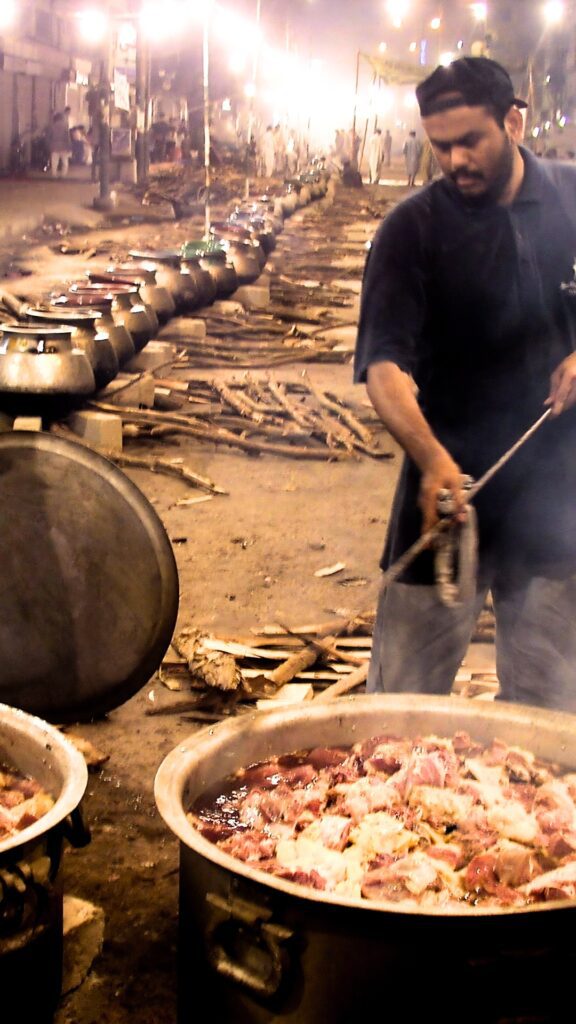
Historical records show that over time, haleem became central to Muharram charity across South Asia. Families cook it in large iron cauldrons (degs) not only for themselves but for entire neighbourhoods. In Karachi, people close entire streets for communal cooking. In Islamabad, people distribute haleem for free in areas like G6, G8, F7, F8, Abpara Market, and Melody Market every year on the 9th and 10th of Muharram. Across Pakistan, people spend billions of rupees — from their own contributions — on Muharram food distribution.
People cook haleem every year on the 9th and 10th of Muharram and distribute it as Niaz-e-Hussain — an offering in Hussain’s name. Religion does not make this act compulsory. People perform it as a cultural expression of grief and unity, and they pass it down through generations in kitchens rather than books.
Haleem (Khichra/Khichda): The Porridge of Humility and Endurance
Haleem is the most important Muharram dish in South Asia, especially in India and Pakistan, including cities like Hyderabad and Karachi. People prepare it as a slow-cooked porridge using cracked wheat, mixed lentils (barley, chickpeas, urad dal), meat (usually beef or mutton), and spices. They mash it into a smooth texture and garnish it with fried onions, ghee, ginger, green chilies, lemon, and mint. They serve it hot with naan or roti at majalis and imambargahs.
- Connection to Karbala:
Traditions say that after the events of Karbala, survivors or community members prepared a nourishing stew from whatever grains and meat they could find to feed grieving people. The dish also comes from the Arabic harees, which medieval cookbooks recorded and which reached the Indian subcontinent through migration. The long process of pounding and stirring represents the patience and humility of the martyrs and their supporters. In 2026, people are preparing large deghs (cauldrons) across regions for free distribution.
- Family-Style Recipe (Serves 8–10):
Ingredients:
1 kg boneless meat, 1 cup cracked wheat, ½ cup each mixed lentils, turmeric, red chili powder, garam masala, ginger-garlic paste, onions, ghee, fresh herbs.
Method:
Soak wheat and lentils overnight. Boil and shred the meat with spices. Cook the grains in broth for 4–6+ hours (or use a pressure cooker for a modern method), and mash until creamy. Add fried onions and ghee for tempering. A family secret includes slow cooking overnight to get the best flavour.
Doodh ka Sharbat: Quenching the Symbolic Thirst of Karbala
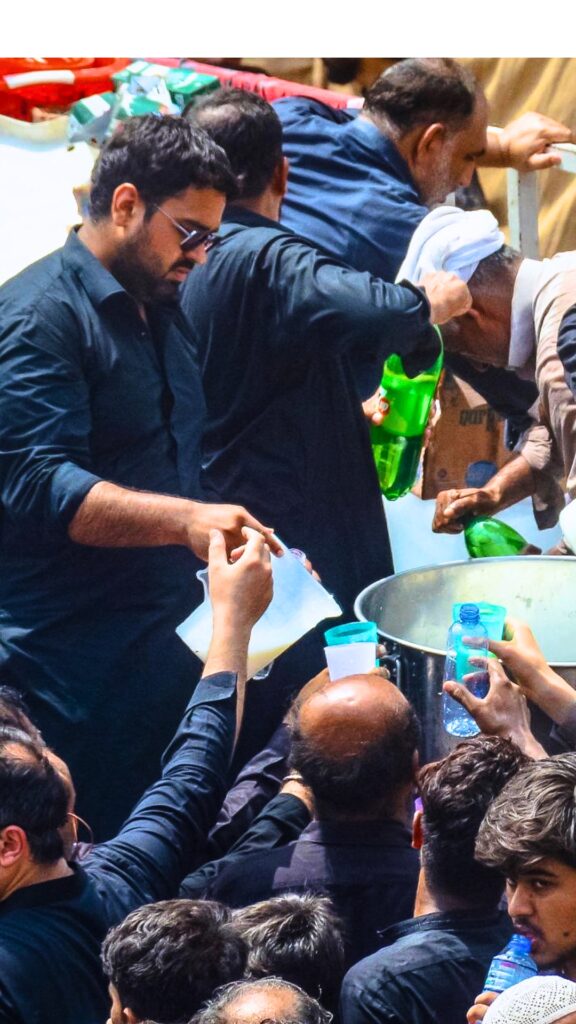
This chilled milk-based drink includes rose syrup (Rooh Afza or homemade), sugar, cardamom, chopped nuts (almonds and pistachios), and kewra water. People distribute it widely during Muharram majalis.
- Story:
This drink directly reminds people of the thirst that Hussain’s family suffered when the army denied them water at Karbala from the 7th of Muharram onward. When people serve this drink, they provide physical relief to mourners and keep spiritual remembrance alive. In Hyderabad and similar regions, people consider it an essential part of Ashura on June 25, 2026.
- Easy Recipe:
Boil milk with sugar and cardamom. Let it cool. Add rose essence and nuts, then chill. You can prepare large quantities for community sharing. Some families also add jaggery for traditional sweetness.
The Regional Map of Muharram Food
Muharram food differs across regions. It evolves through local history, ingredients, and communities.
Hyderabad: Haleem remains the main dish, slow-cooked over wood fires for 12 hours. People also prepare Dum Ka Roat, a baked sweet made from semolina, flour, ghee, and dry fruits.
Lucknow: Khichra dominates. People serve it during majalis held in Imambaras like the Bara Imambara, one of India’s most important Shia sites.
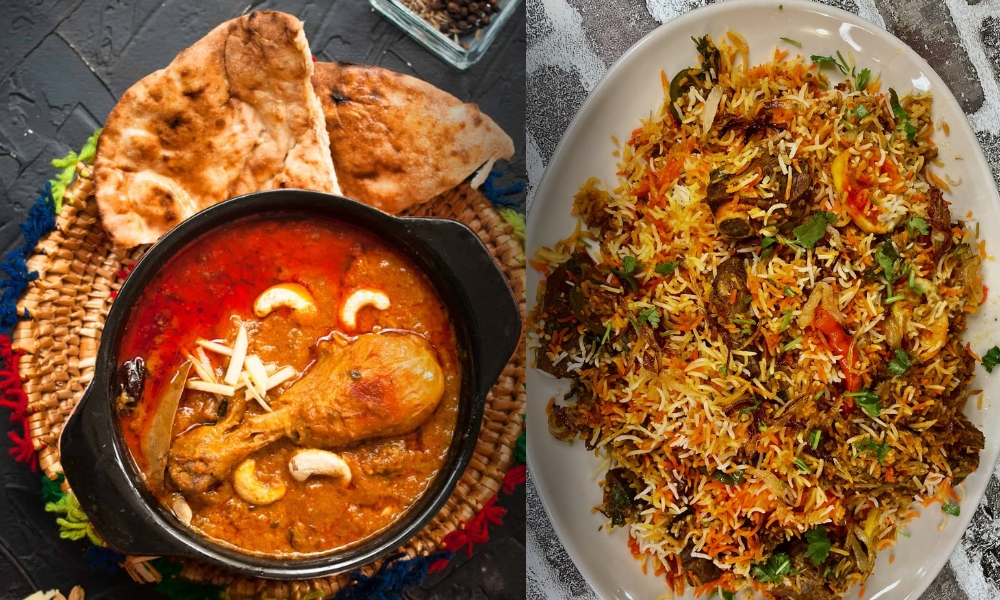
Karachi and other Pakistani cities: People distribute biryani, qorma with sheermal and taftan, chana, and haleem. In cities like Sukkur, communities spend billions collectively on Muharram food.
Mumbai: In Mohammed Ali Road, people serve haleem and khichra, attracting both Muslim and non-Muslim visitors.
Diaspora communities: Families in cities like London, Toronto, and New York continue these traditions. In Birmingham, families gather on the 9th of Muharram to cook haleem together, helping younger generations connect with their heritage.
Who Else Eats at the Muharram Table
Muharram food traditions cross religious boundaries more than most people realise.
In India, Hussaini Brahmins — a Hindu community linked historically to Imam Hussain — continue to observe Muharram rituals, including food distribution. People from Hindu, Sikh, and other communities also eat haleem and khichra during Muharram.
In Hyderabad, both Shia and Sunni communities take part in distributing haleem. In Pakistan, people openly distribute food “without discrimination,” serving anyone who comes.
The history of harees and haleem also shows cultural blending. Persian Jews have eaten it for centuries on the Sabbath, and Syrian Christians prepare a similar dish called harisa. What began as a recipe in a 10th-century Arab cookbook travelled across cultures and became a shared human tradition.
The Niaz: When Cooking Becomes an Act of Faith
The term niaz refers to food distributed as an offering. During Muharram, people use it to express devotion.
Unlike Eid, which celebrates with rich meals, Muharram food stays simple and humble. It focuses on remembering hunger and thirst rather than celebrating abundance.
Families pool money, cook together in large pots, and distribute food to neighbours, strangers, and the poor. People treat cooking itself as an act of remembrance. Women stir haleem through the night, children clean grains, and families gather around fires — forming rituals within rituals.
This practice follows a historical pattern. When Zainul Abedin returned from Karbala, people fed travellers who came to offer condolences. That act of feeding strangers continues today.
The Dish That Carries the Century: A Note on Memory
Muharram food traditions stand out because they preserve history through taste.
When a family cooks haleem on Ashura, they do more than prepare a meal. They continue a chain of memory that connects them directly to events from 680 CE. Over time, the dish changed — Mughal spices shaped it, local grains entered it, and regional tastes refined it — but the act of cooking and sharing it freely remains the same.
As Muharram 2026 unfolds and Ashura falls on June 25, each pot of haleem, each sabeel, and each bowl of khichra becomes a living piece of history.
The word haleem means patient. In this tradition, patience does not mean waiting silently. It means standing by the fire, stirring through the night, and feeding everyone who comes — continuing a practice that began in Karbala and has lived on every year since.
Muharram 2026 began on June 16. Ashura, the 10th of Muharram, falls on June 25, 2026.

Mansi Sharma is a journalist covering Global Affairs, and wellness, known for turning complex ideas into sharp, engaging narratives. Her work is driven by curiosity, depth, and a constant urge to question and explore. When she’s not writing, you’ll often find her diving into new ideas—preferably with a cup of coffee in hand, one sip at a time.