
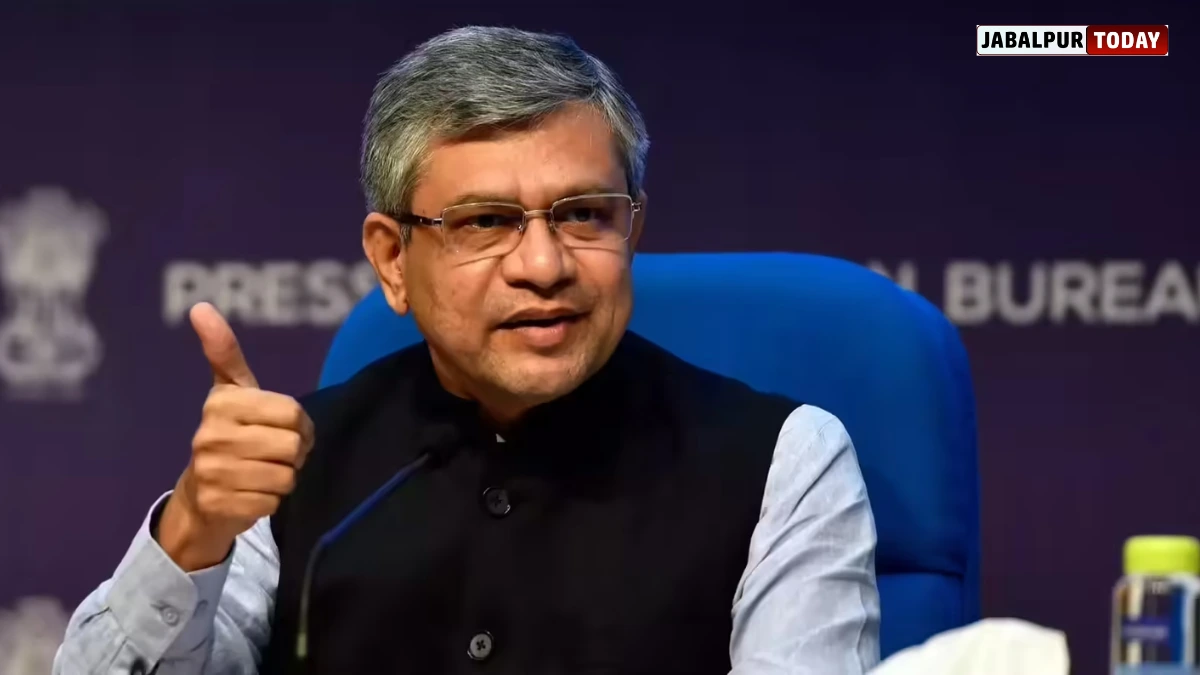
Day 1 of the India AI Impact Summit 2026 at Bharat Mandapam was marked by severe overcrowding, long registration queues, poor internet connectivity, and management issues, prompting Union Minister Ashwini Vaishnaw to issue a public apology and announce corrective measures.
New Delhi: In a rare and honest response to problems at a major government event, Union Minister for Electronics and IT Ashwini Vaishnaw publicly apologized for the mismanagement seen on the first day of the India AI Impact Summit 2026. The event was held at Bharat Mandapam in Delhi and was promoted as the world’s largest gathering focused on artificial intelligence.
The summit attracted an unexpectedly huge crowd, which led to confusion and poor arrangements that overshadowed its big goals. While many reports focused only on the chaos, a deeper look shows that the problems were linked to the fast growth of India’s AI ambitions. The event reflects both the challenges and the strong potential of India’s growing tech ecosystem.
The Summit’s Big Vision: India’s AI Push
The India AI Impact Summit 2026 was organized by the Ministry of Electronics and Information Technology (MeitY). It aimed to show that India wants to become a global leader in artificial intelligence.
The multi-day event began on February 16, 2026. It included discussions on AI ethics, infrastructure, skill development, and how AI can be used in different sectors. The summit brought together global tech companies, startups, policymakers, researchers, and innovators.
Some major highlights included:
- Minister Vaishnaw describing AI as the “5th Industrial Revolution” and explaining how it can transform the economy and society.
- Plans to create a public AI platform similar to UPI, so that AI tools and data can be accessed widely and easily.
- Announcement of $200 billion investment in AI infrastructure over the next 10 years, including expanding computing capacity to over 34,000 GPUs.
- Focus on building India’s own large language models (LLMs), sector-specific AI systems, and creating a balanced legal framework that supports innovation while ensuring safety.
The scale of the summit was massive. Thousands of exhibitors, visitors, and delegates attended, showing how strong the interest in AI is in India, especially as global competition grows with countries like the US and China.
What Went Wrong on Day 1
On February 16, 2026, instead of showcasing India’s tech strength smoothly, the event faced serious management issues.
Participants reported:
- Registration Delays:
Thousands of attendees stood in long lines for entry passes. Some sessions started hours late because of registration bottlenecks. - Poor Internet Connectivity:
Weak Wi-Fi disrupted live demos and networking. Exhibitors showing AI products faced difficulties because stable internet is critical for such presentations. - Overcrowding and Safety Concerns:
“Even though the venue was designed to host large events, far more people showed up than expected Halls became crowded, and some participants felt uncomfortable. - Complaints About Theft and Basic Arrangements:
Some attendees reported lost or stolen items during the confusion. Others said there was not enough food, water, or seating.
Videos and photos of long queues quickly spread on social media, especially on X (formerly Twitter). Many users criticized the organizers and tagged the minister directly. Some described the situation as “complete incompetence.”
Minister Vaishnaw’s Apology
On February 17, 2026, during a press conference at the summit, Ashwini Vaishnaw openly addressed the issues.
He said, “If anybody has faced any problems yesterday, my apologies for that. We are working very hard. The entire team is working day and night, and we will make every effort to make this an enjoyable experience.”
He also announced the creation of a special ‘war room’ to monitor the situation and solve problems in real time. By the second day, improvements were visible. Organizers streamlined the entry process, improved connectivity, and managed the crowd more efficiently.
Some praised his quick response and accountability. However, critics argued that such problems show deeper weaknesses in planning large government-led events.
Political Reactions and Industry Response
The situation quickly became a political issue.
Mallikarjun Kharge, President of the Congress party, criticized the government. He called the situation “utter chaos and extreme distress” and said it embarrassed India internationally. He urged better preparation for events that aim to show India’s global strength.
Reactions from industry participants were mixed:
• Startups said that despite the challenges, the large turnout showed strong interest in AI, which was encouraging.
• Industry experts warned that poor organization at such a major event could discourage international investors. One delegate said, “First impressions matter in tech.”
• On social media, opinions ranged from frustration to constructive suggestions for better management in future events.
