
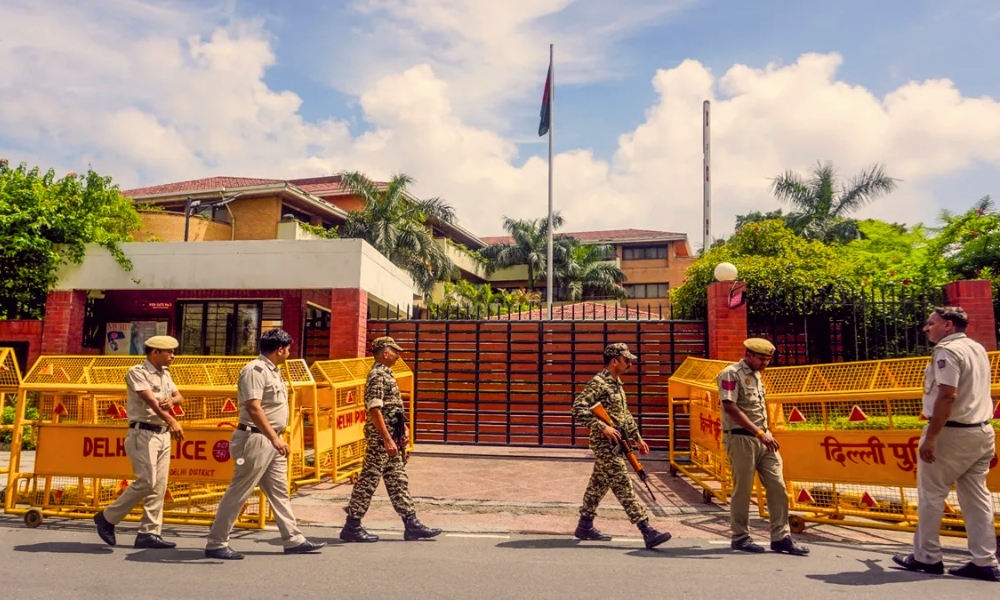
Citing security concerns, Bangladesh has paused all visa and consular services in New Delhi, Agartala and Siliguri amid escalating tensions with India.
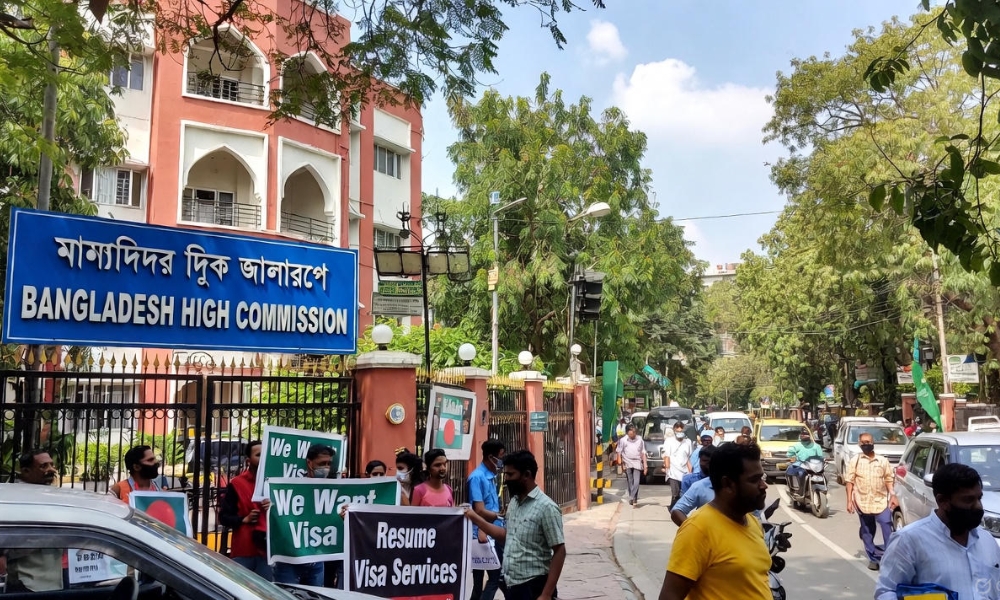
New Delhi: Bangladesh has temporarily stopped all visa and consular services at its High Commission in New Delhi. The decision comes at a time when tensions between India and Bangladesh are rising due to protests, political unrest, and growing security concerns. Officials said the services are suspended because of the current “security situation” and will remain closed until further notice. This has created serious difficulties for people who need to travel between the two countries.
What Caused the Suspension?
The move follows a series of protests in Bangladesh that are being described as “anti-India.” These protests have taken place in cities like Dhaka and other parts of the country. Because of the unrest, Bangladesh has also shut down visa services in Khulna and Rajshahi. A notice outside the Bangladesh High Commission in Delhi stated that services were paused due to “unavoidable circumstances.”
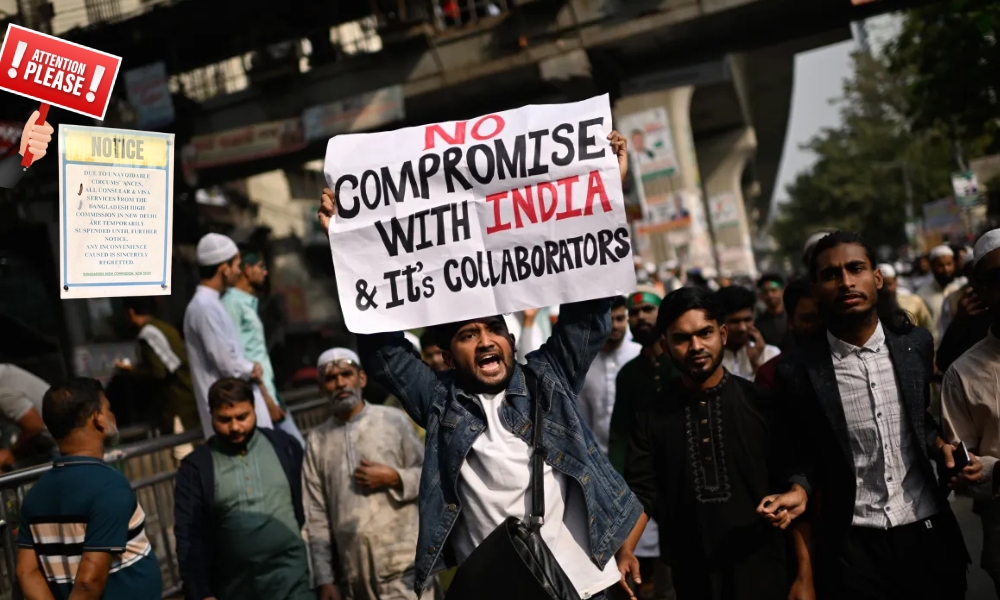
Around the same time, a small protest took place outside the Bangladesh High Commission in New Delhi. About 20 to 25 young protesters gathered late on Saturday, shouting slogans against attacks on Hindus in Bangladesh. Although the protest was limited in size, it added to security worries and is believed to have influenced the decision to halt services.
India’s Response
India has also taken similar steps. Indian authorities suspended visa services at the Indian Visa Application Centre in Chattogram (Chittagong), Bangladesh. This came after unrest following the death of a youth leader, which led to violent protests. These actions show that both countries are responding to each other’s moves, further increasing tension between them.
Ongoing Political Unrest in Bangladesh
Bangladesh has been facing political instability for over a year. In 2024, large protests forced Prime Minister Sheikh Hasina to leave the country. Since then, an interim government led by Muhammad Yunus has taken charge. However, reports of violence against minority communities—especially Hindus—have continued. Many observers believe religious extremism and political instability are behind these attacks.
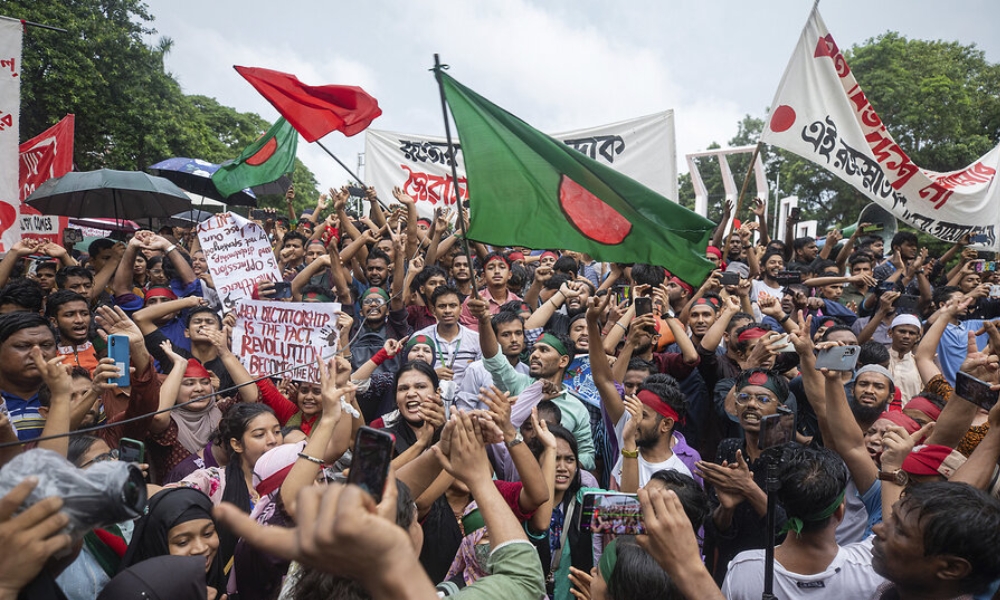
Relations with India have worsened as some groups in Bangladesh blame India for supporting the previous government. Large protests have erupted, with thousands of people reportedly attacking Indian diplomatic missions. In Chattogram, crowds attacked the Indian visa center, forcing it to shut down early for safety reasons.
Protests in India
In India, leaders from both the BJP and Congress parties have held protests in Kolkata outside the Bangladesh Deputy High Commission. They are demanding action over the reported attacks on Hindus in Bangladesh. BJP leader Suvendu Adhikari joined the protests and called for stronger protection for minority communities.
International Concern Grows
The unrest has drawn international attention. United Nations Secretary-General Antonio Guterres has expressed serious concern about the violence in Bangladesh, including attacks on political leaders and security forces. This highlights how serious and widespread the situation has become.
Some people in Bangladesh blame the interim Yunus government for banning the Awami League party, saying the decision worsened the crisis. Former Indian High Commissioner to Bangladesh, Veena Sikri, has also pointed out that this ban played a role in increasing instability.
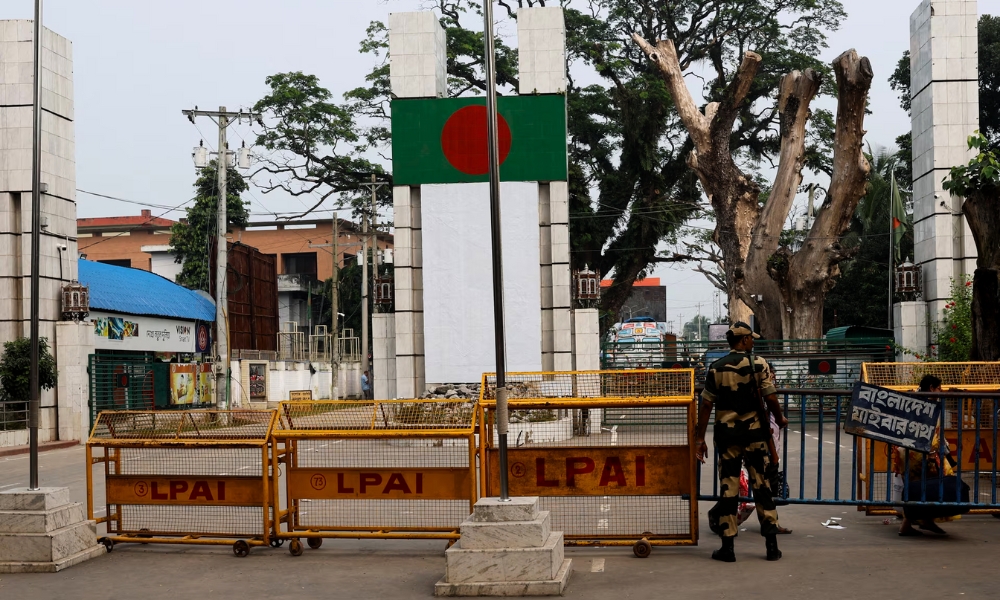
There are additional concerns after some groups in Bangladesh made statements about separating parts of India’s northeastern region, known as the “Seven Sisters.” India has firmly rejected any such ideas and warned against interference in its internal matters.
Impact on People, Travel, and Trade
The visa suspension has badly affected ordinary people. Many Bangladeshis travel to India for medical treatment, education, business, and family visits. With visa services halted in Delhi, Agartala, and Siliguri, thousands are now stuck. Social media is filled with posts expressing fear, frustration, and concern about worsening relations.
Trade could also suffer. Bangladesh imports around $9 billion worth of goods from India every year but exports far less in return. Experts warn that stricter border controls and travel restrictions could harm both economies. Indian tourists may also face longer travel bans, similar to restrictions placed on travelers from other countries.
Situation So Far
• Visa services at the Bangladesh High Commission in Delhi remain suspended
• India has increased security at its diplomatic missions in Bangladesh
• Protests continue in both countries, though leaders are calling for calm
• No timeline has been announced for resuming visa services
The current situation shows how fragile relations between India and Bangladesh have become. Without dialogue and cooperation, tensions may continue to rise. People on both sides hope that talks will begin soon so peace can return and normal travel and relations can be restored.
Also Read: US Military Launches Operation Hawkeye Strike to Crush ISIS in Syrian Desert

Mansi Sharma is a journalist covering Global Affairs, and wellness, known for turning complex ideas into sharp, engaging narratives. Her work is driven by curiosity, depth, and a constant urge to question and explore. When she’s not writing, you’ll often find her diving into new ideas—preferably with a cup of coffee in hand, one sip at a time.