
From royal titles to Delhi’s most iconic landmark — discover the fascinating history of how a British prince left a timeless mark on India’s capital.
A Royal Echo Behind the Name
The name “Connaught” exudes a sense of royal charm and British elegance — and that’s no coincidence. It wasn’t derived from any Indian place or figure but was directly linked to the British royal family. Originally, Connaught was the name of one of Ireland’s four provinces, the smallest among them. During the era of the British Empire, it was adopted as a royal title, symbolizing nobility and prestige. When the British began designing New Delhi as the new imperial capital, they envisioned a grand, modern marketplace that would mirror the architectural sophistication of European high streets. The name was chosen in honor of Prince Arthur, Duke of Connaught and Strathearn, who held that royal title. Prince Arthur was the third son of Queen Victoria and the uncle of King George VI — making Connaught Place a living reminder of Britain’s royal lineage in India’s architectural heart.
1921: The Royal Visit That Changed Delhi Forever
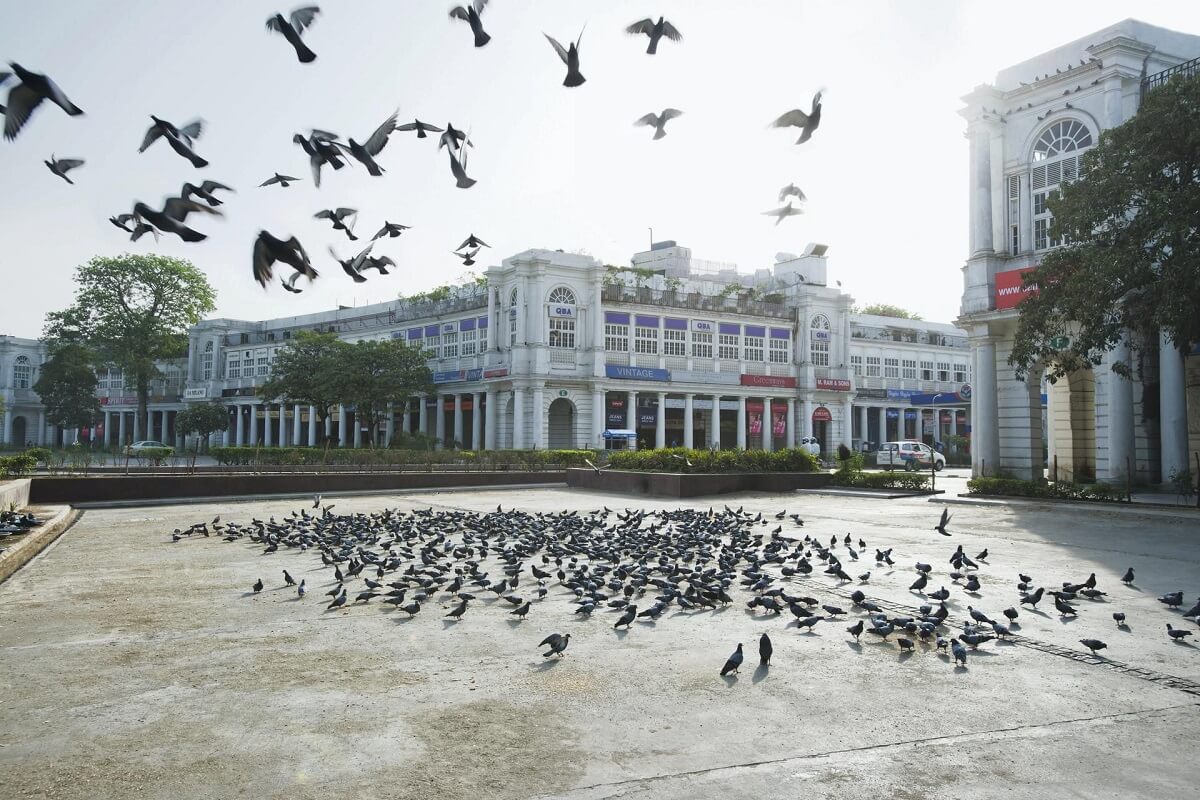
In 1921, Prince Arthur visited India. To commemorate his royal visit and pay tribute to his title, the British administration decided to name Delhi’s newly designed marketplace Connaught Place, after the Duke of Connaught. At that time, New Delhi was still taking shape — envisioned as the shining jewel of the British Empire in India. The market’s now-iconic circular design was created by British architect Robert Tor Russell, who sought to blend functionality with grandeur and symmetry. It’s said that Russell drew inspiration from The Royal Crescent in Bath, England — a masterpiece of Georgian architecture. That influence can still be seen in Connaught Place’s graceful curves, pillared arcades, and uniform white façades, giving it a timeless colonial charm.
Before Connaught Place: Where Villages Once Stood
It’s hard to picture today, but just over a century ago, the site of Connaught Place was far from a bustling city center. It was a cluster of small villages and dense wilderness, dotted with kikar (acacia) trees and home to wild deer and boars. The area once included villages like Madhoganj, Jaisinghpura, and Raja ka Bazaar — peaceful rural settlements that were later cleared when construction of New Delhi began. The British administration relocated local residents and transformed this forested region into a planned commercial hub designed in the grand European style.
That transformation — from a green wilderness to a monumental marketplace — gave birth to what we now affectionately call “the heart of Delhi.”
From British Grandeur to Indian Soul
Over time, Connaught Place evolved far beyond its colonial roots. What once stood as a symbol of British opulence is today a vibrant representation of Indian modernity and culture. Once frequented by British officers and the upper class, it has now become a melting pot of cultures, buzzing with cafés, art galleries, global brands, and theatres. By night, as lights flood its corridors and laughter fills the air, Connaught Place still seems to whisper tales from its royal past — stories of empire, evolution, and endurance.
Also Read : Over 500 Experts from 8 Nations Discuss Breakthroughs in Regenerative Medicine and Neurorestoration
