
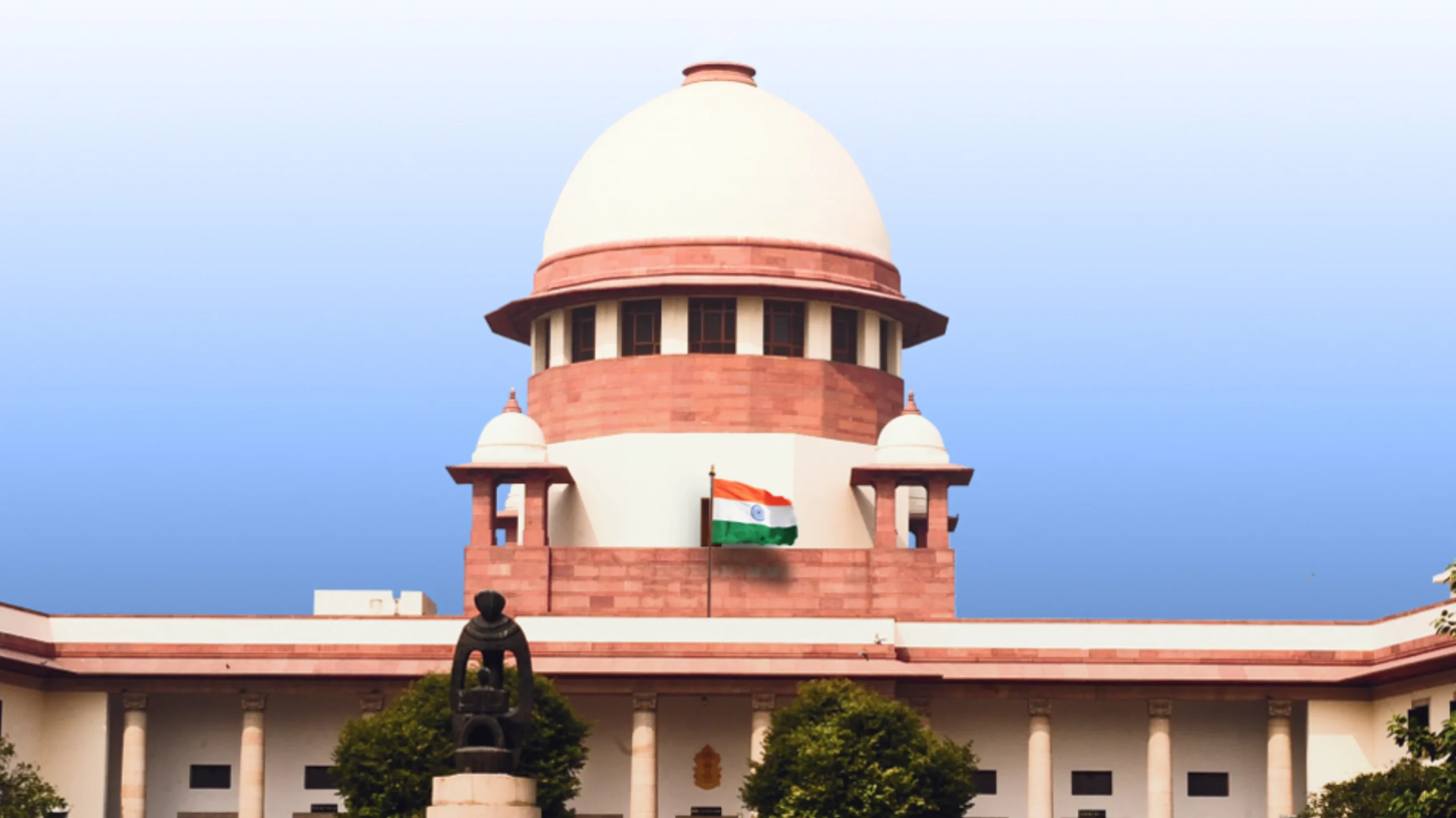
Supreme Court rejects complete internet bans for children, calls for proportionate safeguards to protect online safety without compromising fundamental rights
New Delhi: The Supreme Court has ruled that every individual in India, including children of all ages, has a fundamental right to access and use the internet under Articles 21 and 19(1)(a) of the Constitution.
A bench of Justices J.B. Pardiwala and K. Vinod Chandran made this observation while stressing that children have the same fundamental rights as adults. The judges said, “We have no hesitation in saying that the right to access and use the internet is a fundamental right of every individual under Article 21 read with Article 19(1)(a) of the Constitution.” They added that denying children these rights would be as unreasonable as claiming that young children do not deserve protection for their conscience or freedom of speech. The Court stressed that protecting children and respecting their freedom do not conflict with each other. Children deserve both safety and freedom.
The Court made these observations in an order dated around mid-October 2026 and made the order public on October 17. The proceedings focus on strengthening systems to identify and remove child sexual exploitation and abuse material (CSEAM) from social media platforms and other online services. The case, Just Rights for Children Alliance & Anr. v. S. Harish & Ors., continues proceedings linked to the Court’s important September 2024 judgment on the responsibilities of online platforms under the Protection of Children from Sexual Offences (POCSO) Act and the Information Technology (IT) Act.
Building on Earlier Digital Rights Judgments
The latest ruling builds on earlier Supreme Court judgments on digital rights. In the 2020 case Anuradha Bhasin v. Union of India, which concerned internet restrictions in Jammu and Kashmir, the Court recognised that Articles 19(1)(a) and 19(1)(g) protect freedom of speech and expression and the freedom to conduct trade or business through the internet. However, the Court did not declare internet access itself a separate fundamental right.
In 2025, the Court recognised digital access as a fundamental right under Article 21 in Pragya Prasun & Ors. v. Union of India. The present bench took another step forward by explicitly declaring that every individual, including children, has a fundamental right to access and use the internet.
The Court described the internet as a “marketplace of ideas, creative expression and information.” The judges explained that the internet’s value comes not only from the information it contains but also from the opportunities it provides people to access that information.
For many children, especially those living in remote areas, the internet serves as their main source of education and information. Children with special needs may also depend on online communities to connect with others who face similar challenges and experiences.
Why the Court Rejected a Complete Internet Ban for Children
The bench examined the argument that authorities should completely restrict children’s access to the internet and social media to protect them from online dangers. It rejected this approach.
The Court observed that blanket restrictions on children’s internet access rely on unproven measures that impose disproportionate limits on their rights. It also noted that no jurisdiction had demonstrated that such restrictions actually make children safer.
The judges highlighted several problems with complete bans. Children do not necessarily stop using the internet when adults prohibit them from accessing it. Instead, they may move to unregulated platforms and websites that expose them to even greater risks.
Age-based restrictions can also prevent children from reporting abuse. For example, a child who faces online grooming, threats or exploitation may hesitate to seek help because they fear punishment for breaking internet access rules.
The Court also raised concerns about privacy. Strict age-verification systems may require platforms to collect and monitor sensitive personal information from users continuously. Such systems could create serious risks of surveillance and misuse of personal data.
Safeguards Are Necessary, but They Must Be Proportionate
The ruling does not mean that children should use the internet without protection. The Court acknowledged that today’s online environment remains unsafe for children and that authorities must introduce safeguards to protect them and regulate the content they can access.
However, the judges emphasised that these safeguards must protect children without taking away their fundamental rights.
The Court suggested several measures that could help platforms create safer online spaces for children:
- Dedicated child mode: Social media platforms could offer a separate mode with age-appropriate settings and protections.
- Private accounts by default: Platforms could automatically set children’s accounts to private to limit access to their personal information and posts.
- Restrictions on unknown adults: Platforms could limit messages and contact requests from adults whom children do not know.
- Content and advertising controls: Platforms could moderate advertisements and content shown to children to reduce their exposure to harmful material.
- Parental consent: Platforms could use reasonable and proportionate methods to verify parental consent, particularly for younger children and pre-teens.
The Court said authorities could introduce these safeguards without taking away children’s fundamental right to access the internet. It left the detailed rules and implementation methods to the Union Government.
The bench also clarified that the ruling does not prevent the government from restricting access to inherently harmful categories of content or services, including adult-content websites.
Supreme Court Issues Directions to Fight Child Sexual Exploitation Material
While recognising internet access as a fundamental right, the Court also issued directions to strengthen efforts to identify and remove child sexual exploitation and abuse material.
The directions include creating a comprehensive national database to help authorities and platforms identify such material and remove it across online services. The Court also called for better detection and reporting systems, improved preservation of digital evidence and clearer accountability for online intermediaries that fail to meet their legal reporting obligations.
The case reflects concerns about the limited progress that platforms and government agencies have made in implementing the Court’s 2024 judgment. More than two years after that ruling, the proceedings continue to examine whether the authorities and online services have met their responsibilities.
The Court has repeatedly stressed the serious threat that the circulation of child sexual exploitation and abuse material poses to children’s safety and well-being.
What the Ruling Means for Ordinary Indians
The judgment has implications for parents, schools, social media companies, policymakers and children themselves.
For parents and guardians: The ruling highlights children’s rights while underlining the need for responsible supervision. Instead of relying on complete bans, parents can guide children, discuss online risks openly and use parental controls and child-safe settings to protect them.
For schools and educators: The judgment recognises the internet’s role in education and access to information. Schools can support children by teaching digital literacy, helping them identify online risks and encouraging them to use digital platforms safely and responsibly.
For social media platforms: Online services must strengthen their systems to detect and remove child sexual exploitation material. They must also improve reporting to law-enforcement agencies and introduce age-appropriate features, including child modes and privacy protections. Platforms that fail to meet their legal obligations may face consequences under the POCSO Act and the IT Act.
For policymakers: The ruling provides constitutional guidance for future rules governing children’s internet use. Any restrictions must have a clear purpose, rely on evidence and remain proportionate to the risks authorities want to address. Countries that have introduced or proposed strict minimum-age limits for social media have made this issue a subject of wider debate. In India, similar restrictions would need to meet constitutional requirements.
For children and young people: The Court has recognised children as individuals with rights, rather than treating them only as people who need protection. Children have a constitutionally protected interest in using the internet to learn, express themselves, seek information and connect with others, subject to reasonable safeguards.
Wider Significance and Questions That Remain
The judgment comes amid a global debate about children’s online safety, minimum-age requirements for social media and the balance between protection and freedom of expression. Several jurisdictions have introduced or considered strict age-verification rules and age-based restrictions. The Supreme Court’s observations indicate that authorities must carefully examine whether such measures are necessary and proportionate before introducing them in India.
The ruling also carries significance amid periodic internet restrictions in different parts of the country. Although the present case focuses on children’s online safety rather than internet shutdowns, the Court’s explicit recognition of internet access as a fundamental right adds to the constitutional framework for examining restrictions on access.
Several questions remain unanswered. How will the Union Government design child modes and parental consent systems? What technical standards will platforms have to follow to detect child sexual exploitation material? How will the proposed national database operate while protecting users’ privacy? Future legal challenges may also test the scope and limits of this fundamental right.
For now, the central principle is clear: the Supreme Court has recognised access to and use of the internet as a fundamental right of every individual, including children. The Court has stressed that safety and freedom do not oppose each other. Children deserve both.
The judgment places responsibility on the government, online platforms, parents and society to build safer digital spaces without unnecessarily restricting children’s constitutional rights. The next challenge lies in turning this principle into practical safeguards that protect children while allowing them to exercise their freedom.
