
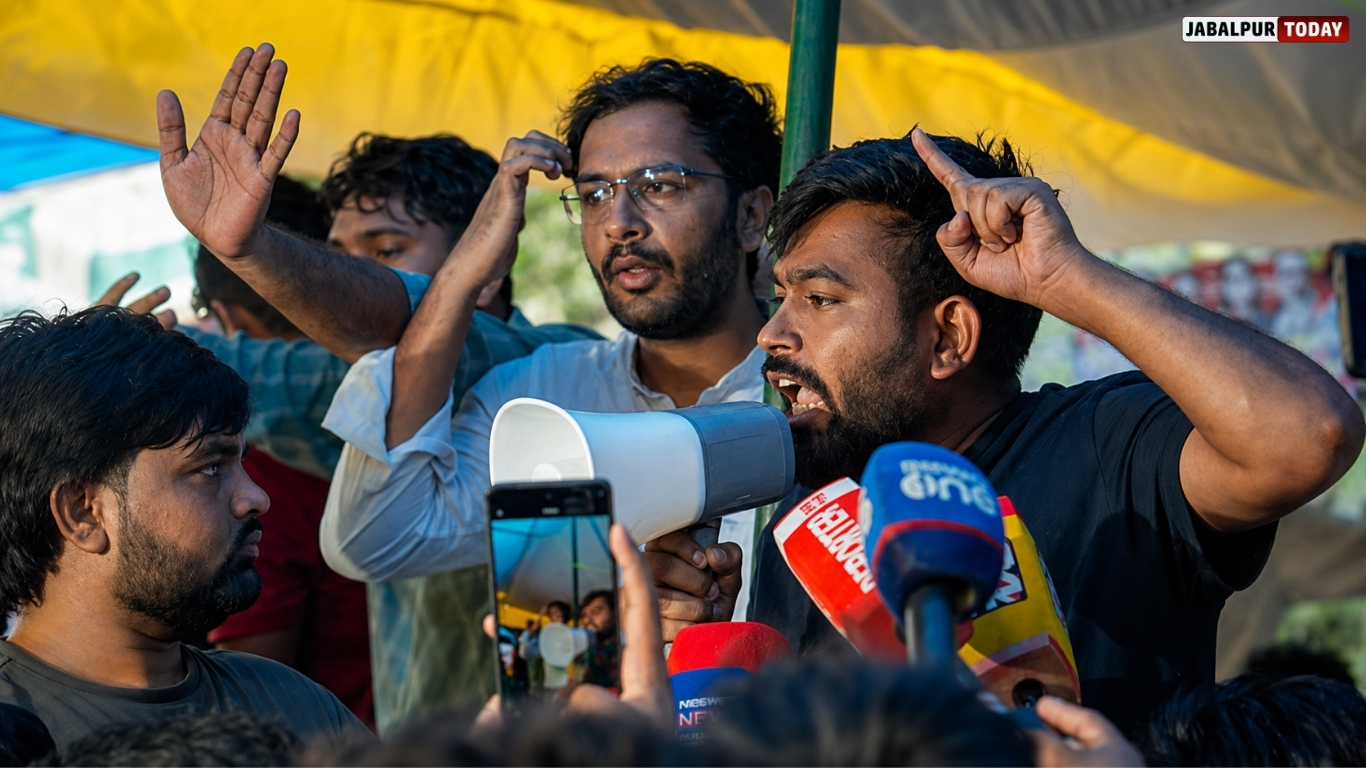
Abhijeet Dipke claims police beat and detained him after they shifted Sonam Wangchuk to Safdarjung Hospital. Here’s what happened on Saturday morning
New Delhi: On the morning of Saturday, July 18, 2026, Delhi Police arrived at Jantar Mantar and shifted 59-year-old Sonam Wangchuk, who had not eaten solid food for 21 days, to Safdarjung Hospital. Around the same time, Abhijeet Dipke, founder of the Cockroach Janta Party (CJP), claimed that police beat and detained him. By the afternoon, police had started clearing the protest site that had remained active for 29 days.
Saturday’s events did not happen suddenly. They marked the latest chapter in a movement that began as political satire but later turned into one of the country’s biggest protests over the examination system. The police action also came just two days before the CJP’s planned “Chalo Sansad” march to Parliament.
How the Protest Started
The CJP began its protest at Jantar Mantar on June 20, 2026. This time, its target was not the judiciary but Union Education Minister Dharmendra Pradhan.
The protesters demanded Pradhan’s resignation over alleged irregularities in the examination system, especially the NEET paper leak controversy. They also demanded a judicial investigation into the alleged examination scam and broader reforms in India’s entrance examination process.
For the first eight days, the protest received limited attention.
Everything changed on June 28, when Sonam Wangchuk joined the demonstration and started an indefinite hunger strike in support of the same demands.
Wangchuk, known as an engineer, education reformer and climate activist from Ladakh, had previously undertaken hunger strikes for Ladakh’s statehood and Sixth Schedule demands. This time, however, he focused on education reforms and accountability in the examination system.
The Protest Gained Political Attention
As Wangchuk continued his hunger strike, the protest attracted national attention.
Several political leaders and public figures visited the protest site or appealed to Wangchuk to end his fast. These included Jammu and Kashmir Chief Minister Omar Abdullah, AAP chief Arvind Kejriwal, Congress leader Pawan Khera, Samajwadi Party MP Dimple Yadav, and the Supreme Court Bar Association.
The CJP also claimed that nearly 1.5 lakh people had confirmed participation in its planned “Chalo Sansad” march.
On July 16 (Day 19), the Delhi High Court intervened.
A division bench headed by Chief Justice Devendra Kumar Upadhyaya and Justice Tejas Karia ordered authorities to monitor Wangchuk’s health every day. The court directed the government to provide any medical treatment recommended by doctors, saying that every citizen’s life is valuable and authorities must protect it.
That order later became the basis for the police action.
Day 20: Health Concerns and Fresh Allegations
On Friday, July 17, Dipke released a video claiming that Wangchuk was “on his deathbed.”
He said Wangchuk had become extremely weak and had almost collapsed twice while walking to the washroom. Videos from the protest site showed Wangchuk walking slowly with support. According to reports, doctors monitoring him also warned that the prolonged fast had entered a stage where it could begin affecting his organs.
Actor Aamir Khan also appealed to Wangchuk to end his hunger strike while once again clarifying that his 3 Idiots character Phunsukh Wangdu was not based on Wangchuk.
Later that day, Dipke claimed that unidentified people tried to attack Wangchuk at the protest site and threw an object at him, although Wangchuk was not injured.
Dipke also alleged that someone inside the police had warned him days earlier that people would be sent to disrupt the protest. He further claimed that several people created disturbances at the protest site on Friday, but police did not respond for hours.
On the same day, Wangchuk said that although he was still alive, he had already lost nearly one-fifth of his body weight through fat and muscle loss. He warned that prolonged fasting would eventually affect vital organs and, later, the brain.
Day 21: Police Shift Wangchuk to Hospital
Early on Saturday, July 18, Delhi Police reached Jantar Mantar in large numbers.
Citing the Delhi High Court’s order and the advice of medical experts, police shifted Wangchuk to Safdarjung Hospital for treatment.
New Delhi Deputy Commissioner of Police Sachin Sharma said on X that authorities acted under the High Court’s directions because Wangchuk’s health had deteriorated. He said some protesters tried to stop the police, causing a brief commotion, but added that officers showed maximum restraint and safely shifted Wangchuk to the hospital.
Police also appealed to the remaining protesters to vacate the protest site peacefully.
Dipke and CJP Tell a Different Story
Dipke gave a completely different account.
He alleged that Delhi Police used force against protesters, beat people at the site, and forcibly removed Wangchuk. Shortly afterwards, he posted that police had also beaten and detained him.
CJP spokesperson Saurav Das claimed that police lathi-charged students at the protest site and separately stopped Dipke where he was staying.
Students participating in the protest also alleged that police removed three other protesters who had completed 21 days of hunger strike along with Wangchuk.
As of Saturday, Delhi Police had not issued any separate statement responding specifically to Dipke’s allegations of assault, detention, or the earlier claim that someone had thrown an object at Wangchuk.
Later in the day, police dismantled the remaining protest camp and cleared the entire Jantar Mantar site.
Key Dates
- May 15, 2026: CJI Surya Kant reportedly refers to unemployed youth as “cockroaches.”
- May 16, 2026: Abhijeet Dipke launches the Cockroach Janta Party.
- June 20, 2026: CJP begins its protest at Jantar Mantar, demanding Dharmendra Pradhan’s resignation over alleged NEET-related irregularities.
- June 28, 2026: Sonam Wangchuk joins the protest and begins an indefinite hunger strike.
- Early July: Omar Abdullah, Arvind Kejriwal, Pawan Khera, Dimple Yadav and the Supreme Court Bar Association engage with the protest.
- July 16 (Day 19): Delhi High Court orders daily medical monitoring of Wangchuk.
- July 17 (Day 20): Dipke says Wangchuk is on his “deathbed.” Aamir Khan appeals to Wangchuk to end his fast. Dipke also alleges an attempted attack and claims he received advance warnings about possible disruption.
- July 18 (Day 21): Delhi Police shift Wangchuk to Safdarjung Hospital. Dipke alleges police beat and detained him. CJP also alleges a lathi-charge on students and the removal of three other fasting protesters.
- Later on July 18: Police clear the entire Jantar Mantar protest site.
- July 20 (planned): CJP schedules its “Chalo Sansad” march to Parliament.
- A Protest That Changed Much Faster Than Anyone Expected
The events of July 18 are not only about Wangchuk’s health or the conflicting versions given by Delhi Police and the CJP.
They also show how quickly a movement can grow.
The Cockroach Janta Party began as a satirical response to a controversial remark by the Chief Justice of India. Its name, slogan and campaign were designed to mock the comment through political humour.
Less than two months later, its founder says police assaulted and detained him, the country’s best-known hunger-strike activist is in hospital under medical supervision, and the Delhi High Court is monitoring his health.
The movement changed from satire into a major political protest that attracted national leaders, court intervention and police action.
At the same time, an important question remains unanswered.
Did police remove Wangchuk only to protect his life under the High Court’s order, as they maintain? Or, as Dipke alleges, did authorities use the medical order to end a protest just before its planned march to Parliament?
As of July 18, both versions remain under debate.
What Happens Next
The Delhi High Court’s order remains in effect, and doctors will continue monitoring Wangchuk’s health.
The Cockroach Janta Party has not withdrawn its call for the July 20 “Chalo Sansad” march, which is scheduled to coincide with the start of Parliament’s Monsoon Session.
It is still unclear whether authorities will investigate Dipke’s allegations of assault and detention or whether Delhi Police will issue a detailed response.
For now, the protest site at Jantar Mantar stands empty, Wangchuk remains under medical care, and the movement that began as political satire faces its biggest test yet.

Mansi Sharma is a journalist covering Global Affairs, and wellness, known for turning complex ideas into sharp, engaging narratives. Her work is driven by curiosity, depth, and a constant urge to question and explore. When she’s not writing, you’ll often find her diving into new ideas—preferably with a cup of coffee in hand, one sip at a time.