
India has Strong Heritage Laws but Lacks Sensitivity and Action on Ground, says Manish Tewari on World Heritage Day
New Delhi, April 19, 2026:
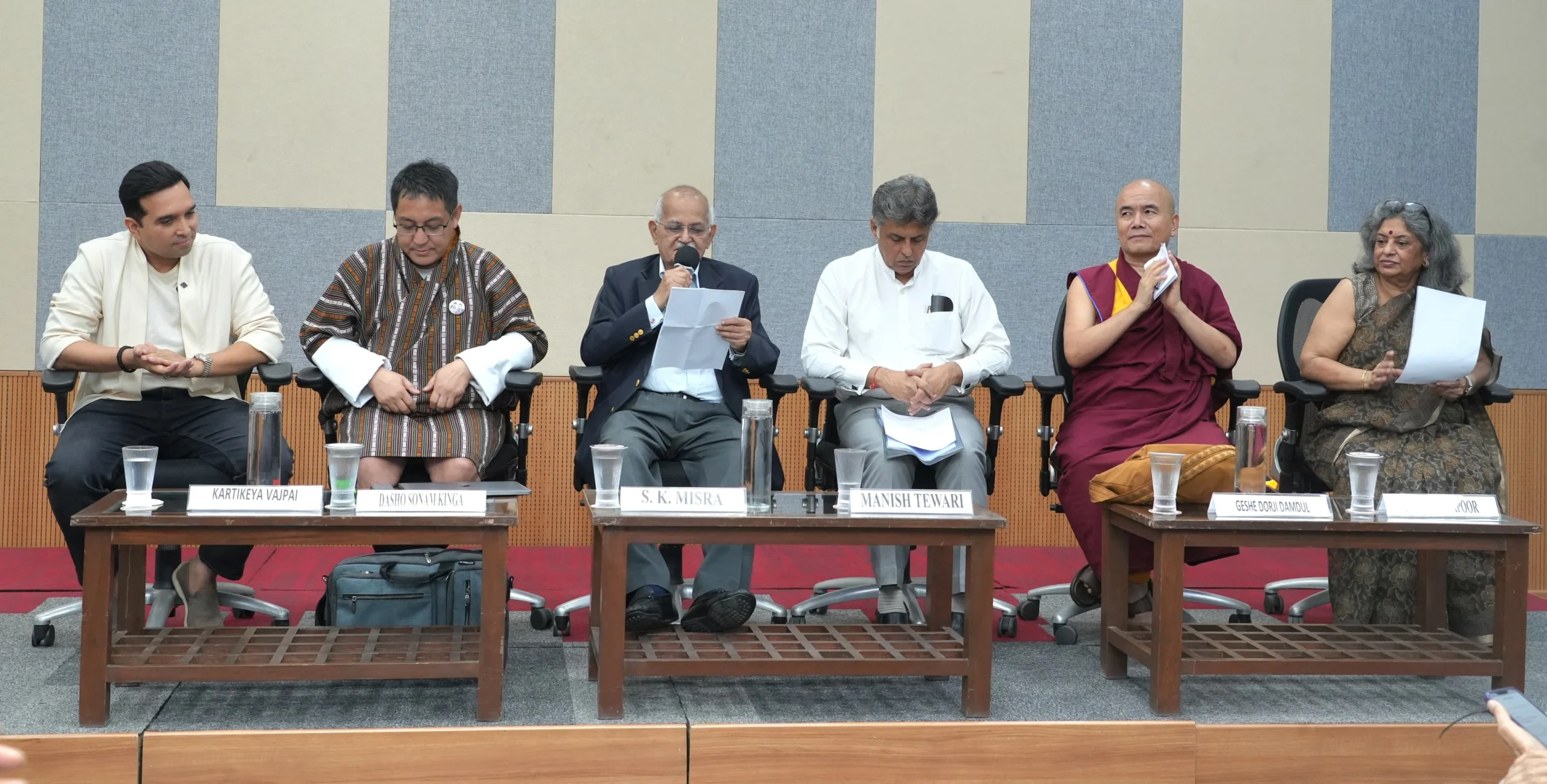
The Indian Trust for Rural Heritage and Development (ITRHD) celebrated World Heritage Day with a special programme in New Delhi, bringing together policymakers, scholars and cultural voices to deliberate on the preservation of India’s rural heritage, aligned with this year’s theme — “Emergency Response for Living Heritage in Contexts of Conflicts and Disasters.” The occasion also marked 15 years of ITRHD’s work in the field of heritage conservation.
The event was graced by Manish Tewari, Member of Parliament, as the Chief Guest, in the presence of Padma Bhushan Shri S. K. Misra, Chairman, ITRHD.
The programme featured addresses by distinguished speakers including Dasho Sonam Kinga (Former Chairman of the National Council of Bhutan), Geshe Dorji Damdul (Head of Tibet House, New Delhi), and Kartikeya Vajpai (Author). The event was also attended by Archana Capoor (Member Secretary, ITRHD) and members and representatives of ITRHD.
Addressing the gathering, Manish Tewari highlighted the urgent need to prioritise heritage conservation in the context of ongoing global conflicts. “Given the scale of ongoing international conflicts since 2022, the conservation of historical sites and heritage places, especially in conflict zones, must become a priority—even though, when such crises unfold, it is often the last thing on anyone’s mind,” he said.
He further pointed to the gap between policy and implementation in India, adding, “While India has a fairly robust legal architecture for heritage conservation, there remains a clear lack of consciousness and sensitivity when it comes to preserving, protecting and promoting our heritage, particularly in rural areas.”
Speaking on the occasion, Padma Bhushan Shri S.K. Misra emphasised the broader responsibility associated with heritage preservation. “World Heritage Day is not just a symbolic observance; it is an occasion to renew our collective responsibility to preserve our heritage for future generations, especially in a country like India where such immense cultural wealth cannot be allowed to remain unattended,” he said.
Highlighting ITRHD’s approach, he added, “We see rural heritage as a catalyst for rural development. Our effort is to identify neglected heritage sites, particularly those linked to Buddhist traditions, and reintegrate them into community life by building awareness and local participation.”
Dasho Sonam Kinga said that in Bhutan, the preservation of Buddhism has been sustained through the close integration of community life, cultural practices and state support, particularly in rural areas. He pointed out that heritage continues as a living tradition because communities actively practice and pass it on across generations.
Geshe Dorji Damdul said that heritage goes beyond physical structures and carries deeper human values such as compassion, wisdom and harmony. He explained that preserving heritage is important not only for protecting history but also for sustaining the values that shape human society.
Kartikeya Vajpai, author of The Unbecoming, said that preservation should begin with safeguarding the philosophical and spiritual essence of heritage. He said that when people, especially the youth, engage with this wisdom through experience and introspection, cultural continuity follows naturally.
The discussions explored the intersection of heritage, identity and its contemporary relevance, with a particular focus on rural ecosystems and traditional knowledge systems. Speakers highlighted how India’s rural heritage, spanning monuments, agricultural practices, crafts, languages, performing arts and indigenous knowledge, remains a largely underutilised resource in the country’s development narrative.
With nearly 70% of India’s population residing in rural areas, many of which continue to face economic challenges, the need to recognise heritage as a valuable economic and social asset was strongly underscored.
Observed globally on April 18 under the aegis of the International Council on Monuments and Sites and UNESCO, World Heritage Day underscores the importance of protecting cultural and natural heritage.
