


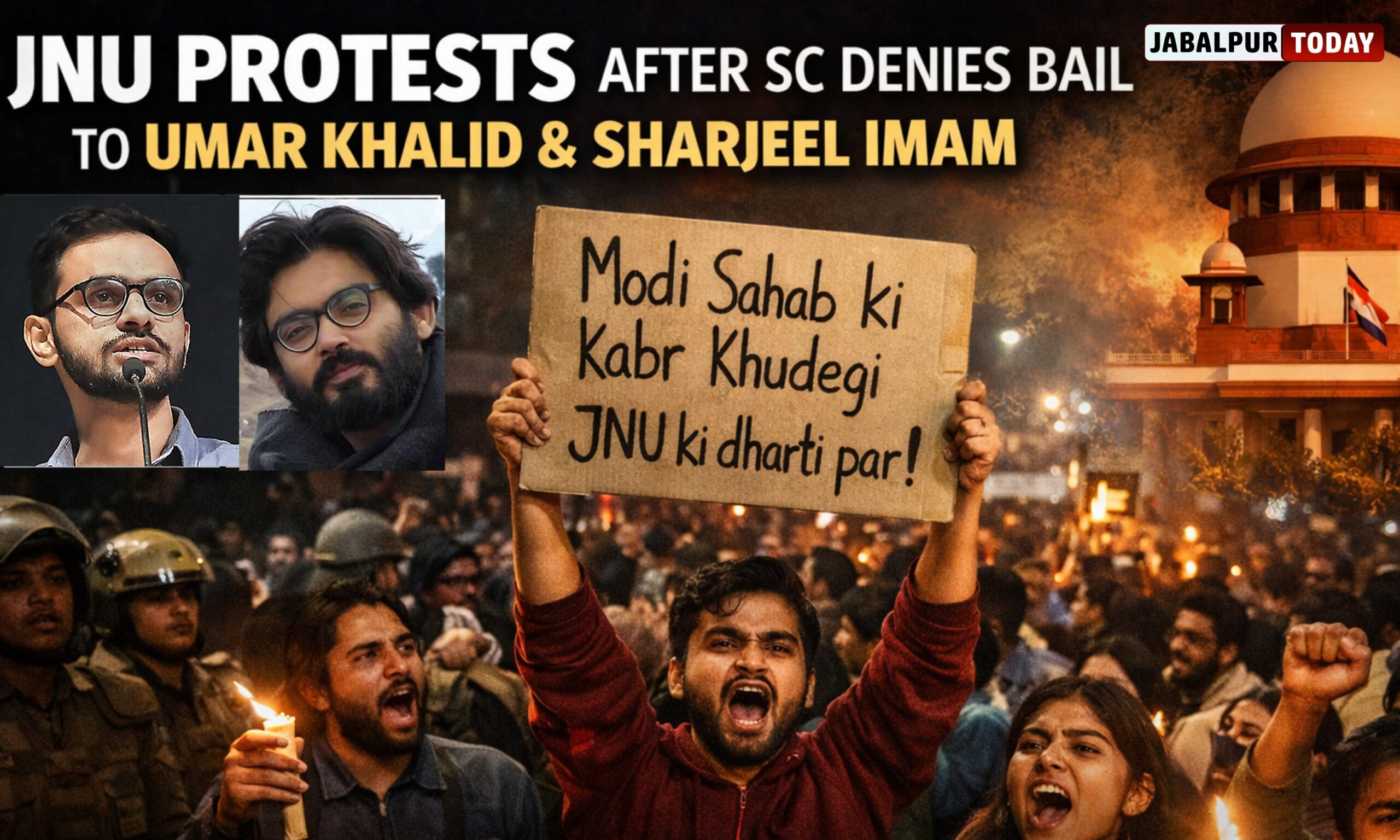
JNU protests erupt after SC denies bail to Umar Khalid and Sharjeel Imam, left wing students chant “Modi Shah ki kabr khudegi JNU ki dharti par”. Viral slogans spark outrage and political backlash
New Delhi: Jawaharlal Nehru University (JNU) witnessed late-night protests on January 5, 2026, after the Supreme Court denied bail to activists Umar Khalid and Sharjeel Imam in the 2020 Delhi riots conspiracy case.
The protest, led by left-wing student groups and the JNU Students’ Union (JNUSU), saw students raising controversial slogans against Prime Minister Narendra Modi and Home Minister Amit Shah. Videos of these slogans quickly went viral on social media platforms, especially X (formerly Twitter).
Delhi Police said they are aware of the slogans but have not taken any immediate action or made any arrests so far. The protest took place amid ongoing unrest on the JNU campus over several issues, including library surveillance measures and recent jackal deaths inside the university.
Timeline of Key Events at JNU
Here is how events unfolded over the last few days:
| Date | Key Event |
|---|---|
| January 3, 2026 | JNUSU accuses administration of targeting students; Delhi Police serves notices over library surveillance protests from August/November 2025. |
| January 4, 2026 | JNUSU condemns police notices as “dastardly attack”; demands withdrawal of cases. |
| January 5, 2026 | Supreme Court denies bail to Umar Khalid and Sharjeel Imam; grants to five others. Late-night protest at JNU with slogans against PM Modi and HM Shah; videos go viral. |
| January 6, 2026 | JNUSU urges administration to investigate jackal deaths on campus. Political reactions intensify; BJP leaders like Kapil Mishra, Giriraj Singh, Manjinder Singh Sirsa, and Vishwas Sarang condemn slogans as “anti-India”; Congress terms verdict “unfortunate.” |
What Triggered the January 5 Protest?
The immediate trigger for the protest was the Supreme Court verdict delivered on January 5, 2026.

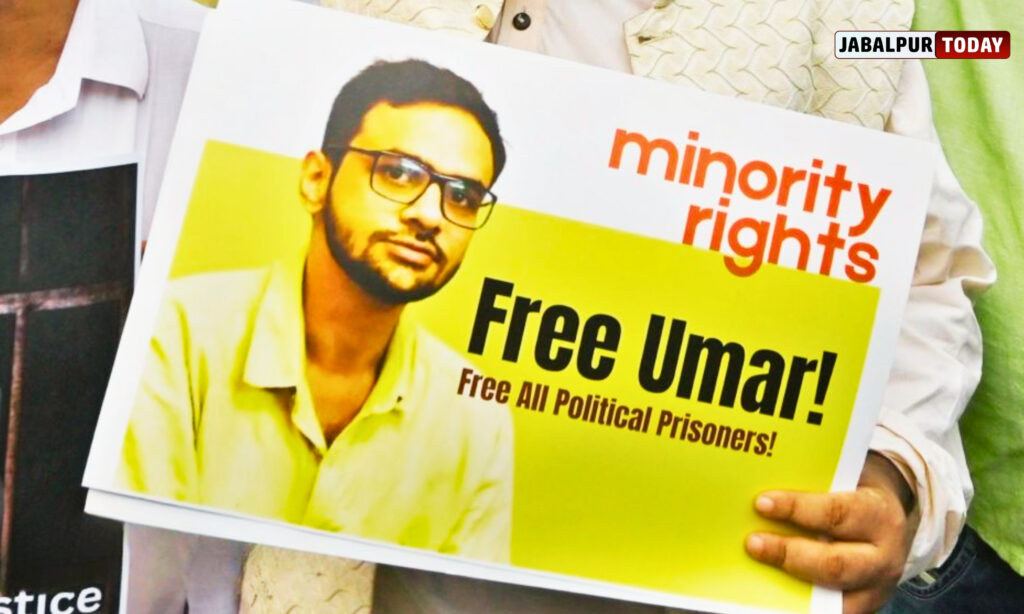
A bench comprising Justice Aravind Kumar and Justice N. V. Anjaria denied bail to Umar Khalid and Sharjeel Imam, who have been in custody for more than five years without trial under the Unlawful Activities (Prevention) Act (UAPA) in the Delhi riots conspiracy case.
At the same time, the court granted bail to five other accused:
- Gulfisha Fatima
- Meeran Haider
- Shifa Ur Rehman
- Mohd Saleem Khan
- Shadab Ahmed
The court cited different levels of alleged involvement while granting bail to the five.
Following the verdict, students gathered near Sabarmati Hostel at JNU. During the protest, slogans such as “Modi Sahab ki kabr khudegi JNU ki dharti par” were raised. A video of these chants was shared widely on X, including by journalist @iAtulKrishan1, after which it spread rapidly online.
Delhi Police and JNUSU’s Response
Delhi Police confirmed that they are aware of the “objectionable slogans” raised during the protest. However, officials said that no immediate action has been taken so far.
JNUSU President Aditi Mishra defended the protest, stating that the slogans were ideological in nature and not personal attacks. She said the protest was part of student opposition to what they see as injustice and was also linked to remembering the anniversary of violence at JNU in 2020.

Political Reactions Intensify
The protest and viral slogans drew sharp political reactions:
- BJP spokesperson Shehzad Poonawalla called it part of the “Tukde-tukde ecosystem” and described the slogans as “anti-national.”
- Pradeep Bhandari (BJP) said the protest reflected “anti-India thinking.”
- Union Minister Giriraj Singh remarked that JNU has a mindset similar to “Rahul Gandhi-like anti-national thinking.”
- Kapil Mishra (BJP) claimed that “the heads of snakes are being crushed.”
- ABVP announced plans to file a complaint over the slogans.
On the other hand:
• Congress leader Udit Raj termed the verdict “unfortunate” and alleged injustice, stating that anger in JNU reflects broader concerns.
Other Protests and Issues on JNU Campus
The January 5 protest is part of a series of demonstrations at JNU in early January 2026.
• Library Surveillance Row
On January 3 and 4, JNUSU protested against library surveillance measures, including:
- Magnetic entry gates
- Facial recognition cameras
These were first installed in August 2025, removed after protests, and later reinstalled in November 2025 during student elections.
JNUSU called these measures a violation of student privacy and demanded:
- Withdrawal of police notices
- Cancellation of proctorial action against students
The JNU administration has not issued any official response to these demands.
• Jackal Deaths on Campus
On January 6, JNUSU raised concerns over the recent deaths of jackals on the JNU campus. The student body urged the administration to conduct a proper investigation, citing environmental and safety concerns.
Understanding the Broader Impact
JNU has long been a centre of student activism. The latest protest once again brings back memories of:
- The 2020 campus violence
- The 2016 ‘Tukde Tukde’ controversy
With videos going viral on platforms like X, and coverage by outlets such as TN Navbharat and Navbharat Times, the issue has once again become a national political flashpoint.
The situation has reignited debates around:
- Freedom of speech vs sedition
- Campus security vs student rights
- Student–administration relations
Authorities have urged calm, while students remain on alert as developments continue.
Also Read on jabalpur today: No Bail for Umar Khalid and Sharjeel Imam: Supreme Court Upholds UAPA Charges in 2020 Delhi Riots, Grants Relief to 5 co-accused